



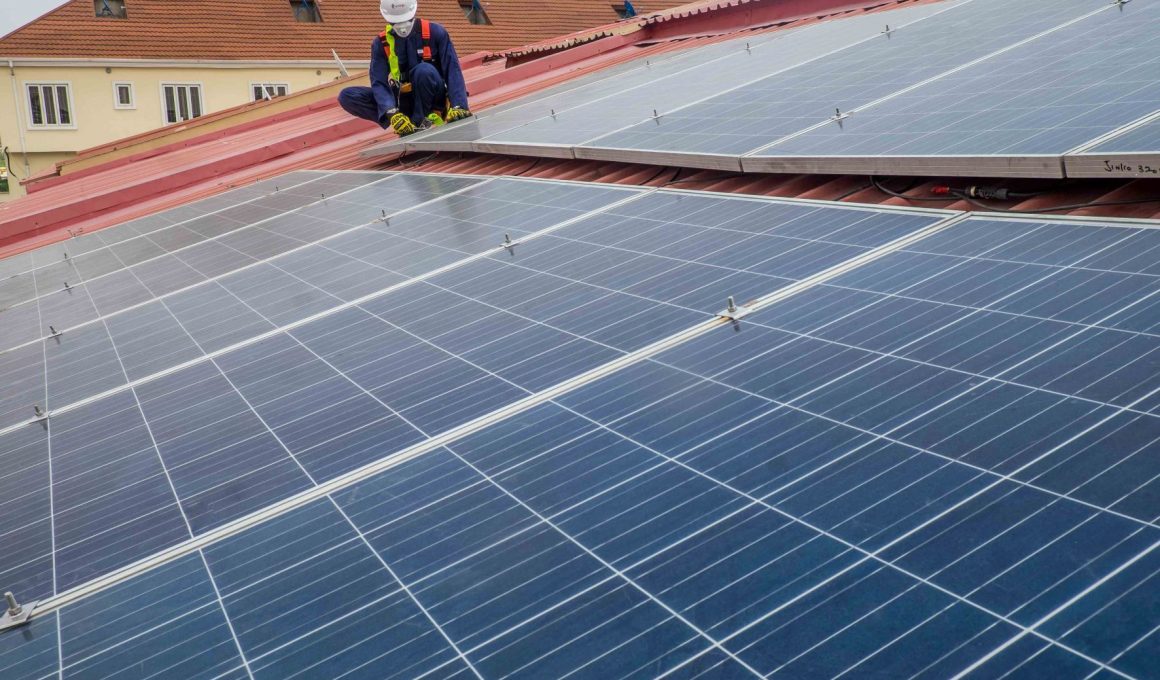
Ghana has rolled out its National Clean Energy Programme (NCEP) — a $200 million initiative to accelerate rooftop solar adoption across homes and businesses.
Why it matters
The program aims to deploy 4,000 new rooftop solar systems with a combined 137 MW capacity — a major step toward reducing the country’s reliance on fossil fuels and expanding its clean energy footprint.
The partnership
The initiative is a collaboration between Ghana’s Ministry of Energy and Green Transition and Klik Foundation, a Swiss-based carbon offset group that finances verified emission reduction projects.
- Funding from Switzerland will flow through Klik.
- Subsidies will be disbursed after installation.
- Performance-based payments will depend on verified emission reductions.
How it works
NCEP will support both residential and commercial solar installations.
A fully digital monitoring system will measure, report, and verify emission savings for each project — ensuring transparency and accountability.
The bigger picture
Ghana announced plans in March to create a renewable energy investment fund to attract private capital into clean energy.
- Current installed solar capacity: 188 MW (including 66 MW commercial/industrial).
- Target: 10% of national electricity from renewables by 2030.
- Present share of non-hydro renewables: <3%, according to Ghana’s Voluntary National Review 2025.
Source: PV Magazine