





ACCRA — When Ghana launched a nationwide SIM card re-registration exercise in October 2021, the goal seemed straightforward: link every mobile phone number to a verified national identity card, curb fraud, and build a credible digital database.
Four years later, the country is preparing to do it all over again, and almost nobody is happy about it.
The effort has become a case study in bureaucratic overreach, data insecurity, and the limits of forcing a population through a technical exercise it was not ready for — or, in some cases, was never able to complete at all.
The registration process began in October 2021, and the deadline moved several times before authorities eventually disconnected all services to unregistered SIM cards in mid-2023, leaving roughly nine million subscribers without access to calls, texts, mobile data, or mobile money services.
The chaos that ensued revealed the depth of the problem. At the time the exercise began, Ghana had approximately 46 million mobile connections — equivalent to 140 percent of the country’s total population, as one person can use multiple networks simultaneously. Sorting through that tangle proved far more difficult than regulators had anticipated.
A Fraud Problem Begets a Bigger Fraud Problem
The central logic of the exercise was security. According to the Bank of Ghana, mobile money transactions in the country reached an estimated $88.3 billion in 2023, and that same year, about 7,250 mobile money fraud cases were reported by the Ghana Police Service’s cybercrime unit — a 32 percent increase from the prior year.
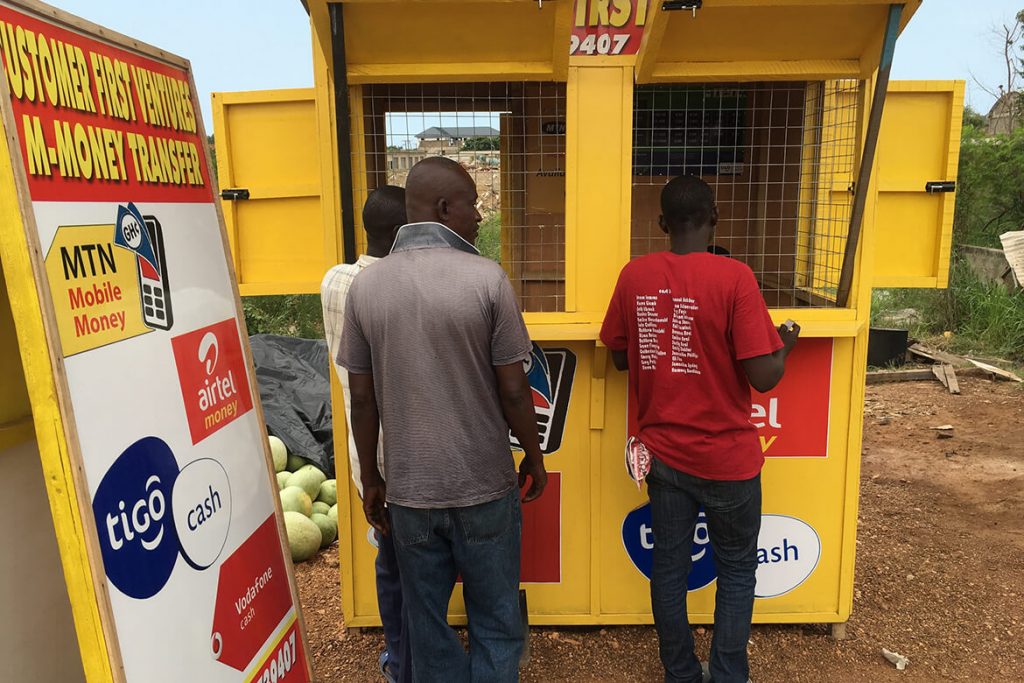
But the re-registration process itself became a vehicle for the very crimes it was meant to prevent. Reports emerged that the Ghana Cards of some members of the public had been used to register SIM cards they did not own, with some individuals discovering that their identities had been linked to multiple unknown numbers without their knowledge or consent.
In one documented case, a subscriber received a message from MTN informing him he had exceeded the maximum of 10 SIM registrations permitted per person — registrations he had never made.
The National Communications Authority later acknowledged that some agents were linking multiple SIM cards to people’s Ghana Cards without their consent, and deleted over six million SIM cards that had been fraudulently registered.
Biometrics Collected, Never Used
Perhaps the most damning revelation came years after the exercise concluded. In late 2024, an official confirmed that the biometric data collected from millions of Ghanaians during the 2021–2022 SIM re-registration exercise — fingerprints submitted at telecom offices across the country — had never actually been authenticated against any authoritative identity system.
Citizens had queued for hours and submitted their most sensitive personal data for a process that, technically speaking, did not verify who they were.
Questions about data sovereignty compounded the concern. Experts pointed out that data captured by one of the app contractors had been uploaded to an Amazon Web Services server not controlled or owned by the government, raising questions about compliance with Ghana’s Data Protection Act.
The Bill, Paid by Someone
Throughout the exercise, the question of who was footing the bill remained murky. When the government introduced a self-service registration app, it imposed a fee of GH₵5 (roughly $0.58 at the time) per user to help the app “finance itself,” a move that critics immediately challenged as an unlawful levy imposed without parliamentary approval.
Critics noted that the costs of SIM card registration ultimately fell on a combination of citizens, telecom operators, and the government itself — an arrangement that satisfied none of them. Telecoms, which invested heavily in field officers and registration equipment, saw their operating costs rise without a clear return.
The government, meanwhile, faced the prospect of reduced tax revenue as millions of SIM cards went dark.
At least one prominent economist, Dr. Frank Bannor of the Institute of Economic Research and Public Policy, publicly questioned whether millions of taxpayer funds had been well spent, warning that a new registration exercise would strain Ghana’s already limited fiscal reserves.
Starting Over
Ghana’s new Minister of Communications, Digital Technology, and Innovation, Sam Nartey George — who had himself been a vocal critic of the previous exercise — announced early in 2025 that a new SIM registration process was needed to address the failures of the last one.
This time, he said, telecom companies would bear the full cost of the process, a departure from previous models that drew on both public funds and user fees. The minister also promised a system robust enough to block Ghana Cards associated with repeated mobile money fraud.
George described the previous exercise as a “botched re-registration” that had failed to meet its own key performance indicators, and said the new process would be “human-centered” and “technology-driven.”
For many Ghanaians, the promises sound familiar. The country has now launched, extended, partially completed, and effectively abandoned one SIM registration drive, and is preparing to embark on another.
Whether the next round fares better may depend less on technology than on the far more stubborn challenge of building public trust — in the process, and in the institutions running it.