




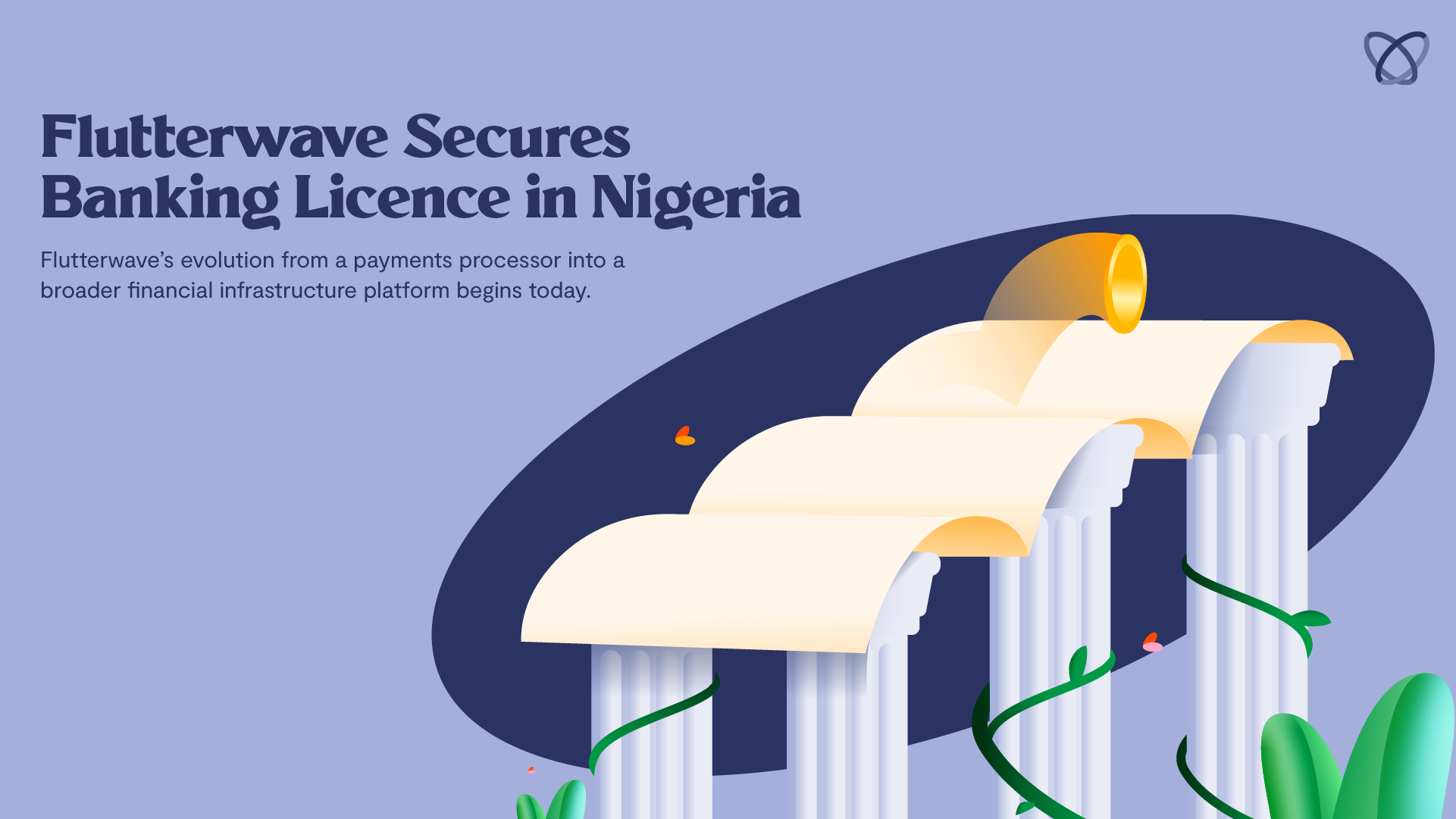
Flutterwave has announced it has secured a Nigerian banking license. This regulatory milestone hands the Lagos-founded fintech direct control over how money moves through its own platform, without needing a traditional bank to hold its hand.
It’s a shift that sounds technical but has sweeping implications.
If it plays out as planned, Flutterwave’s 2 million business customers and over a million consumer app users will experience faster, cheaper, and more integrated financial services. And the company itself stands to capture far more of the value it already generates.
The Sponsorship Model Was Always a Workaround
To understand why this matters, you need to understand how fintech has historically worked in Nigeria — and across Africa more broadly.
Payment companies like Flutterwave typically operated under what’s known as a “sponsorship” model: they partnered with licensed commercial banks to access national clearing and settlement systems. The arrangement worked, but it came with friction.
Fintechs had to share a slice of every transaction with their banking sponsors, move at their partner’s pace, and accept real limits on how far they could innovate.
The sponsorship model, in other words, put a ceiling on what Flutterwave could build — and how fast it could build it.
With a banking license, that ceiling is gone. Flutterwave can now hold deposits, manage settlement flows internally, and control the full arc of a transaction from initiation to completion.
In a market where trillions of naira move through digital channels each year, even marginal improvements to settlement efficiency can translate into enormous gains.
What Changes for Users
For consumers using Flutterwave’s SendApp, the change means access to personal account numbers and instant transfers without leaving the platform. For the company’s 2 million business customers, it unlocks accounts, payroll, multi-currency capabilities, and payouts — all under one roof.

Larger enterprises get treasury management tools and liquidity infrastructure. Developers get programmable APIs to build financial products directly on top of Flutterwave’s infrastructure.
The company also says it’s exploring stablecoin-enabled settlement — a move that could significantly accelerate cross-border transactions and further reduce the cost of connecting African businesses to global markets.
“By operating directly within the financial system, we can streamline money movement, accelerate settlement for merchants, and build products that support sustainable long-term growth,” said Olugbenga Agboola, Flutterwave’s founder and CEO.
The Risks Are Real
Banking licenses come with considerably more regulatory scrutiny than payment licenses. Flutterwave will now be subject to capital adequacy requirements, deposit insurance obligations, and the kind of oversight that comes with holding customer funds directly.
Any stumble — a compliance failure, a fraud incident, a liquidity crunch — carries heavier consequences than it would for a payments intermediary.
Flutterwave has navigated turbulence before. The company faced regulatory headwinds in Kenya in 2022 and dealt with internal governance scrutiny that made headlines. Whether it has built the institutional muscle to operate as a fully licensed bank, at scale, across one of the world’s most complex regulatory environments, remains to be seen.
Still, for a company that processes the equivalent of a significant portion of Nigeria’s GDP, the move is a logical next step. The question isn’t whether Flutterwave should have a banking license. The question is what it builds with it.
Learn more about other African tech startups on Labari Insights, our data repository for tech in Africa: insights.techlabari.com