





Venture capital in Africa has a geography problem. The vast majority of funding flows to a handful of cities, a handful of sectors, and founders who already know the right people.
Madica, a pre-seed investment program launched in 2022, is trying to fix that — one early-stage check at a time.
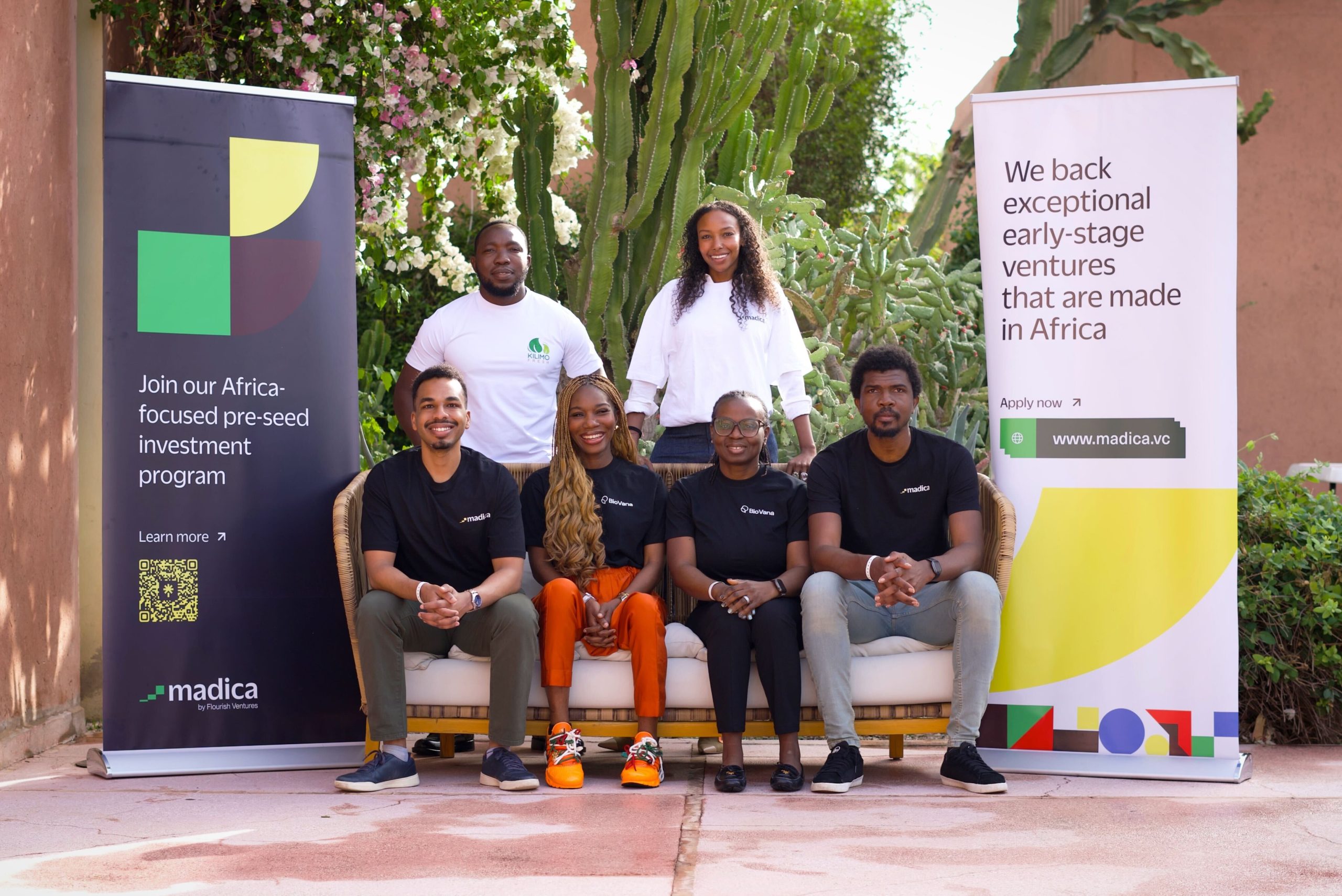
The firm has announced $600,000 in new investments across three startups: Kilimo Fresh in Tanzania, Hakimu in Kenya, and Biovana in Nigeria.
Each company receives up to $200,000, along with 18 months of structured support that includes mentorship, executive coaching, and two fully funded trips to major tech ecosystems.
Who Got the Money — and Why
The three startups reflect the kind of diversity Madica says it’s actively looking for — not just geographic, but sectoral.
Kilimo Fresh is attacking food waste in East Africa. Co-founded by Baraka Chijenga and Justice Mangu, the company aggregates produce from smallholder farmers in Tanzania and routes it to urban markets through a tech-enabled supply chain.
Hakimu is building what it calls pan-African legal infrastructure, using AI to improve access to justice across the continent. Co-founders Rawan Dareer, Ahmed Ahmed, and Ahmed Elbashir are operating in a sector — legaltech — that remains largely underdeveloped across African markets, where the justice gap is wide and costly.
Biovana, co-founded by Estelle Dogbo and Dr. Jumi Popoola, is a data harmonisation and certification platform focused on making African health datasets usable for pharmaceutical companies, AI researchers, and clinical trials globally.
It’s a technically dense pitch in a sector — health data — where African companies are consistently underrepresented despite holding uniquely valuable data.
All three were selected from applications submitted across the continent.
The Bigger Structural Problem Madica Is Trying to Solve
The funding gap in African tech isn’t just a capital problem — it’s a network problem. Most early-stage investors back founders they already know, or founders who know someone they know. That excludes the majority of entrepreneurs building in Africa, particularly those outside Lagos, Nairobi, and Cairo, and those without prior startup experience or elite academic credentials.
Madica’s model is explicitly designed to counter this. The firm describes itself as “sector-agnostic,” and its selection criteria prioritize founders who have little or no institutional funding, are working full-time on their startup, and have at least a minimum viable product with some paying customers. Being headquartered in Africa is the other baseline requirement.
“Each new investment brings us closer to the portfolio we set out to build,” said Emmanuel Adegboye, Head of Madica, “one that reflects the full breadth and diversity of African entrepreneurship.“
A Fundraising Guide for Founders
Alongside the investment announcement, Madica released the first edition of a fundraising guide series: Zero to Funded: A Founder’s Guide to Pre-Seed Fundraising in Africa.
The 75-page document is aimed specifically at founders who are navigating their first raise without access to investor networks, accelerators, or anyone who’s done it before.
The guide covers the mechanics of pre-seed fundraising — how to think about whether to raise at all, how to talk to investors, and how to reconcile local market realities with what global investors actually want to see. It also includes templates and checklists.
The decision to publish the guide signals something important about how Madica sees its role. The firm isn’t just deploying capital — it’s trying to demystify a process that remains opaque for most first-time founders on the continent.
What’s Next
Madica has also added Tauriq Brown to its mentor roster. Brown previously served as CEO of TooMuchWiFi, one of Africa’s fastest-growing internet infrastructure companies, and brings experience from Rocket Internet and Mountain Partners.
His role will focus on helping founders think through execution, not just strategy.
The full Madica team and portfolio convened in Morocco this month, with the gathering timed to coincide with GITEX Africa. The immersion trip includes investor meetings, workshops on investment readiness, and sessions on team building and organizational culture.
Madica continues to accept applications from pre-seed African startups. The bar is deliberately low by venture standards — an MVP, a few paying customers, and a committed founding team. The aim, as the firm has consistently framed it, is to reach founders that the rest of the market hasn’t found yet.