





Despite years of investment in digital infrastructure — from the Ghana Card to the Ghana.GOV portal — the average Ghanaian still carries a folder of photocopies to the bank, the hospital, and the passport office.
NITA, Ghana’s information technology regulator, wants to change that. The agency has released a concept note outlining plans for a Ghana Electronic Document Wallet (GEDW): a national system that would let citizens store verified digital copies of their official documents — birth certificates, driver’s licenses, academic transcripts, tax records — on a smartphone, and share them with any institution that needs them.
The idea is straightforward. Instead of presenting a photocopy of your WAEC certificate to a university admissions office, you share it digitally from your phone. The receiving institution can verify it is authentic in seconds.
The Private-Sector Twist
What sets Ghana’s approach apart is who will actually run the wallets.
In India, the government operates DigiLocker, the country’s equivalent system, directly. Ghana is taking a different route. Under NITA’s proposed framework, independent, licensed private companies — called Electronic Wallet Service Providers, or EWSPs — will build and operate the wallet apps. NITA will set the technical standards, issue licenses, and conduct audits, but will not run a wallet itself.
The model is explicitly designed to encourage competition. Citizens would choose between multiple providers, each offering their own apps and potentially additional features like automated KYC or document classification for businesses.
NITA positions Ghana as the first African country to attempt a market-driven, standards-based digital document ecosystem of this kind — a claim that, if the system delivers, would mark a significant policy distinction on the continent.
How It Would Work
The architecture connects three groups: issuers, users, and requesters.
Issuers — institutions like the National Identification Authority, DVLA, GRA, WAEC, and universities — would publish digitally signed documents through a central data exchange layer called the National Data Exchange (NDX). Each document would carry an issuer signature, a document hash, and a validity status, making tampering detectable.
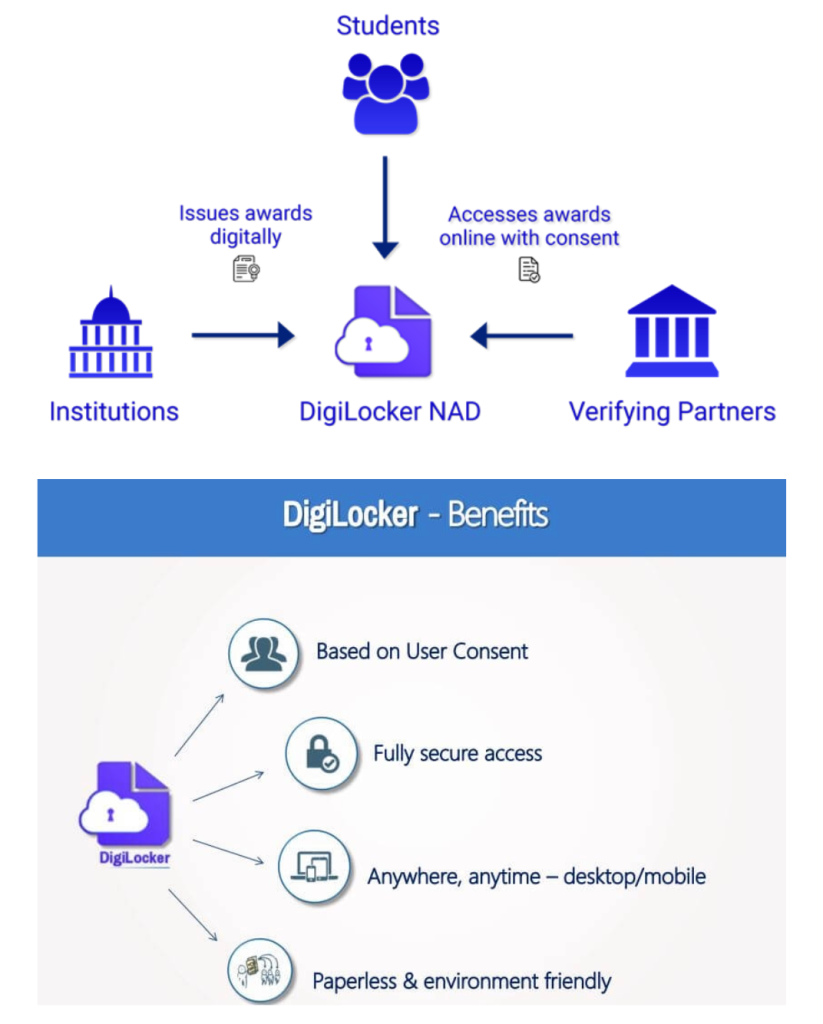
Citizens would access their documents through a wallet app of their choosing. Critically, the wallet itself would not store copies of government-issued documents — only metadata and secure links. The actual documents remain with the issuing authority.
When a bank, employer, or school needs to verify a document, the citizen grants consent through the app, and the requester pulls the data directly. Every sharing event would be logged in an audit trail visible to the user.
The concept note says government-issued documents shared through the system would carry full legal validity, equivalent to physical originals, under a forthcoming revision of Ghana’s Electronic Transactions Act.
What Still Needs to Happen
The document is a concept note, not a policy directive — meaning the hard work of implementation lies ahead.
NITA’s roadmap lays out four phases: framework development, a pilot involving early issuers like DVLA and WAEC with two or three licensed wallet providers, a national rollout, and eventual cross-border document verification. No firm timelines are given for any phase.
Several preconditions must hold for the system to function. Government agencies need to digitize their issuance processes and integrate with NDX — a significant operational lift for institutions that still issue many documents manually.
Private wallet providers must meet technical and security standards rigorous enough to earn public trust. And citizens, particularly outside urban areas, need both the devices and the digital literacy to use the system.
The multi-provider model also introduces coordination complexity that a single government-run platform avoids. Ensuring that a document issued through one wallet can be verified by a requester using a different provider requires interoperability standards to work reliably across the board.
The Stakes
Fraud in document verification — fake certificates, doctored records, identity misrepresentation — costs Ghanaian businesses and institutions in ways that are hard to quantify but widely acknowledged. A tamper-proof, instantly verifiable document system would reduce that exposure significantly.
For ordinary citizens, the promise is simpler: fewer queues, fewer lost certificates, and less dependence on bureaucracies that move slowly and often require in-person visits for documents that should travel digitally.
Whether Ghana can execute on that promise depends on choices that haven’t been made yet — which institutions come onboard first, how quickly NITA issues licenses, and whether wallet providers can build products that people actually trust and use.