



Ghana’s telecom regulator has made official what industry watchers have anticipated for weeks: Next Gen Infraco Limited (NGIC) is no longer the sole company permitted to build and operate the country’s wholesale 5G network.
The National Communications Authority (NCA) said Wednesday it had amended NGIC’s Wholesale Electronic Communications Infrastructure Licence, striking the exclusivity clause that had reserved wholesale 5G infrastructure for the company alone. The change took effect July 15, 2026.
The move formalizes a shift that Communications Minister Sam George signaled earlier this year, when he said Ghana would open 5G licensing to competition because of how slowly the network was being built. NGIC, which partnered with Radisys Corp. — a unit of Mukesh Ambani’s Reliance Industries — had managed just 49 active sites as of March, far short of the government’s target of 1,200 by 2027.
The Legal Mechanics
The NCA said its authority to amend the licence comes from Article 6.1.2 of NGIC’s licence and section 14 of the Electronic Communications Act, 2008 (Act 775), both of which allow the regulator to alter licence terms in the public interest.
The process followed a defined statutory path. The NCA issued NGIC a Notice of Proposed Amendment on March 2, 2026, and met with the company on March 18. NGIC pushed back, filing a Statement of Objections on April 1 under its rights in section 14(4) of the Act. The regulator then gave the company a further hearing before its Governing Board on May 28, before concluding that removing exclusivity served the public interest.
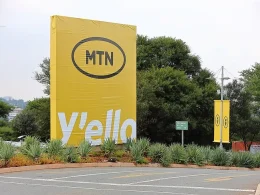
That timeline places the amendment roughly four months after the notice was first issued — a period that overlapped with public reporting that MTN Group and Telecel Group were already preparing to bid for 5G spectrum once the exclusive arrangement ended.
What Changes, and What Doesn’t
The amendment is narrow in scope. It removes only the single condition giving NGIC exclusive rights over wholesale 5G infrastructure; the rest of the company’s licence, including its spectrum assignment, remains intact. NGIC keeps its other rights and obligations under the licence and can still operate in the market — just no longer as the only wholesale provider.
The NCA framed the decision as one aimed at fostering “a competitive wholesale 5G market that promotes investment, innovation, network resilience, service quality and wider access to advanced communications services,” rather than as a penalty against NGIC specifically.
Questions the Announcement Leaves Open
The NCA’s statement does not specify when a competitive licensing process — such as a spectrum auction — will begin, how many additional wholesale licences might be issued, or what obligations new entrants would face. It also does not address NGIC’s original 2034 licence expiry or whether the company’s spectrum holdings will be adjusted to accommodate competitors.
Telecel’s chief executive, Moh Damush, has previously cautioned that any competitive process should not simply favor the highest bidder, warning that doing so could entrench the advantage already held by MTN, which accounts for roughly 80% of Ghana’s data subscribers. Whether the NCA’s forthcoming licensing framework addresses that concern remains unclear from Wednesday’s announcement.
Radisys and Reliance Industries have not commented publicly on the amendment. NGIC has not issued a statement responding to the outcome of its objections.
Part of a Broader Reset
The amendment is the clearest confirmation yet that Ghana is abandoning the wholesale-monopoly model it adopted to accelerate 5G deployment, in favor of an operator-led, competitive approach more similar to those used in Kenya, Nigeria and South Africa — all of which have outpaced Ghana on 5G coverage.
The NCA said it expects the change to encourage investment and innovation and to advance the country’s broader digital transformation goals. Whether that translates into faster network buildout than NGIC achieved under exclusivity will depend on details the regulator has yet to announce.