





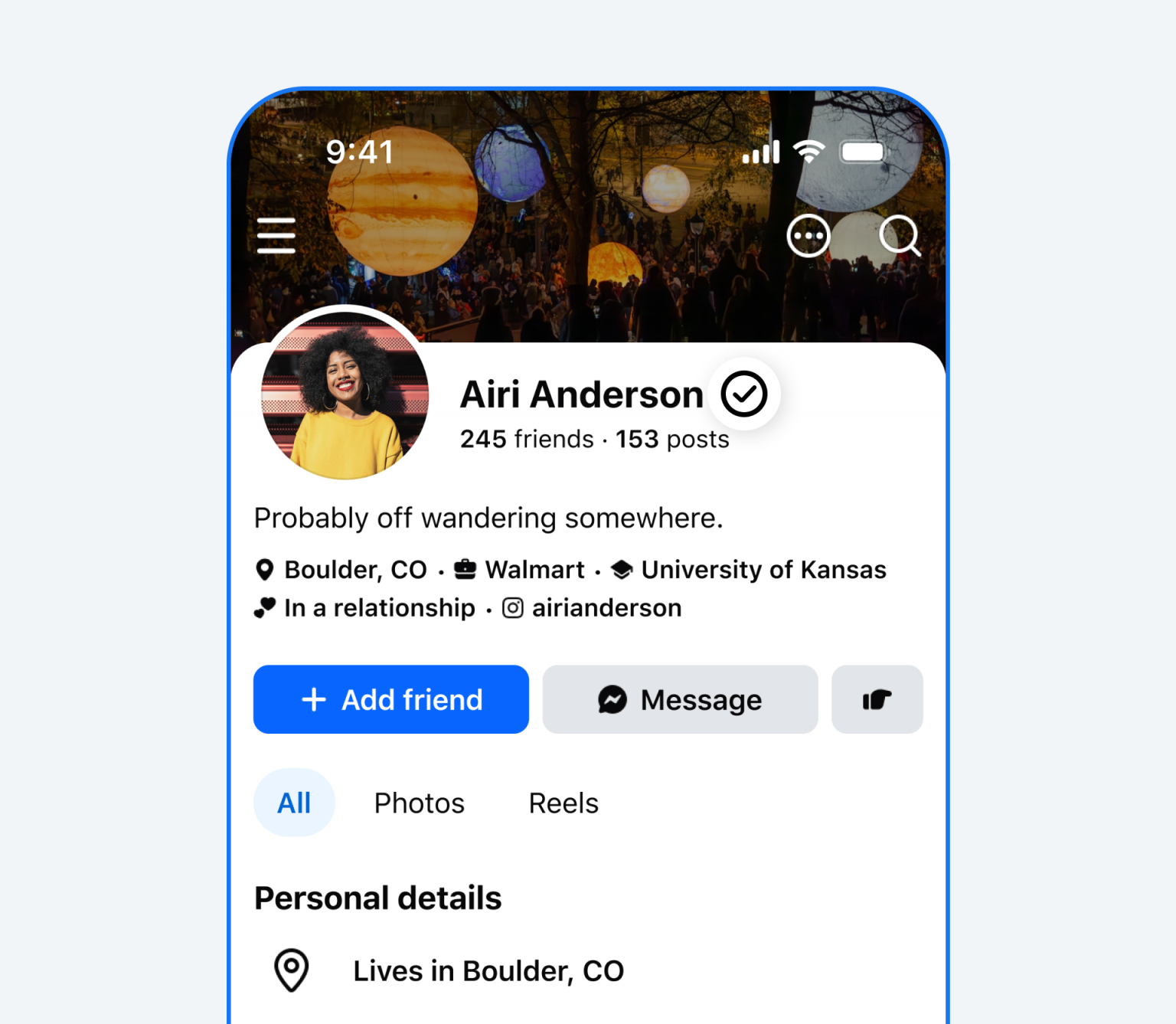
Meta is rolling out a new free verification badge on Facebook, aimed squarely at a problem the company itself has helped create: it’s getting harder to tell whether the account on the other end of a Marketplace listing, a dating match, or a Group post belongs to an actual person or an AI-generated front.
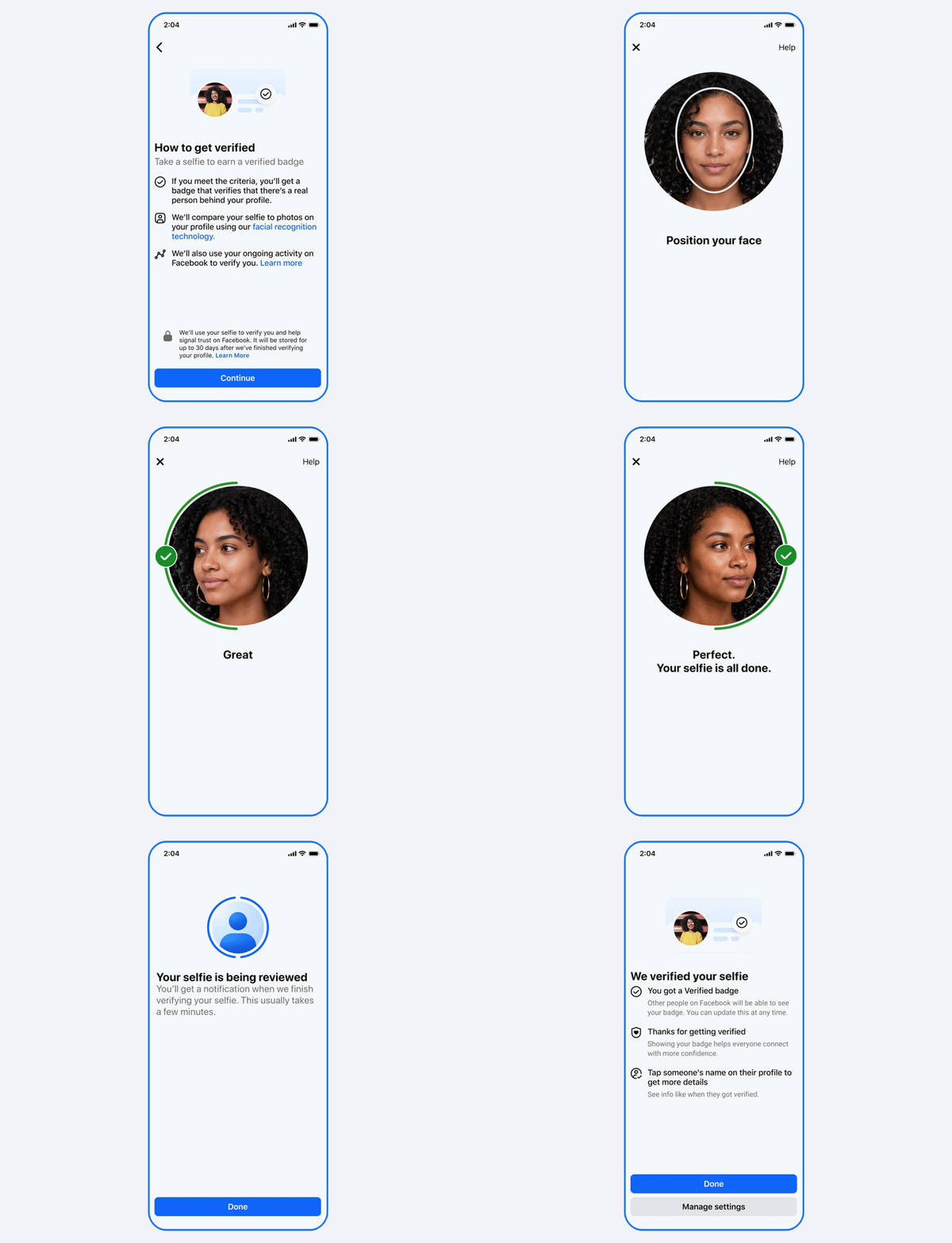
The feature, called Facebook Verified, asks users to record a short video selfie, which Meta then checks against a person’s existing profile photos. If it matches, and the account has a clean record on fraud, scams, and “inauthentic behavior,” the user gets a badge.
There’s no subscription and no payment involved — a notable departure from Meta Verified, the paid check-mark product the company introduced in 2023 for Facebook and Instagram.
Why now
Meta’s framing is direct about the source of the anxiety: generative AI has made it trivially easy to spin up convincing fake profiles, images, and conversations. The company says the badge is meant to give users a fast, visible cue — before they respond to a listing, agree to a date, or engage in a Group — that they’re dealing with a verified human being.
That’s a meaningful admission from a company whose platforms have also been pushing AI-generated content and AI personas more aggressively over the past year. Facebook Verified is, in effect, a countermeasure to a problem partly created by Meta’s own product roadmap.
How it works, and who qualifies
The verification process is quick — Meta says it typically takes a few minutes — but it isn’t available to everyone. Users must be 18 or older, in good standing under Meta’s Community Standards on fraud and inauthentic behavior, and the badge isn’t offered to Pages or ProMode accounts, meaning it’s designed for individual users rather than businesses or creators running professional profiles.
Meta is launching the badge in phases, starting with select markets, with a global rollout to follow. The company hasn’t specified which markets come first or offered a timeline for full availability — a gap worth watching given how unevenly Meta’s past feature rollouts have reached markets outside the U.S. and Europe.
Where the badge shows up
Initially, the checkmark will appear on Marketplace listings, Dating profiles, Groups, and personal profiles. Meta says badges in News Feed posts are coming later. Once a user verifies, the badge follows them everywhere across Facebook — no repeat verification required.
What it doesn’t promise
Meta is careful to draw a line around what the badge actually certifies. It confirms a human completed the selfie check and has no record of policy violations — it does not mean Meta endorses the person or vouches for their trustworthiness in a transaction or interaction.
Users are still bound by, and Meta still enforces, its existing Community Standards and Commerce Policies regardless of verification status.
What’s still unclear
Meta’s announcement leaves several operational questions open: how badge holders are protected from identity theft or selfie-spoofing attempts, what happens if a verified account is later compromised or sold, and whether verification data — the video selfies — is stored, for how long, and under what safeguards.
Meta also hasn’t disclosed adoption targets, or how the badge will interact with its broader push into AI-generated personas and chatbots, some of which now maintain their own Facebook-style profiles.