





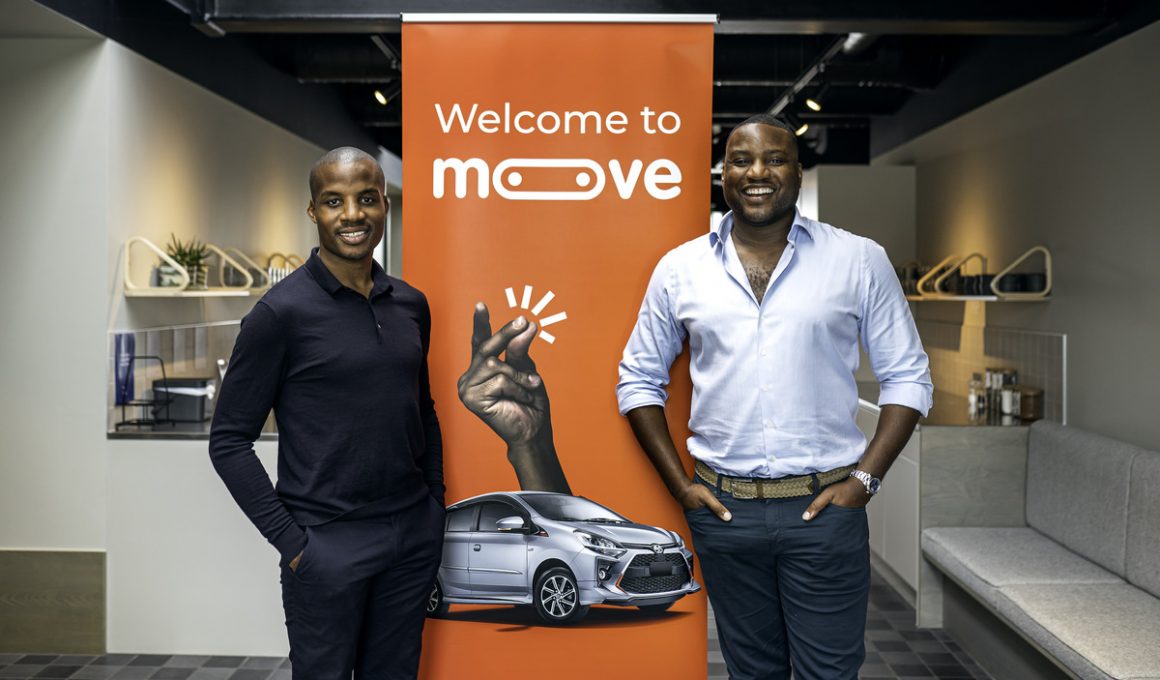
Moove, the Lagos-born mobility company that began by financing cars for ride-hailing drivers, has raised $250 million in a Series C round that values it at $2.1 billion.
The round, led by Abu Dhabi’s Mubadala Investment Company and co-led by Toyota’s Woven Capital and Ion Pacific, marks a decisive pivot: Moove is repositioning itself as the operational backbone of the autonomous vehicle industry, not just a financier of human drivers.
The round also drew BlueCrest Capital Management, Sona Asset Management and The Raptor Group as new backers, alongside returning investors BlackRock, MUFG, Franklin Templeton and Uber.
From Driver Financing to Robotaxi Logistics
Moove was founded in 2020 in Nigeria on a simple premise: many gig-economy drivers couldn’t afford cars, so Moove would supply vehicles in exchange for a cut of their earnings. The model scaled quickly, from 76 vehicles in Lagos to roughly 42,000 vehicles across 29 cities in 13 countries, according to the company.
That business is now secondary to a bigger ambition. Moove has become one of Waymo’s primary third-party fleet managers, handling the unglamorous but essential work of charging, cleaning, maintaining and dispatching autonomous vehicles. That partnership, which began in Phoenix, has since expanded to Miami and London.
The wager underlying Moove’s new valuation is that autonomous vehicle companies — Waymo chief among them — will increasingly outsource fleet operations rather than build depots, maintenance crews and dispatch systems themselves. If that holds, Moove is positioning itself as an indispensable middle layer between the robotaxi makers and the streets they operate on.
Investors Frame It as Infrastructure, Not Software
The language from Moove’s backers leans heavily on infrastructure rather than technology. Ali Eid AlMheiri of Mubadala said autonomous mobility’s shift from “breakthrough technology to scaled deployment” makes supporting infrastructure more important, and described Moove as building an integrated platform combining fleet ownership, operations and technology.
Betty Lee of Woven Capital made a similar case, calling the next wave of mobility “an infrastructure problem as much as a software one.” Michael Joseph of Ion Pacific, a Moove backer for more than five years, said the company is building a layer that is “complex, adaptive and essential to scaling AVs.”
The framing is notable. It suggests investors see limited upside in competing with Waymo, Cruise or Zoox on the underlying self-driving software — a capital-intensive race dominated by a handful of well-funded players — and more opportunity in owning the logistics layer that any of those companies will eventually need.
A Familiar Sovereign-Wealth Backer
Mubadala’s continued involvement is a throughline in Moove’s funding history rather than a new development. The Abu Dhabi fund first backed Moove three years ago and led its Series B in 2024, when the company was valued at $750 million.
The new round more than doubles that valuation in roughly two years — a steep climb for a company that started as a vehicle-financing outfit for gig drivers in Lagos.
That trajectory raises a question the announcement doesn’t directly address: how much of Moove’s valuation now rests on its autonomous vehicle contracts versus its legacy financing business, and how profitable each segment actually is.
Moove has not disclosed a revenue breakdown between the two, nor specified financial terms of its Waymo partnership beyond the markets involved.
Betting on Waymo’s Expansion
Moove’s fortunes are, for now, closely tied to Waymo’s own pace of expansion. Waymo has been methodical in rolling out commercial robotaxi service, market by market, and any slowdown — regulatory, technical or otherwise — would directly affect the fleet volumes Moove needs to justify its new valuation.
The company has not named additional autonomous vehicle partners beyond Waymo, leaving it dependent on a single customer relationship for the segment its investors are most excited about.
Moove has not disclosed how it plans to allocate the $250 million between its legacy financing business and its autonomous vehicle operations, nor has it given a timeline for profitability at the new valuation.
The company’s growth has also been aided by acquisitions, including its purchase of Brazilian rival Kovi earlier this year, a strategy that has helped it add scale quickly but has not been reflected in independently verified financial disclosures.