



ARC Ride, an electric mobility company based in Nairobi, has raised $33.3 million to expand its network of battery-swapping stations across Africa. The round, announced Tuesday, ranks among the largest ever raised by an electric mobility company on the continent.
The financing was led by Novastar Ventures and Norrsken22, two venture firms with track records in African tech. The International Finance Corporation, British International Investment and Proparco — all development finance institutions — joined as co-investors.
A debt facility came from BII’s Kinetic program and Mirova, a French asset manager focused on sustainable investing.
How the Business Works
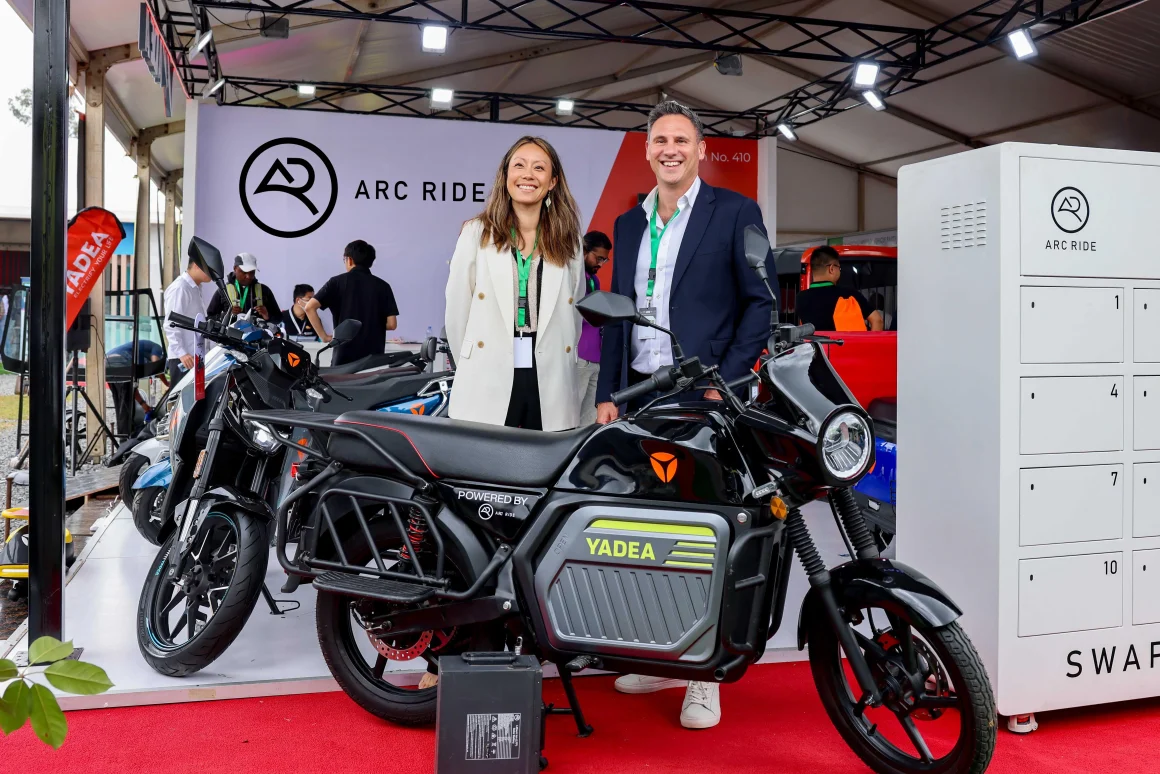
ARC Ride does not sell electric motorcycles or batteries outright. Instead, it rents access to both, a model known as Battery-as-a-Service.
Riders swap depleted batteries for charged ones at stations scattered across cities, a process that takes minutes rather than the hours required to recharge a battery from an outlet. The model sidesteps one of the biggest obstacles to electric vehicle adoption in Africa: the high upfront cost of batteries, which can rival the price of the vehicle itself.
The company’s swap stations are compatible with motorcycles made by Yadea, a Chinese manufacturer, and other original equipment makers. Two- and three-wheeled vehicles carry an outsize share of urban transport in African cities, making them a natural target for electrification.
Where the Money Is Going
ARC Ride plans to direct the new capital toward several projects:
- Adding 5,000 motorcycles to its fleet
- Expanding operations in Kenya, including Nairobi and the country’s western region
- Building out battery lifecycle management and swap-station uptime
- Developing automated swapping technology and smart charging tied to renewable energy
- Entering four new markets: Ghana, South Africa, Tanzania and Uganda
The funding structure pairs debt with equity — a common approach for infrastructure-heavy businesses that need capital for physical assets like charging stations, alongside growth funding for expansion.
Investors See a Bigger Opportunity
Executives at the investing firms framed the deal as a bet on African-built infrastructure rather than a single product.
Steve Beck, a co-founder of Novastar Ventures, said ARC Ride was addressing “one of the biggest barriers to electric mobility in Africa: reliable, extensive battery-swapping infrastructure.”
Ngetha Waithaka, a partner at Norrsken22, went further, suggesting the company’s network effects could position it as a default standard for the industry. “The unit economics are compelling, and the product is winning with riders,” he said.
Development finance institutions, which invest public and quasi-public money with both financial and social goals, cited climate and job-creation rationales. Chris Chijiutomi, head of Africa at British International Investment, said electric two-wheeler infrastructure was “a key pillar” of the institution’s climate strategy. Fabrice Perez, head of venture capital at Proparco, said the investment supported “climate resilience, economic inclusion, and the long-term competitiveness of African cities.”
A Broader Pattern
The deal reflects a wider trend of international capital flowing into African climate and mobility startups, often through blended financing that mixes commercial venture capital with development-focused debt and equity.
Musashi Seimitsu, a Japanese auto parts supplier, and Talanton, an African impact investor, both existing backers of ARC Ride, added to their positions in this round — a signal, the company said, of continued confidence from earlier investors.
ARC Ride was advised on the transaction by ICON Corporate Finance, a boutique firm focused on technology and infrastructure deals in emerging markets.
The Road Ahead
Jo Hurst Croft, ARC Ride’s founder, said the goal was to make electric motorcycles the default choice for commercial riders, ahead of gas-powered alternatives. “This funding allows us to scale the infrastructure required to support that transition and to do so at pace,” she said.
Whether that ambition is realized will depend on execution across a wider and more complex footprint. Kenya has served as the company’s proving ground; expanding into Ghana, South Africa, Tanzania and Uganda will test whether its swap-station model holds up amid different regulatory environments, electricity grids and urban layouts.
For now, the size of the round — and the mix of investors behind it — suggests growing institutional appetite for African-built climate infrastructure, even as many electric vehicle markets globally face slower growth and tighter funding.