





Heading into Ghana’s 2024 election, then-Presidential candidate John Dramani Mahama made Ghana’s young, online population a central target. His party’s manifesto promised a $3 billion push, in partnership with the private sector, to create digital jobs.
Twenty-one months into his term, the record is uneven.
The quick wins, those that needed only a signature or a negotiation, have been delivered. The promises that need money, infrastructure and sustained execution have not.
What Was Promised
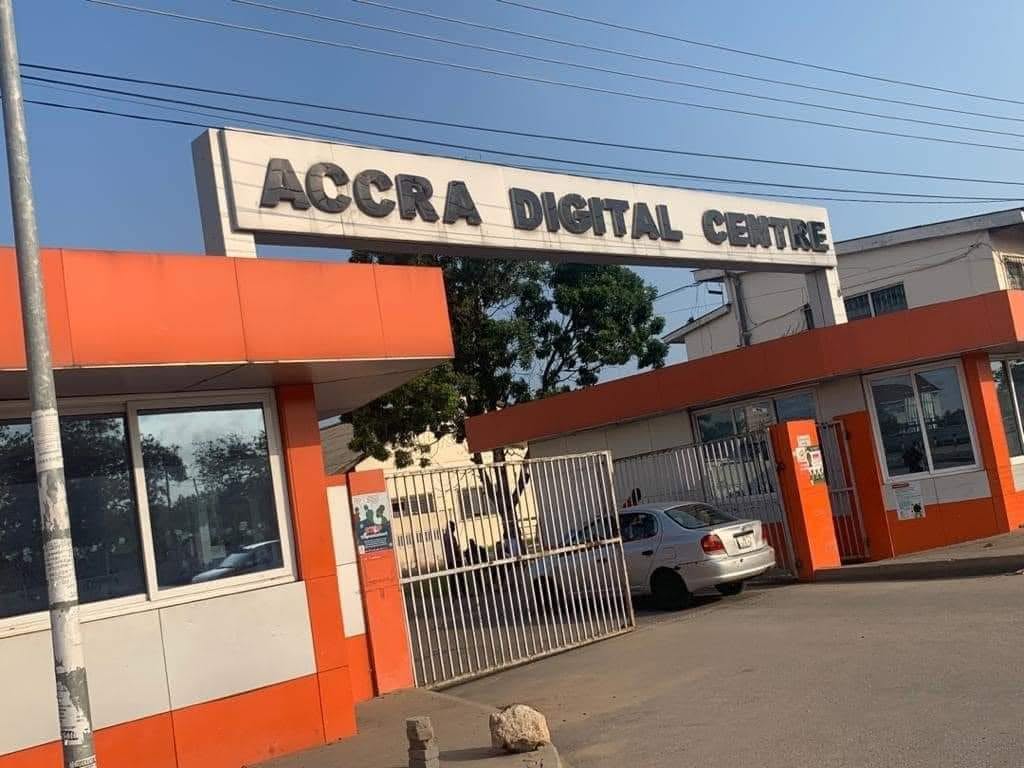
The President’s tech agenda had five main parts. The first was training one million young Ghanaians in coding and software skills. The second was building Regional Digital Centres, modelled on the Accra Digital Centre, to grow outsourcing jobs. The third was a $50 million FinTech Growth Fund for Ghanaian-owned fintechs.
At the NDC’s youth manifesto launch in August 2024, President Mahama added two more: lower data costs and free Wi-Fi in all schools and selected public places.
The Promises Kept
Ghana’s E-Levy, which put a tax on mobile money payments, is gone. Parliament repealed it, and the 1 percent charge on electronic transfers ended on April 2, 2025. This is the clearest win on the list.
Data costs have moved too, though not in the way most people expected. Communications Minister Samuel Nartey George said in September that talks with operators led MTN to add 15 percent more data to its bundles and Telecel and AT Ghana (AirtelTigo) to add 10 percent.
MTN also cut its unlimited 100 Mbps fibre package from GH¢987 to GH¢299 a month.
Bundle prices themselves did not fall. Customers get more data for the same money, which is a real but smaller gain.
One Million Coders: Launched, Far Behind
The One Million Coders Programme launched in April 2025, within the government’s 120-day window. Demand was strong, with tens of thousands of applications in the first days.
But delivery has been slow. As of August 2, 2026, the ministry reported 141,954 registered accounts, 27,782 active learners and 5,812 completed courses. That is fewer than 1 percent of the four-year target.
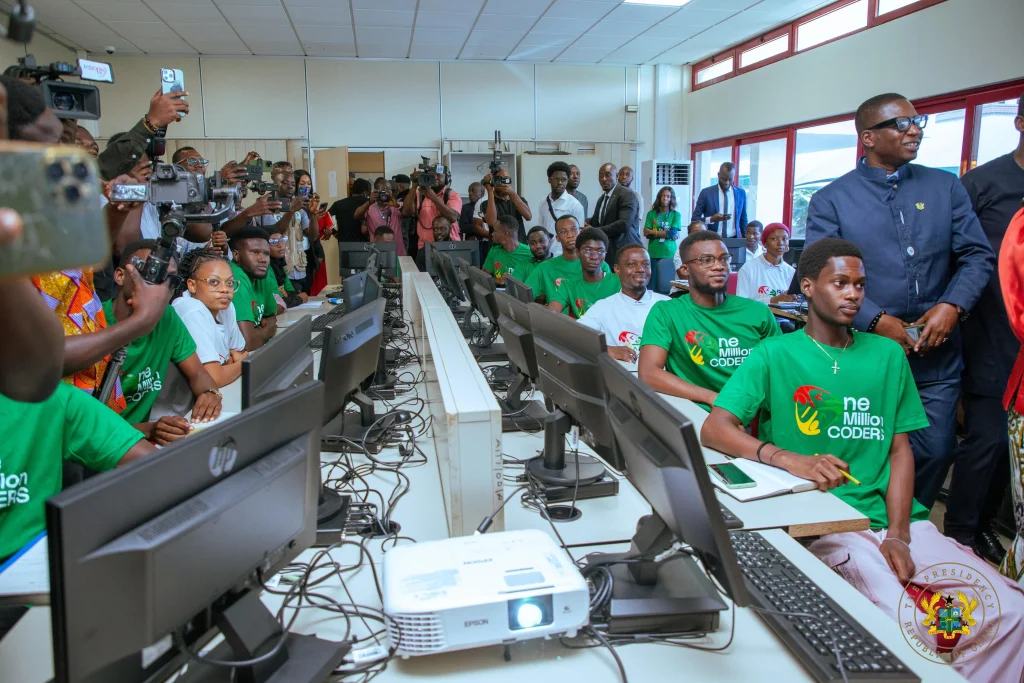
The gap with official targets is wide. In April, President Mahama said 300,000 people would be trained this year. With four months left, completions are about 2 percent of that figure.
The Communications Ministry has leaned on Google, MTN, Huawei and Telecel for support, and the minister cited “financial constraints” for going to Big Tech.
According to Communications Minister Sam George, although the Ministry initially proposed a US$1 billion budget over four years at US$1,000 per trainee, only GH¢100 million was allocated in 2025.
Free Wi-Fi in Schools: No Rollout So Far
Currently, there is no evidence that the government has launched or expanded free Wi-Fi in schools or public places since January 2025.
Education Minister Haruna Iddrisu has spoken repeatedly about connectivity. In June, he said the government intends to expand broadband and provide affordable devices to schools, as part of a GH¢2.5 billion infrastructure plan for 2026 and 2027.
Those were statements of intent, with no connectivity targets or dates. A national digital education policy is still at the assessment stage.
The government had inherited a damaged programme. Under the previous administration, Busy Internet was contracted to connect 717 senior high schools and hundreds of education offices.
A 2023 Africa Education Watch survey found the service failing in about three in four sampled schools. The Auditor-General’s 2024 report found the Ministry of Education paid the contractor more than GH¢430 million, including for long periods when no service was provided.
The status of that contract is unclear. The Ministry of Education has not said publicly whether it was cancelled, renegotiated, or is still being paid.
The $50 Million Fintech Fund Regional Digital Centres: No Public Record
During his campaign, President Mahama laid out a plan to create a $50 million Fintech Growth Fund in 2025.
At the time of this publication, Tech Labari could not find any government document confirming the fund has been capitalised, who manages it, or whether any company has received money from it.
Before the election, analysts warned that Ghana’s tight finances could stop the fund from launching. The government has since prioritised fiscal repair, and the fund has not appeared in the ministry’s public accountability updates.
According to the President’s party manifesto, there was a pledge to create new Regional Digital Centres.
At the time of this publication, there has not been any opening since the government took office.
What Comes Next
Promises that cost the state little, such as scrapping a tax or pressuring telecom operators, were done fast.
However, promises that need capital and operating capacity have stalled or slowed.
The government has two years left to show results, and several questions remain open.
How will the state achieve its One Million Coders target with its current progress? Does the fintech fund exist? What happened to the school Wi-Fi contract? When and where is the first regional digital centre going to be commissioned and opened?
Tech Labari will continue reporting on this story as more information becomes available.