




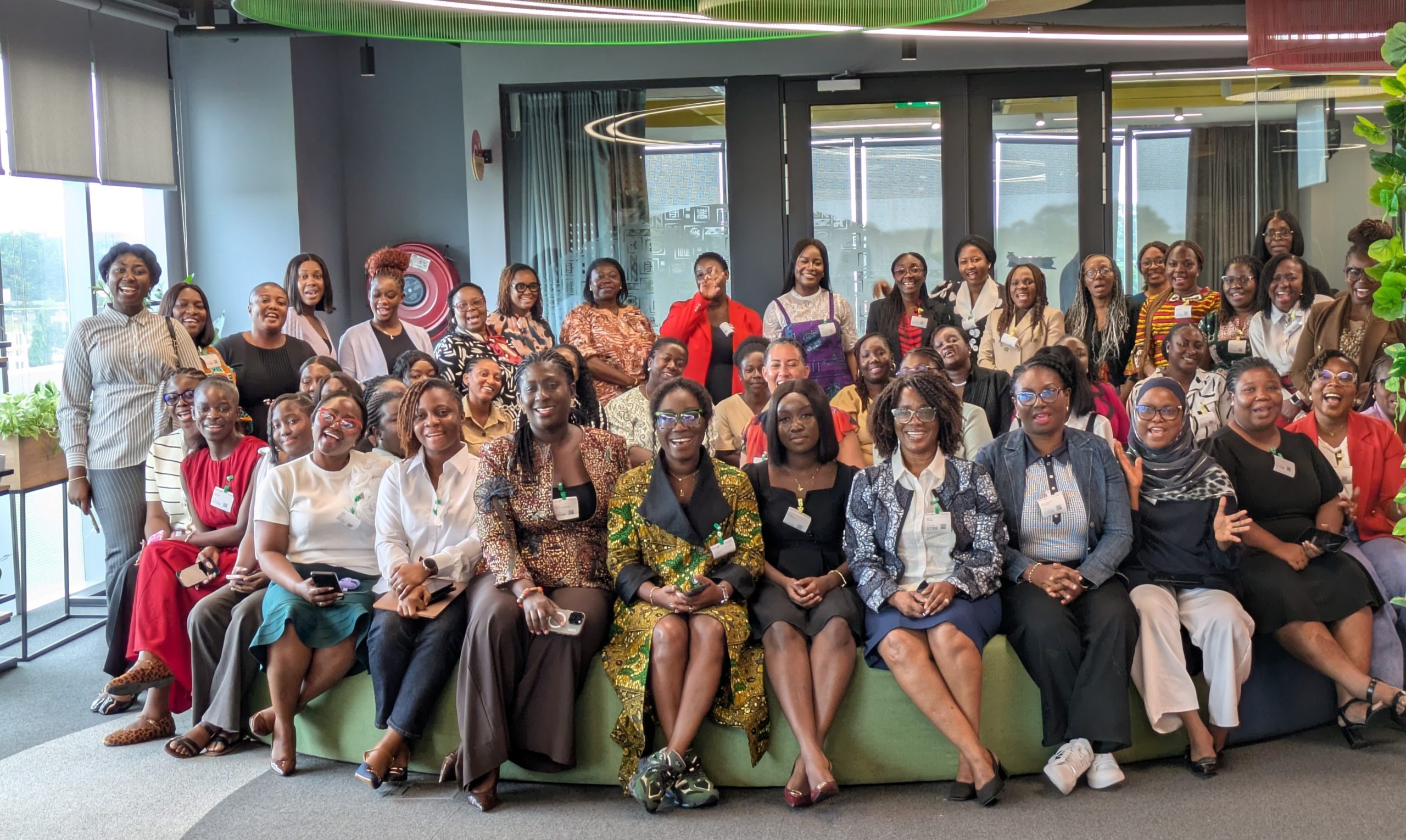
ACCRA, Ghana — On Wednesday, July 8th, dozens of women professionals working across Ghana’s communications sector — telecom and postal operators, regulators, Infrastructure and technology solutions providers – gathered at the Google AI Community Center here to learn more about AI and its application.
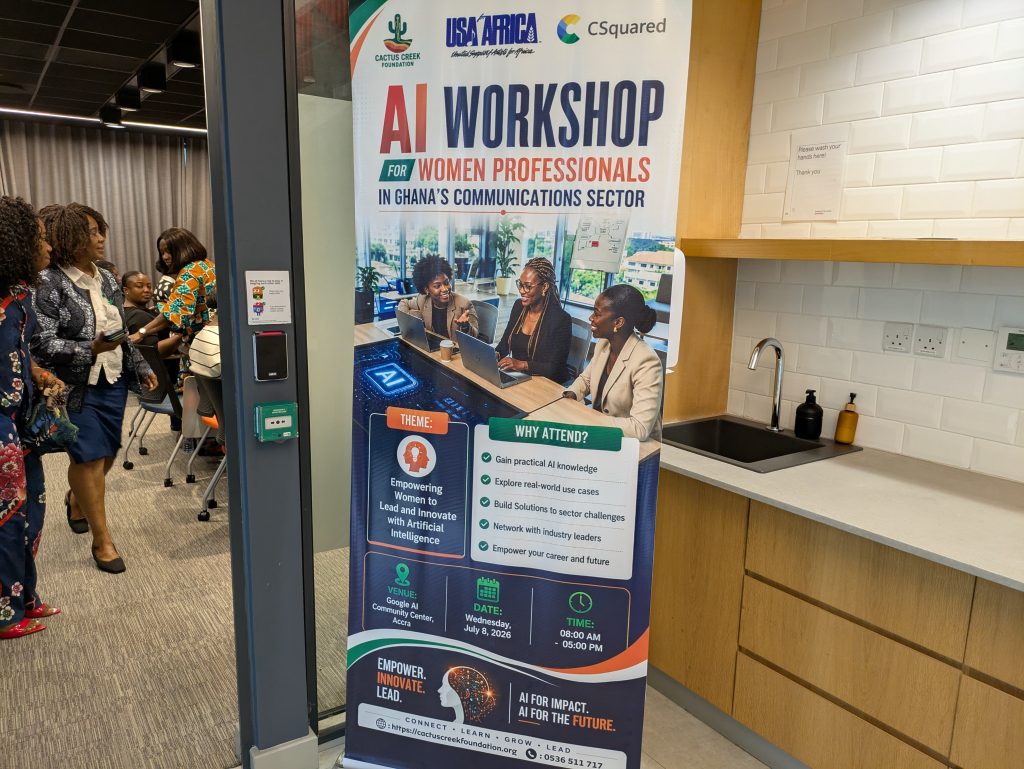
The event, an “AI Workshop for Women Professionals in Ghana’s Communications Sector,” was organized by the Cactus Creek Foundation alongside USA for Africa and CSquared.
Its premise was straightforward: women remain underrepresented in the decisions about how AI is deployed for policy, commercial, regulatory, and technical decisions across various industries, and that gap could widen as the technology becomes more central to the sector’s operations.
“Empowering Women to Lead and Innovate”
The event MC was Ms. Reginal Honu, CEO of Soronko Academy.
The workshop’s theme — “Empowering Women to Lead and Innovate with Artificial Intelligence” — was more than a banner line. The agenda, which ran from 8 a.m. to 5 p.m., moved participants from foundational AI literacy in the morning to a hands-on session by early afternoon, before closing with sessions on ethics and job creation.
The workshop aimed at “empowering” underrepresented groups often stops at awareness-raising.
Who’s in the Room
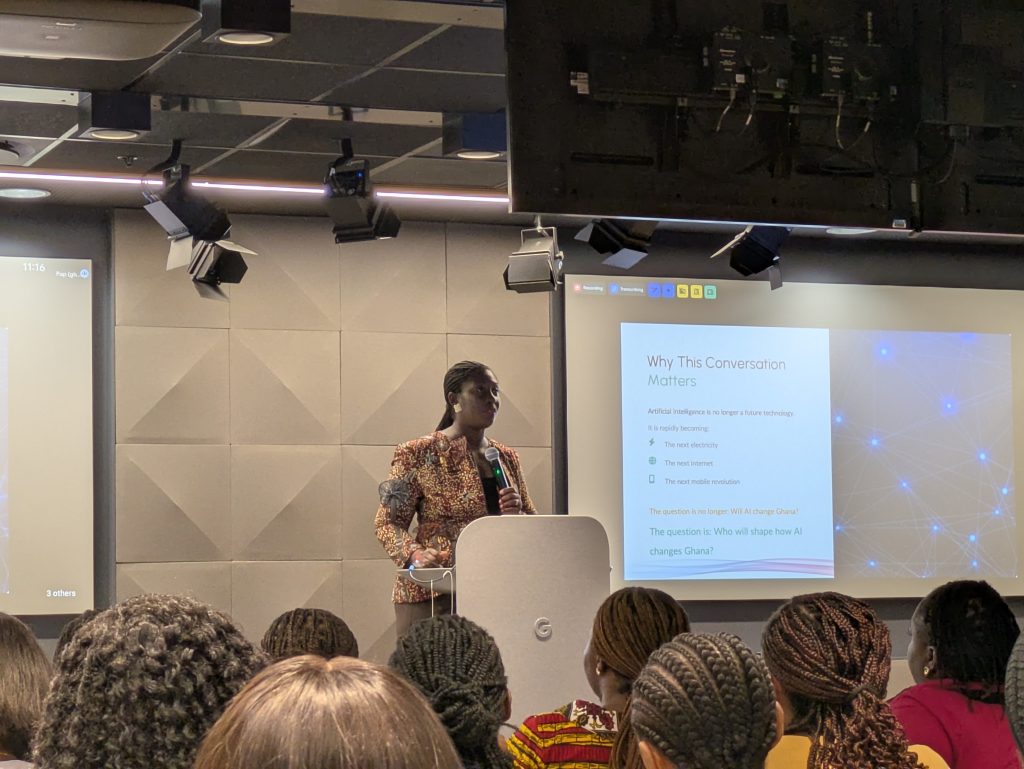
The speaker list featured a cross-section of Ghana’s tech and telecom establishment. Mavis Ampah, who chairs the board of the National Communications Authority and leads the Cactus Creek Foundation, opened the day by providing the context for the workshop by emphasizing the link between technology and leadership, and highlighting the importance of AI as an accelerator for women professionals.
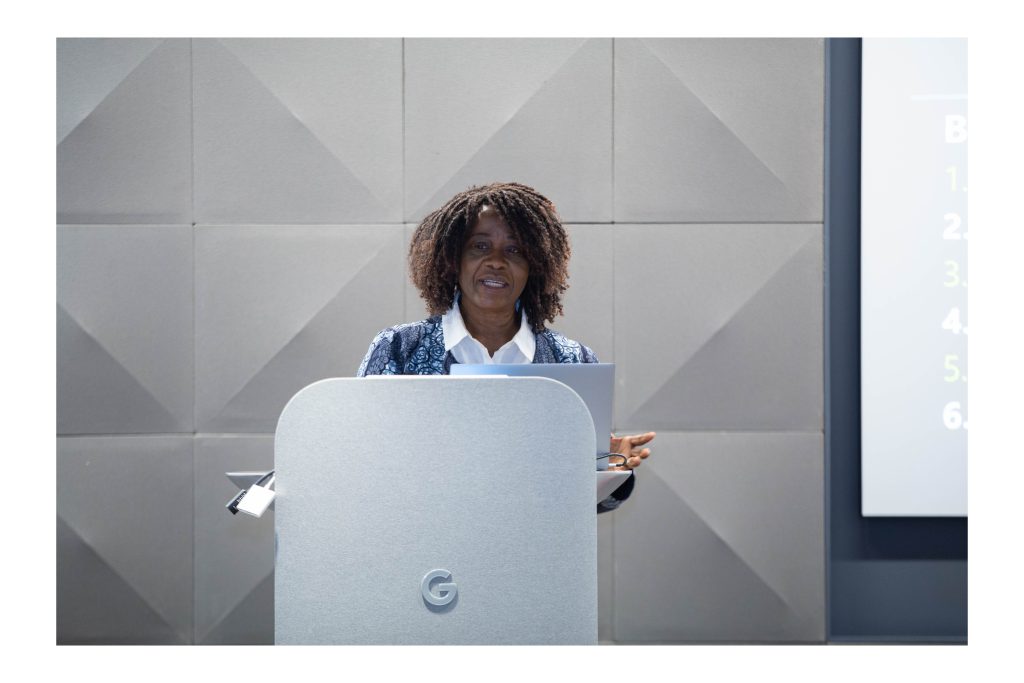
Sylvia Owusu-Ankomah, chief executive of the Ghana Chamber of Telecommunications, followed with a briefing on the country’s AI strategy for 2025 to 2035. She broke down components of the bill and what the government hopes to achieve in the next few years in terms of AI development.
She also highlighted the many reasons why women in the communications sector should be interested in AI, including for improving service quality and the development of policy and regulatory frameworks.
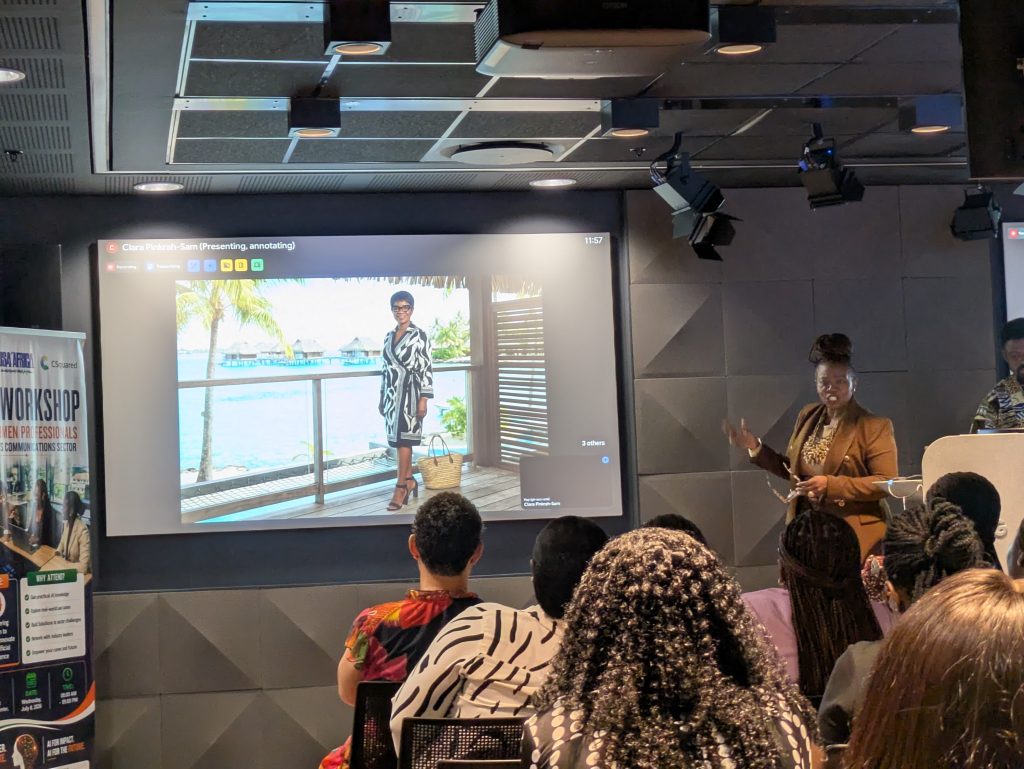
Clara Pinkrah-Sam, an ICT consultant and CEO of Clatural, demonstrated a practical example of using AI for her fashion business to the audience. She used a practical example of one of the speakers to demonstrate how AI can visualise a person in a selected outfit.
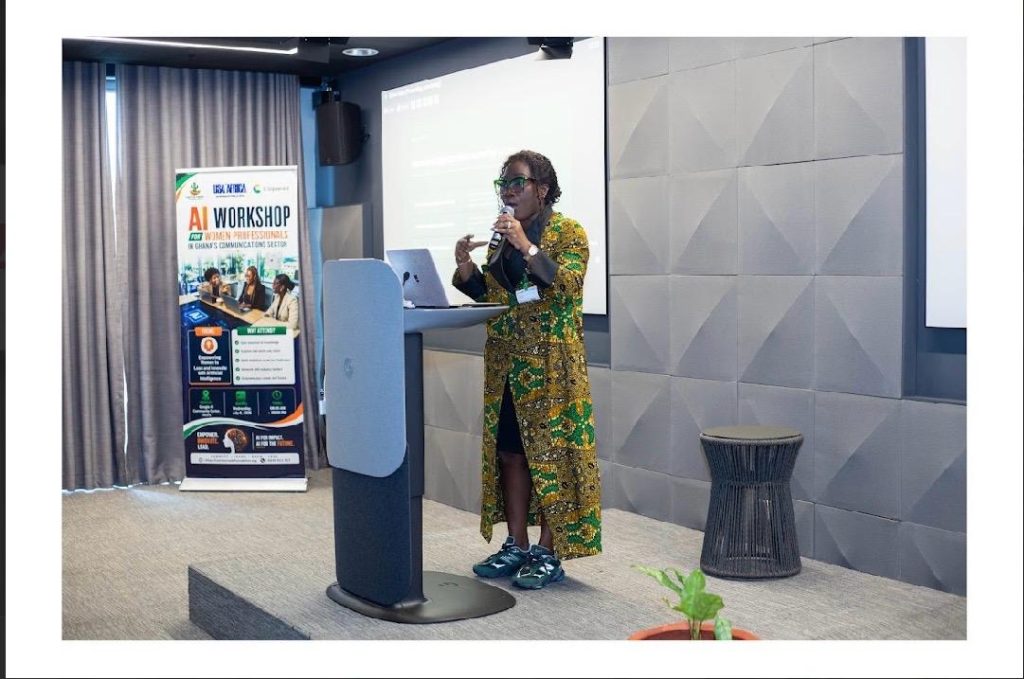
Deborah Asmah, Chief Marketing Officer of Npontu, demonstrated the use of AI tools for businesses and industries. She showed off a tool called Snwolley, an African-based AI tool which can help businesses and SMEs optimise and automate their workflows.
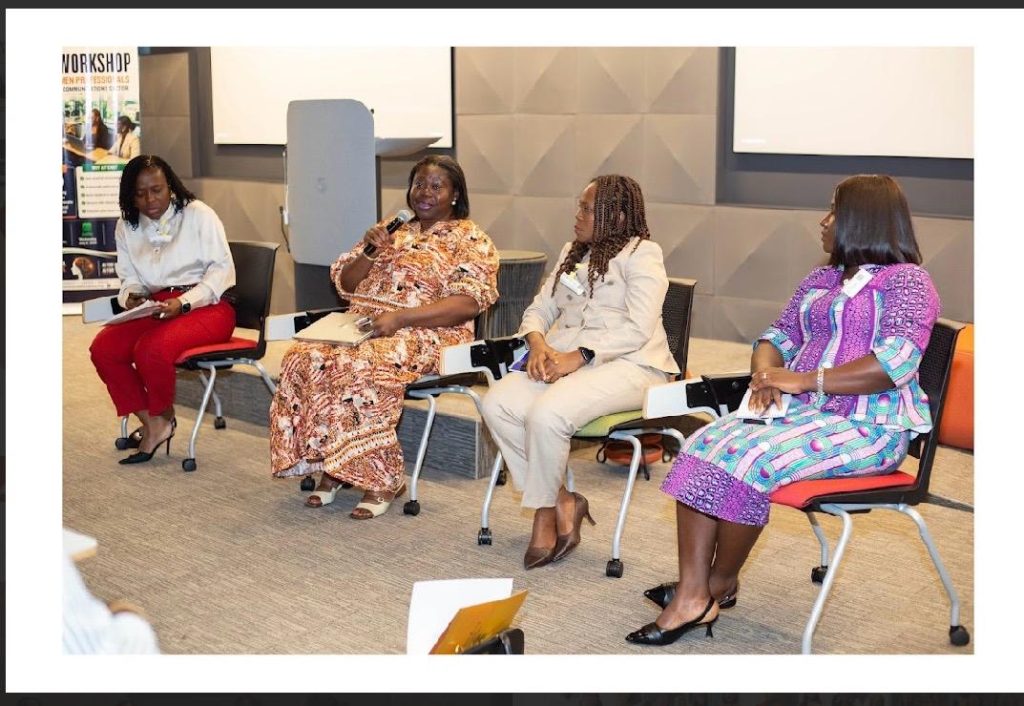
Other presentations by guest speakers included Louisa Ama Sosu (Senior Manager for Network Performance and Service Level Agreement at MTN), Nana Akosua Acheampong (Manager, Regulatory Administration at NCA), and Rita Sraha (CEO of Ghana Post), who all demonstrated how they effectively used AI in their line of work, how it’s improving efficiency in their day-to-day operations and the bigger potential to transform the future of their work.
Ethics and Livelihoods Get Equal Billing
In the afternoon, participants engaged in a hands-on exercise after a presentation on prompt engineering by Regina Honu of Soronko Academy. The lively hackathon focused on brainstorming and solutions for various policy challenges using effective AI prompts.
A session on “Ethics, Trust & Responsible AI” was led by Teki Akuetteh, board chair of Ghana’s Data Protection Commission — placing data privacy and accountability questions on the same agenda as technical upskilling.
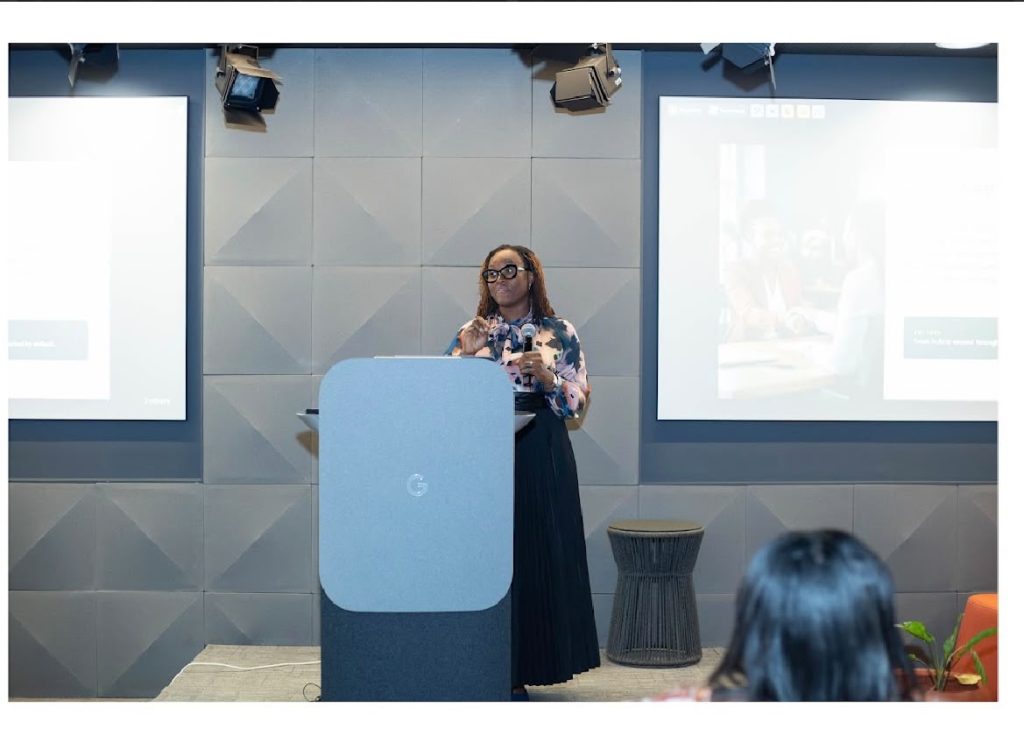
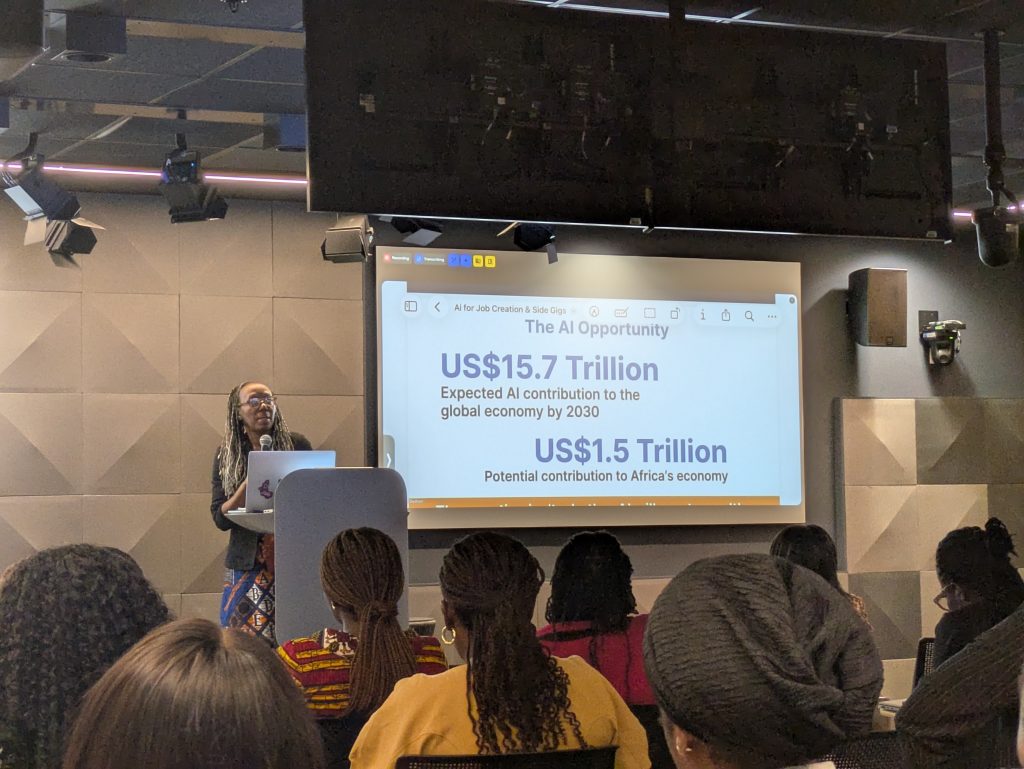
A separate session, “AI for Job Creation & Side Gigs,” led by Ama Dadson, CEO of Akoo Books, pushed in a different direction — toward AI as a source of new income streams rather than a threat to existing ones.
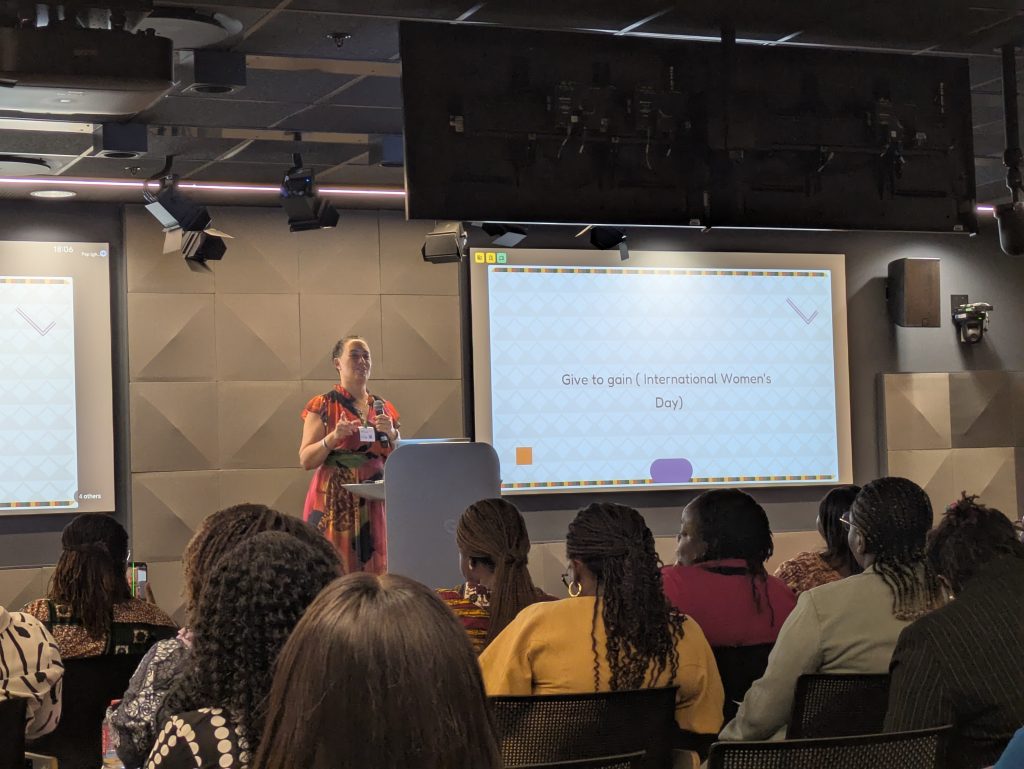
The closing conversation, on “the next chapter for women in AI,” was led by Estelle Akofio-Sowah, West Africa Regional Manager for CSquared.
Ms Akofio-Sowah summarized the key nuggets and takeaways from the workshop, and emphasized the importance of women being part of the conversation and shaping AI strategies. She also encouraged women to give back to their communities.
The Bigger Picture
This workshop was a single-day event that brought together about 50 professional women, but it brings to the fore a larger and more contentious debate about Africa’s digital future: whether the continent’s telecom and tech sectors will diversify their leadership as AI adoption accelerates, or whether the technology will simply calcify existing hierarchies and gaps.