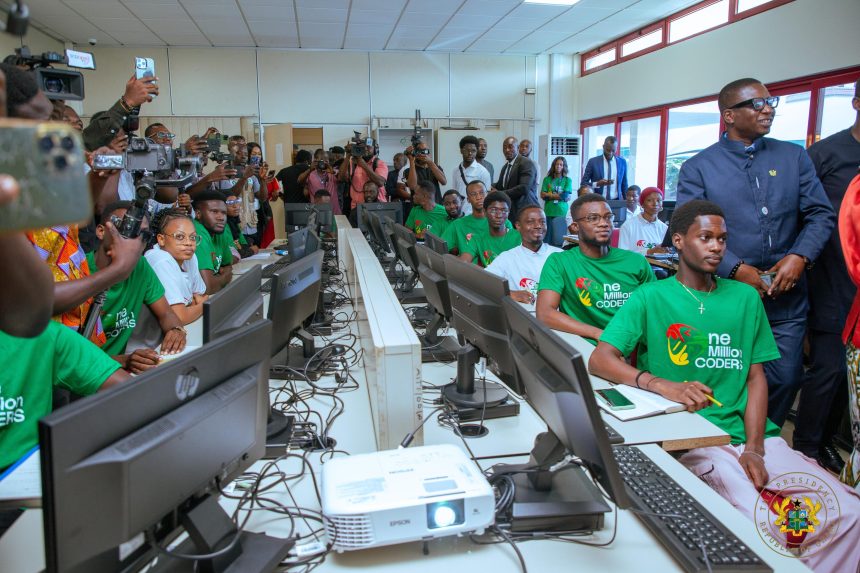
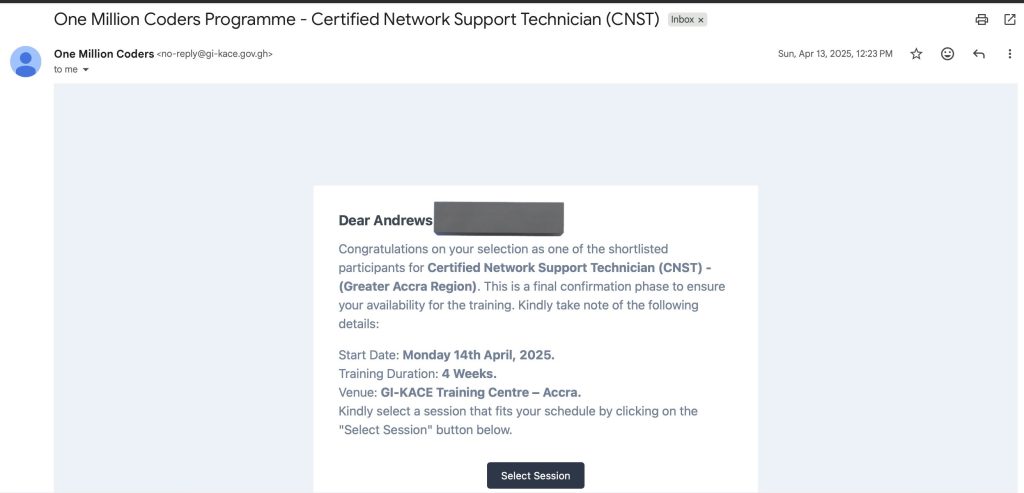
When President John Mahama’s government launched the One Million Coders Programme on April 16, 2025, it felt like a turning point. Young Ghanaians registered online, sharing screenshots of their application confirmations.
The program promised free training in coding, AI, cybersecurity, and web development — a bold bet that digital skills could crack the country’s stubborn youth unemployment crisis.
Less than a year later, the dream looks shakier than the government is letting on.
The Government of Ghana launched the initiative as a purpose vehicle to provide access to skills, with those skills serving as a launchpad toward jobs. While the initiative is commendable and full of promise, it has so far lacked a clear roadmap in its implementation and a clear policy framework for measuring real impact.
According to the government, the programme received an overwhelming response, with over 90,000 applications within 48 hours of the registration portal opening.
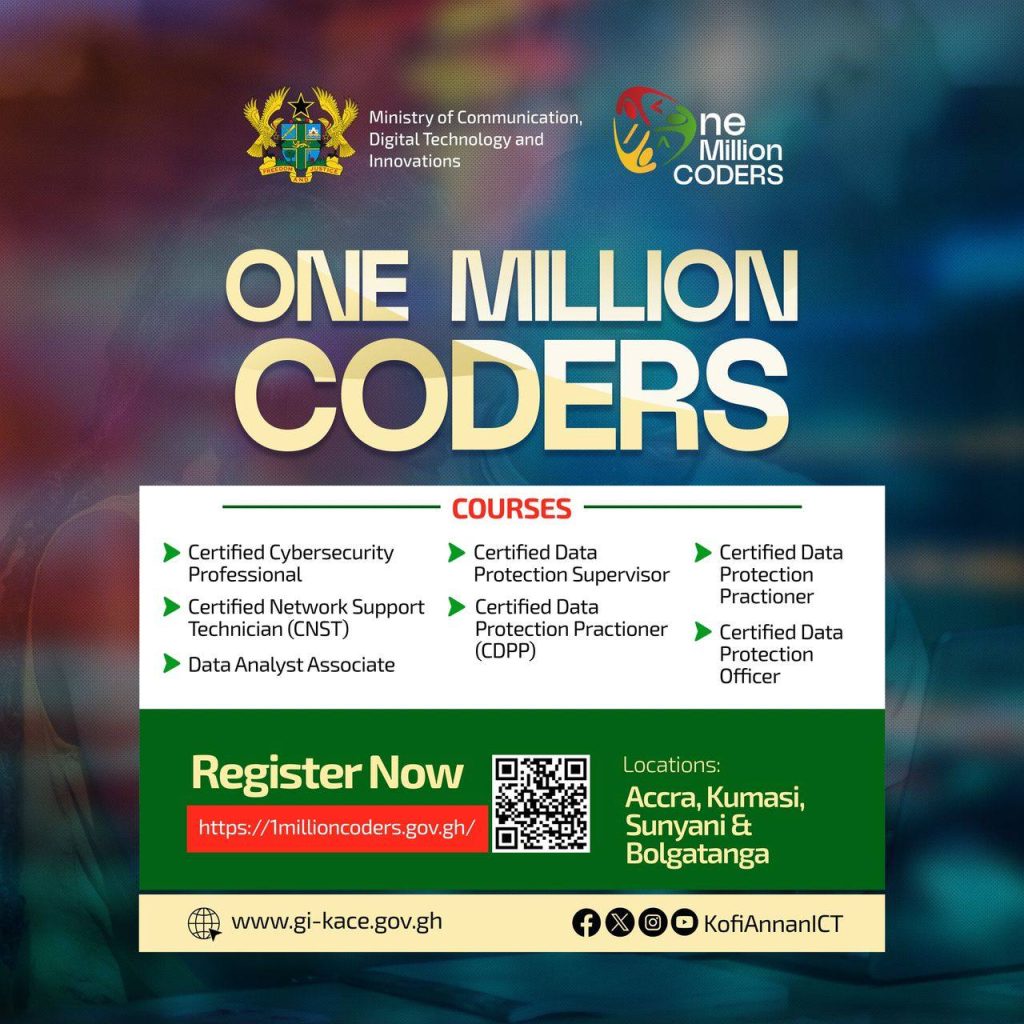
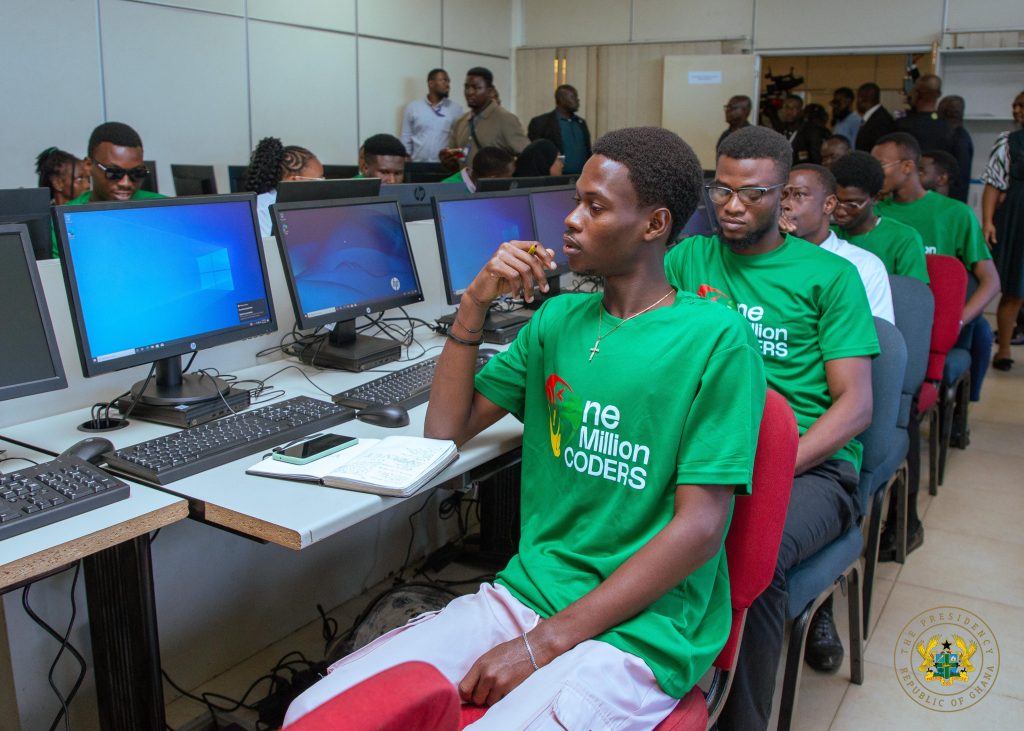
By August 2025, 859 participants had completed the training in the pilot phase, with 52% being female.
But to leap from this modest sample to a target of 400,000 trainees in a single year will require a lot of push. The government has now set exactly that target for 2026.
A Website That Doesn’t Work
The initiative was launched with fanfare at the Kofi Annan Centre of Excellence in ICT in Accra, promising free training through an online platform through which participants would register, take an aptitude test, and begin remote learning before being assigned to in-person training centres nationwide.
By November 2025, that platform was effectively “offline”. An independent technical assessment found the site lacked a valid SSL certificate, failed to respond to secure connections, and showed signs of abandoned infrastructure — all months after the official launch.

One registrant, Jehiel Britstot Houmanou, described the experience bluntly: “We were told we’d start classes soon after the launch,” he said.
Everyone had been excited. Then — nothing.
The Laptop Problem
The controversy doesn’t stop at slow rollout. Mpraeso Member of Parliament Davis Opoku Ansah raised concerns in Parliament about the procurement of laptops for the programme, noting that the devices cost approximately 14,000 Ghana cedis each — and questioning whether competitive tendering was applied and what specifications justify that price.
When the prevailing market price for high-specification coding machines in tech hubs like Osu hovers around 10,000 GHS, the reported state expenditure of 14,000 GHS per unit represents a 40% markup. Twenty thousand laptops have already been procured under this pricing.
Then there’s how the money is being moved. The MP noted that available information suggests the National Communications Authority may have been directed to finance the procurement of laptops for the programme.
He stated that this arrangement raises serious concerns under the Public Financial Management Act, which requires that public funds be committed and spent strictly within an approved budget authorised by Parliament.
“Parliament cannot effectively exercise its oversight responsibility if major government programmes are financed through arrangements that are not transparently presented to this House, ” he stated.
In response, the government maintains that the unit price of the laptops reflects their high-end specifications required for advanced coding, artificial intelligence (AI), and cybersecurity training.
Officials have also denied any breach of the Public Procurement Act. They assert that where single-sourcing or restricted tendering was used, it was done with the necessary approval from the Public Procurement Authority (PPA) due to the “urgent nature” of the programme’s rollout.
The Bigger Question
Even if the execution improves, critics argue that the program is solving the wrong problem. Without a structured framework, Ghana risks oversaturating the market with unemployed coders.
The warning comes with a cautionary tale attached: in 2017, the UAE launched a similar One Million Arab Coders initiative. The program successfully trained over a million people, but local job markets struggled to absorb them.
Many junior-level coders found themselves competing for the same limited roles, and with an oversupply of entry-level programmers, salaries dropped.
The Communications Minister, Sam George, has remained publicly committed. He said the goal is not just to train a million people, but to ensure that after training, they can secure employment or remote jobs with internationally recognised certifications.
The government has also brought in private sector partners — including Huawei, MTN, AWS, and Oracle — to provide specialized ICT training and boost digital job creation.
Whether that’s enough to rescue a program already stumbling before it’s truly begun is the question Ghana’s young, digitally-hopeful population is waiting to have answered.
The One Million Coders Programme website, onemillioncoders.gov.gh, was non-functional at the time of publication.