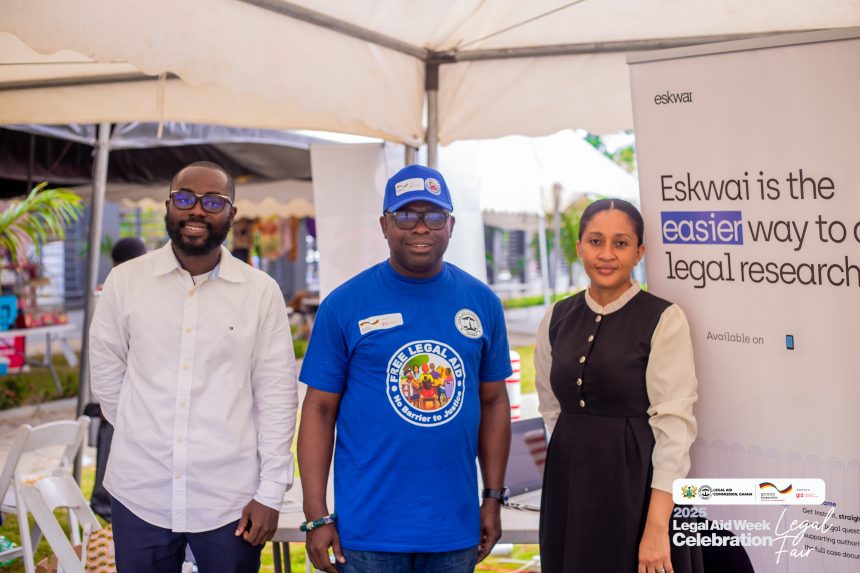
Kwame AI, the Ghanaian legal technology company behind the Eskwai platform, has launched a pro bono program that will give the Legal Aid Commission of Ghana free access to its AI-powered legal research and drafting tools — a move the company says is designed to tackle one of West Africa’s most stubborn justice crises.
Why it matters
Ghana has roughly 45 full-time legal aid lawyers serving a population of more than 30 million people. That ratio — one lawyer per roughly 667,000 citizens — means that for most Ghanaians who cannot afford private counsel, justice is effectively out of reach.
AI tools that multiply lawyer productivity could be the fastest path to closing that gap.
By The Numbers
- 30M+Ghana’s population
- 45 – Full-time legal aid lawyers
- 190 – Staff gaining Eskwai access
The big picture
The Legal Aid Commission is a statutory body mandated to provide free legal services — advice, mediation, and courtroom representation — to Ghana’s poorest and most vulnerable citizens. But chronic underfunding and a severe shortage of qualified staff have long undermined that mandate.
Under the new Eskwai Pro Bono initiative, all 190 of the Commission’s staff — including lawyers, alternative dispute resolution officers, and administrative personnel — will receive free access to Eskwai’s suite of tools, which includes AI-assisted legal research, document drafting, and document review against Ghana’s case law and legislation databases. Kwame AI says it will also provide training and ongoing technical support.
What they’re saying
“Through the use of this AI tool, we see great opportunities to strengthen our mandate to provide free legal assistance and bring justice to the doorstep of those who are most in need.“— Edmund Foley, Executive Director, Legal Aid Commission, Ghana
Between the lines
The partnership is as much a strategic signal as it is a philanthropic gesture. By embedding Eskwai inside a government institution, Kwame AI gains a high-profile, mission-driven reference customer at no revenue cost — the kind of credibility that is hard to buy in a market where trust in AI among legal professionals remains fragile.
Zoom out
Access-to-justice gaps are not unique to Ghana. Across sub-Saharan Africa, legal aid systems are chronically under-resourced relative to population need. Kwame AI’s bet is that AI-driven efficiency gains — faster research, quicker drafting, reduced administrative burden — can act as a force multiplier for the small number of lawyers who do serve indigent clients, without requiring governments to dramatically increase legal aid budgets in the near term.
Whether the technology delivers on that promise at scale will depend on how effectively lawyers integrate it into real caseloads — and whether the quality of AI-assisted output holds up under the scrutiny of Ghanaian courts.