




In Ghana, a basic smartphone can cost nearly a full month’s salary for a low-income worker. That single friction point — the upfront cost — has kept millions of Ghanaians locked out of the digital economy.
M-KOPA Ghana, the local arm of the Pan-African fintech, is betting that removing it changes everything else downstream.
The numbers from the company’s latest impact report suggest the bet is working. Since launching in 2021, M-KOPA Ghana has extended over GHS 1.2 billion in credit to more than 550,000 customers across all 16 regions of the country.
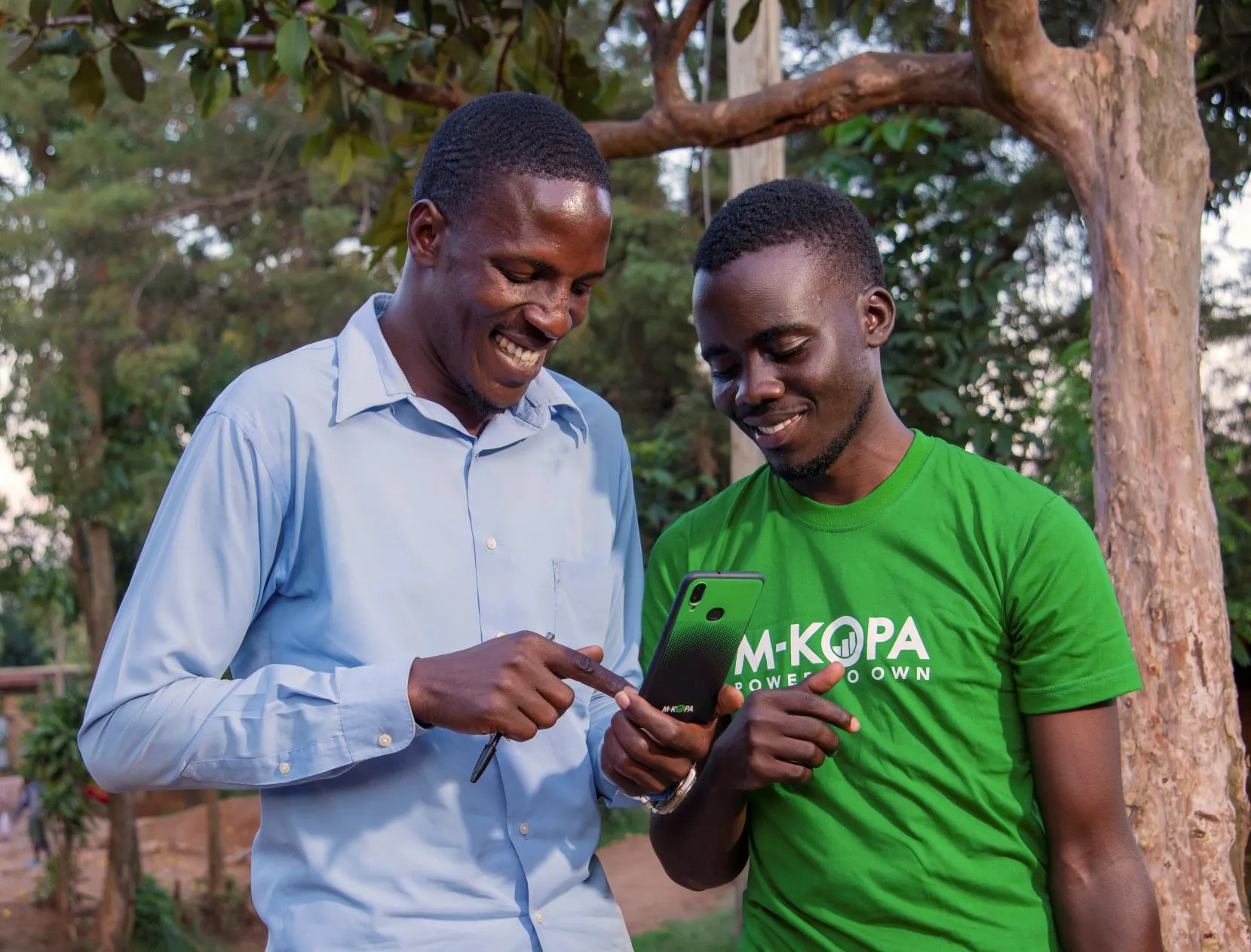
Its model is straightforward: customers pay a small deposit, take a smartphone home the same day, and repay through small daily instalments via mobile money. No credit history required. No bank account needed. Just consistent payments that, over time, build both a device and a financial identity.
More Than a Phone
The product has evolved well beyond hardware. In January 2025, M-KOPA Ghana rolled out “More than a Phone” — a bundled platform that embeds affordable data access, device protection, and health insurance directly into every handset.
The health insurance component, delivered through a partnership with Turaco, is arguably the report’s most striking finding.
Sixty-seven percent of M-KOPA Ghana’s insured customers said they had never had health coverage before. For 43% of female customers, the insurance alone was the reason they chose an M-KOPA device. The impact isn’t abstract: customers describe using the hospital cash cover to pay bills during illness while still covering their daily expenses — a financial cushion that previously didn’t exist for them.
The logic of bundling insurance with a phone purchase is worth pausing on. Traditional insurance products struggle with low uptake in markets where trust is limited, and premiums feel optional.
By folding coverage into an instalment plan customers are already committed to, M-KOPA sidesteps that problem entirely.
Income, Not Just Access
The report takes pains to argue that the M-KOPA phone isn’t just a communications device — it’s a productivity tool. Fifty-five percent of customers use their device for income generation. Fifty-four percent say they’re earning more since the purchase. Seventy-six percent report an improved quality of life.
Those figures will invite some scepticism. Self-reported improvement data has obvious limitations, and the line between correlation and causation is always tricky in impact reporting. But the underlying mechanism is plausible: in markets where mobile money is the primary banking system and mobile commerce is growing rapidly, being unconnected is a genuine economic handicap.
Against that backdrop, the GSMA’s estimate that an entry-level smartphone costs up to 95% of a low-income earner’s monthly wages in Sub-Saharan Africa isn’t just a development statistic — it’s the structural problem M-KOPA is trying to price its way around.
The Sales Force Question
One of the less-discussed levers in M-KOPA’s model is its distribution network. The company operates through more than 3,000 direct sales agents across Ghana, and the report signals a deliberate push to make that workforce more gender-inclusive. Women now account for 31% of the agent network, up from 26% in 2024.
The company has also piloted stationary kiosks as an alternative to traditional field sales, specifically to address safety concerns raised by female agents. Eighty-four percent of agents say they are earning more since joining, and 93% report an improved quality of life — figures that track closely with what customers themselves report.
It’s a model that generates economic returns at two levels simultaneously: for customers buying devices and for agents selling them.
The Local Economy Angle
M-KOPA Ghana’s footprint extends beyond its customer base. In 2024, the company contributed GHS 46 million in annual tax revenue and spent over GHS 382 million in local procurement — numbers that matter in a market increasingly scrutinised for how much fintech growth actually stays in-country.
The company directly employs 254 people, 37% of them women, and brought in its first cohort of National Service Scheme participants in 2025, retaining 80% after the programme ended.
The broader context: 76% of Sub-Saharan Africa’s population still does not own a smartphone. M-KOPA’s Ghana operation is, by its own figures, growing fast. But the addressable market is vast enough that even at 550,000 customers, the company is still operating at the margins of the problem it is trying to solve.