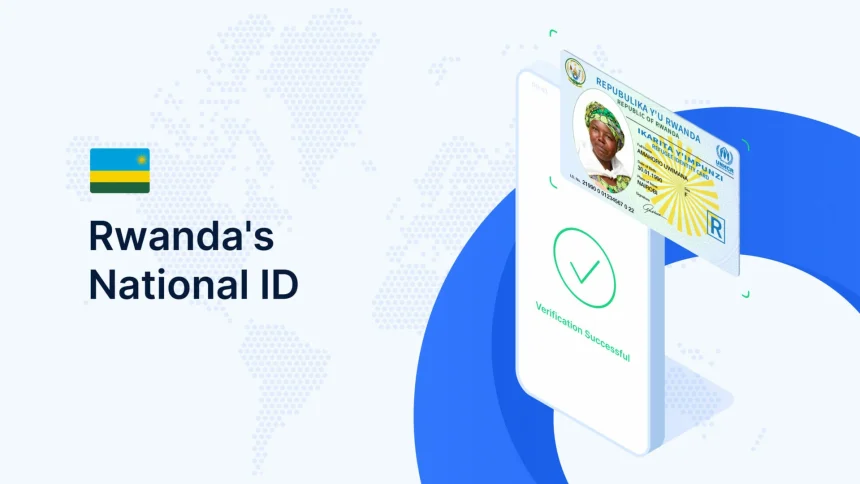
Rwanda is accelerating its push toward a “cashless and paperless” economy, targeting 2027 for the full implementation of its Single Digital ID (SDID) system.
Why it matters
The SDID is the backbone of Rwanda’s Digital Public Infrastructure (DPI). By 2027, this digital credential will be the primary tool for accessing both government and private sector services, from banking and healthcare to telecommunications.
The state of play
- Progress: Authorities report that 1.5 million people have already been enrolled via biometric registration.
- Deadline: The 2027 target aligns with the country’s legislative framework and the second phase of the National Strategy for Transformation (NST2).
- Urgency: A special mobile registration campaign in Kigali is set to end April 2, after which citizens must visit sector offices to register.
How it works
The system allows for both online and offline biometric authentication. Josephine Mukesha, Director General of the National Identification Agency (NIDA), notes that the SDID is designed for universal inclusion, covering:
- Newborns
- Refugees
- Stateless persons within Rwanda’s borders
The big picture
The SDID isn’t just a card; it’s an economic engine. Ambassador Innocent B. Muhizi, former head of the Rwanda Information Society Authority, argues that DPI converts “informality into verifiable economic presence.”
Combined with the Irembo gov-tech platform and eKash payment system, the ID allows citizens to use their digital history—with consent—as collateral for credit and insurance.
The friction
There is a “carrot and stick” approach to adoption. While the government highlights streamlined services and better data privacy (giving users consent-based control over their data), Mukesha warned that citizens without the ID may eventually struggle to access essential services.
Between the lines: This massive digital overhaul is getting a major financial boost from abroad. The project is part of the Rwanda Digital Acceleration Project (RDAP), backed by roughly $200 million in World Bank funding.
Source: Biometric Update