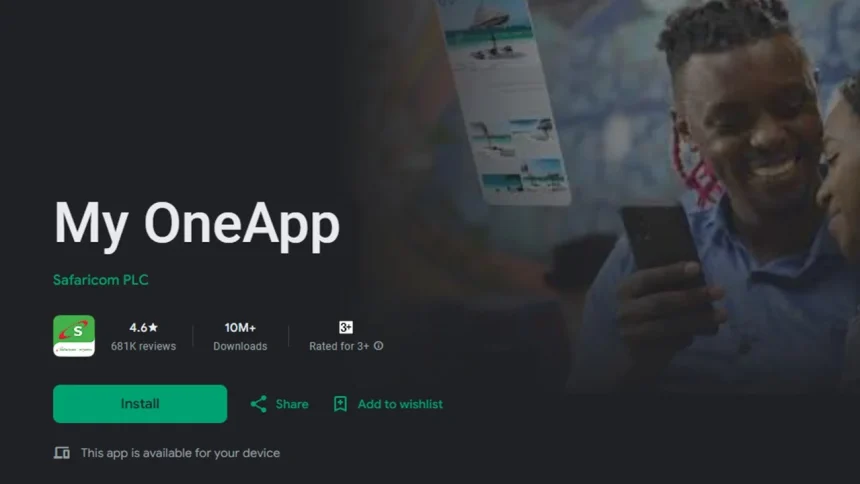
On April 3, millions of Kenyans opened their M-Pesa app and found something they didn’t ask for. An update had quietly pushed them into a new platform called My OneApp — Safaricom’s ambitious merger of its two flagship apps.
No warning SMS. No email. No push notification. Just a new app and a new interface.
Within hours, TikTok was filled with videos of confused users unable to log in. On X, the complaints piled up fast.
“Whoever came up with the new app idea was a big fool and everyone involved is an idiot,” one user posted, tagging Safaricom’s official account.
By April 4, the company was publicly admitting that login issues were widespread and that “most of the financial mini-app services are not working.”
For any app, that would be bad. For an app that millions of Kenyans use to pay rent, school fees, and buy food, it’s a disaster.
What M-Pesa Is — and Why It Matters
Launched in 2007, M-Pesa is arguably Africa’s most consequential fintech product. It helped push Kenya’s financial inclusion rate from 23% to 84% in under two decades — moving money from physical cash into the phones of ordinary Kenyans, including those without bank accounts.
Today, M-Pesa has roughly 35 million users. Safaricom, the Nairobi-based telecom that owns the platform, has built an entire digital economy on top of it: lending, insurance, investments, merchant payments, and now even stock trading through a tool called Ziidi Trader, which captured 55 percent of the Nairobi Securities Exchange’s share orders on its launch day in February.
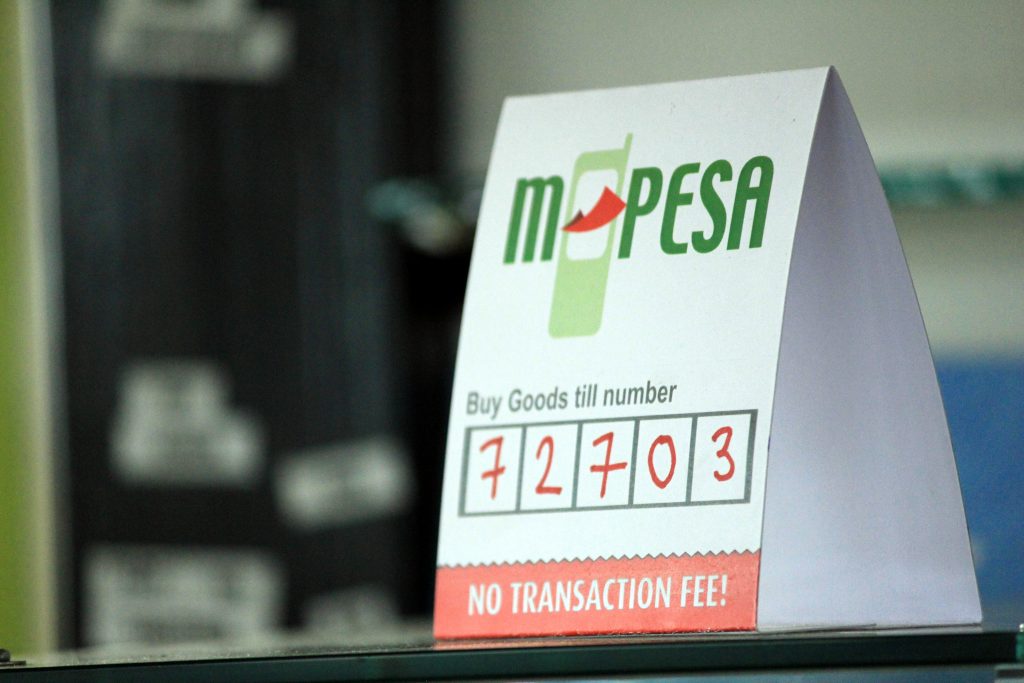
For years, Safaricom ran two separate consumer apps: the M-Pesa app, with 6.7 million users, and the MySafaricom app, with 2.8 million.
The plan to merge them into one platform — My OneApp — was unveiled at Safaricom’s Decode 4.0 engineering summit on April 2. It is the centerpiece of what the company is calling its FinTech 2.0 strategy: a push to evolve from a telecom into a full-scale technology platform, a digital “operating system” for everyday Kenyan life.
What Went Wrong
The complaints users reported fall into a few distinct categories, each reflecting a different failure of the rollout.
Saved data, gone. The new app did not migrate users’ saved favourites — the paybill numbers, till numbers, and phone numbers they had spent months or years storing.
For people who pay the same landlord, the same power company, and the same school every month, losing that data isn’t a minor inconvenience. It’s a breach of the trust those users placed in a platform they depend on daily.
Locked out abroad. My OneApp requires a Safaricom SIM card, Safaricom mobile data — not Wi-Fi — and no active VPN to complete the first-time login. That combination effectively locked out diaspora users and Kenyans travelling internationally.
For a payments platform, having a subset of your users unable to access their money at all is a serious product failure, not a minor edge case.
Basic transactions breaking. Beyond login issues, users reported inability to view transaction history, lagging interfaces, and broken financial mini-apps. Some users suspected the friction around sending money was deliberate, pointing to pop-up ads within the app as a possible revenue motive. Safaricom has not directly addressed that claim.
No advance notice. Perhaps most strikingly, Safaricom gave its 6.7 million most digitally active users no warning that a fundamental change to their primary financial app was coming. The migration simply happened.
The Competitive Stakes
In 2019, a clumsy app launch would have been a PR inconvenience for Safaricom. M-Pesa controlled over 97 percent of Kenya’s mobile money market. The company could absorb almost any friction because users had nowhere else to go.
That era is ending. M-Pesa’s market share has dropped from 97.1 percent in December 2023 to 89.0 percent by the end of 2025. Airtel Money has climbed from 2.9 percent to 11.0 percent in the same period.
Banks like Equity Group and KCB have been upgrading their mobile platforms specifically to chip away at Safaricom’s dominance in payments and savings.
What My OneApp Is Supposed to Be
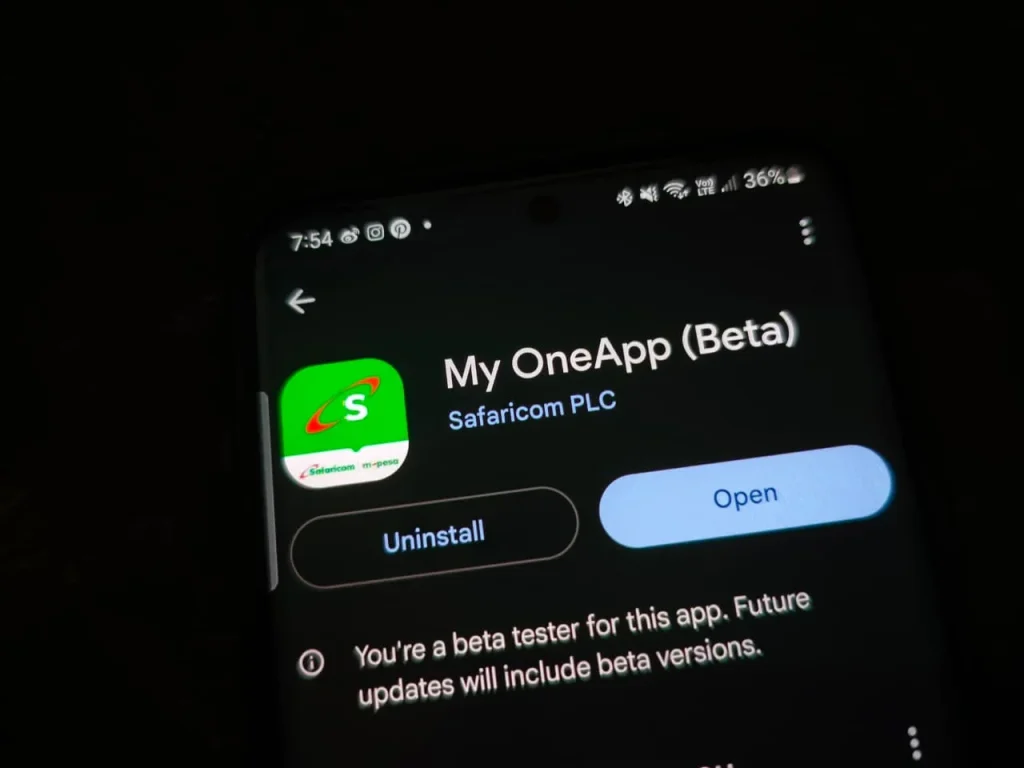
The idea behind My OneApp is genuinely ambitious. The platform is built on cloud-native infrastructure capable of handling 6,000 transactions per second — up from roughly 100 per second in M-Pesa’s earlier years.
It hosts over 80 third-party mini-apps, uses machine learning to anticipate user behaviour, and embeds investment tools, insurance, and stock trading directly into the everyday payments flow.
CEO Peter Ndegwa has been clear about the company’s direction: “We are no longer just a telco. We are becoming a technology company building the intelligent digital infrastructure that will power Kenya’s future.” My OneApp is the product meant to make that claim credible.
Safaricom says it is treating early complaints as feedback and that resolution is underway. What it does next will reveal whether this was a rough launch that gets fixed or a rushed product that erodes the trust of the very users it was meant to serve.