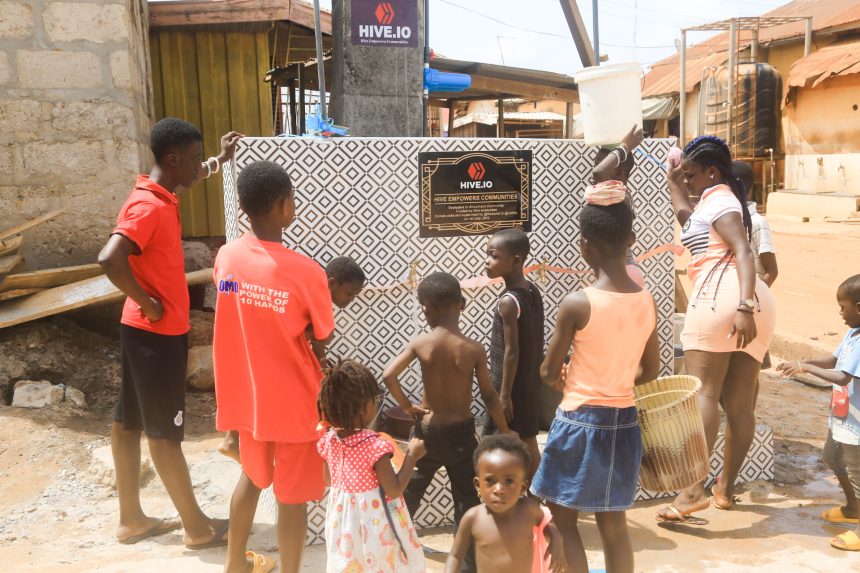
WellsForAll, a Ghana-based NGO, has completed 25 mechanized boreholes across rural Africa in 2025.
The project stands out not just for the infrastructure, but for its funding model: it is powered by the Hive blockchain, using decentralized governance to ensure radical transparency and measurable social impact.
By the Numbers
The impact of these 25 installations extends far beyond physical taps:
- 40% reduction in waterborne diseases within served communities.
- 60% increase in school attendance for girls, who are often tasked with long-distance water collection.
- 100% transparent funding via the Decentralized Hive Fund (DHF), where stakeholders vote on project allocations.
Why It Matters
Traditional NGOs often struggle with “the black box” of funding—donors rarely see exactly how their capital transforms into a finished well. By using the Hive blockchain, WellsForAll creates an auditable paper trail.
- Accountability: The DHF acts as “accountability infrastructure” rather than a speculative tool.
- Efficiency: Funds are moved and tracked without the high fees or delays often associated with international wire transfers to rural regions.
- Dignity: Local communities receive mechanized systems that are more reliable and easier to maintain than traditional hand pumps.
What They’re Saying
“These 25 boreholes represent more than numbers—they represent healthier families and children staying in school. This was achieved through a community-driven model that prioritizes long-term sustainability over short-term charity.” — Samuel Owusu-Boadi, Founder of WellsForAll.
“This is not about speculation—it’s about governance, transparency, and empowering communities with real infrastructure.” — Reese, Global Operations at Hive.
The 2026 Outlook
WellsForAll is already pivoting toward a broader expansion in 2026. The goal is to scale the “blockchain-to-borehole” pipeline by courting new development partners and local stakeholders to replicate this success in even more underserved regions.