




There is a version of the AI story you’ve probably heard: technology is moving fast, Africa is behind, and the continent risks being left out of the fourth industrial revolution unless it catches up quickly.
It is a story told with urgency, often by outsiders, and it places African people in a fundamentally reactive position — scrambling to adopt tools built elsewhere, for problems defined elsewhere, by people who have never set foot here.
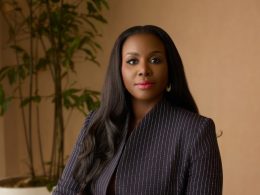
Rashida Musa is not interested in that story.
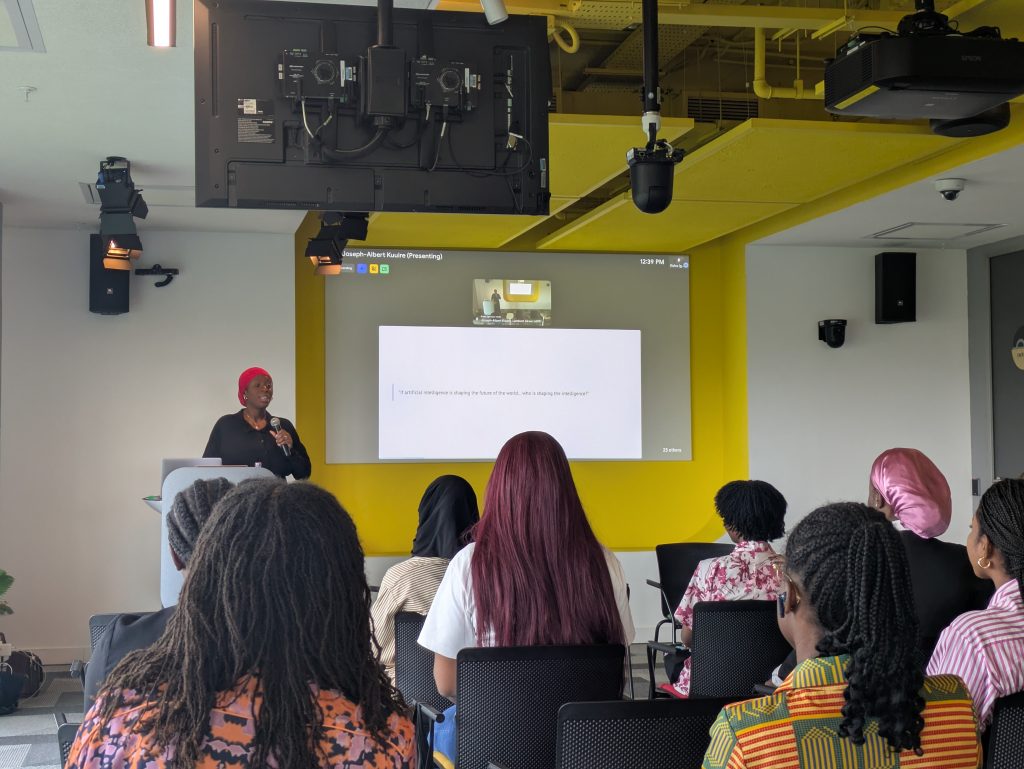
The founder and CEO of rAIma — an AI integration company operating in Ghana — delivered a presentation at the Women and AI event on 13th March 2026 titled “The Blueprint Was Always Ours: How African Women Can Rewrite the Rules of AI.”
Her argument, laid out with data, practicality, and a clear-eyed understanding of how power works in the global tech economy, is this: African women are not behind. They are differently positioned. And that position, if used wisely, is an advantage.
The World Changed. Did You Notice?
Musa opened by naming what she sees as the central shift happening right now. Search — the backbone of how people find information, services, and businesses online — is changing fundamentally. Google built the internet’s economy for two decades. AI is now unbundling it.
The numbers in her presentation made this concrete. AI-generated answers now appear in roughly 79% of Google searches, meaning users increasingly get their answer without clicking through to any website at all.
AI assistants now handle around 40 percent of basic customer queries end-to-end. And the average cost to process a customer service interaction through AI?
Less than $11 — a fraction of what human agents cost at scale.
For most businesses, this sounds like disruption. For African women entrepreneurs — many of whom never had a strong foothold in the old Google-dominated economy to begin with — Musa frames it differently: this is a reset. The rules are being rewritten in real time, and for once, nobody has a 20-year head start.
Beyond Google: The Rise of LLM SEO
One of the most practical sections of the presentation addressed what Musa calls LLM SEO — the emerging discipline of making your business visible not just to search engines, but to AI language models.
When someone asks ChatGPT to recommend a caterer in Accra, or asks Gemini for the best tailoring businesses in Lagos, the AI draws on whatever it has been trained on or can access. If your business isn’t in that information ecosystem, you simply don’t exist in that answer.
This is a new frontier — and critically, it is one where African businesses are not automatically disadvantaged. The old SEO game rewarded those with the most backlinks, the most domain authority, the most years of publishing English-language content optimised for Western search algorithms.
LLM SEO is still being written. A business that starts building its AI-visible presence now is not playing catch-up; it is playing alongside everyone else.
Musa’s advice to entrepreneurs in the room was direct: get your business information into the places AI models read. Write clearly about what you do, who you serve, and where you are. Be specific. Be consistent. The algorithm rewards clarity.
Africa Didn’t Follow the Blueprint. Africa Wrote It
Perhaps the most resonant part of the presentation was Musa’s reframing of African business history.
She walked through a comparison of business models that Silicon Valley claims as innovations — the platform economy, community lending circles, pay-per-use utilities, peer-to-peer trade networks — and their African antecedents: susu, mobile money, informal market cooperatives, and trade routes that predate Western commerce by centuries.
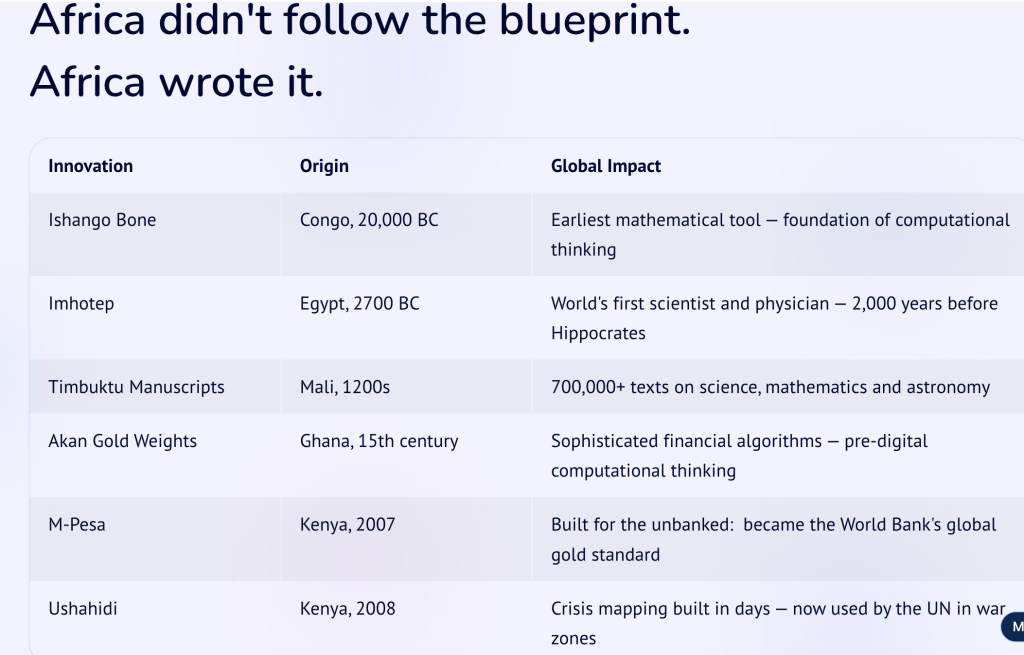
The point is not nostalgia. It is strategic. African entrepreneurs, and African women in particular, have been building resilient, community-rooted, asset-light businesses for generations under conditions of constrained infrastructure and capital.
Those exact skills — doing more with less, building trust-based networks, serving underserved markets with precision — are precisely what make an entrepreneur effective in the AI economy.
The blueprint, Musa argues, was never missing. It was just undervalued.
Three Businesses You Can Build Today
Unlike a lot of AI presentations that stay comfortably theoretical, Musa got specific. She outlined three categories of AI-enabled businesses that African women entrepreneurs can start building right now, without requiring deep technical backgrounds or large capital outlays.
The first is AI automation services — helping local businesses automate repetitive workflows like booking management, customer follow-ups, invoice generation, and social media scheduling.
The second is AI-assisted content and consulting — using AI tools to produce market research, business proposals, translation services, and communications at a speed and quality that would previously have required a large team.
The third is LLM SEO consulting itself — helping other businesses get found by AI systems, a service category that barely existed two years ago and is now in genuine demand.
None of these requires a computer science degree. They require curiosity, entrepreneurial instinct, and the willingness to learn fast — qualities that, as Musa noted with some dry humour, African women have had to develop whether they wanted to or not.
Real Work. Real Impact
Musa grounded the presentation in the work rAIma is already doing. Her company has trained over 250 women entrepreneurs in AI tools and business integration, and has supported more than 400 businesses across the continent in adopting AI-assisted workflows.
These are not pilot programmes or proof-of-concept exercises. They are businesses generating revenue and building capacity right now.
This matters because one of the persistent myths about AI in Africa is that it remains aspirational — something being planned, discussed, and funded by international organisations, but not yet landing in the hands of ordinary entrepreneurs. rAIma’s work is a direct counter-example.
Avoiding the Infrastructure Trap
Musa also addressed a risk she described as the infrastructure trap: the tendency to wait for perfect conditions — reliable internet, affordable devices, government policy, international funding — before starting. Her position is clear. Infrastructure gaps are real, but they are not new, and African entrepreneurs have always built around them.
The businesses she described are designed to be accessible at the entry level, scalable as infrastructure improves, and valuable even in constrained environments.
The most important AI being built in Africa right now, she argued, is being built for survival — responding to real market needs, at real price points, with real people in mind. That orientation is a feature, not a gap. It is exactly what has been missing from AI products designed in San Francisco for an imagined global user.
“You Cannot Enslave a Mind That Knows Itself”
Musa closed her presentation with a quote attributed to Frederick Douglass that she has clearly made her own: “You cannot enslave a mind that knows itself.”
In the context of AI, it lands as a policy argument as much as an inspiration: if African women understand these tools, understand their data rights, understand the economics of the platforms they use, they cannot be passive subjects of a technology built without them. They become shapers of it.