




For a decade, Paystack’s merchant dashboard quietly accumulated the weight of its own success. Every new product feature, every additional market, every workflow bolted onto the original 2016 interface left merchants navigating a sprawl that no longer matched how they actually worked.
The dashboard had become a record of how Paystack grew — not a tool designed for how businesses needed to operate.
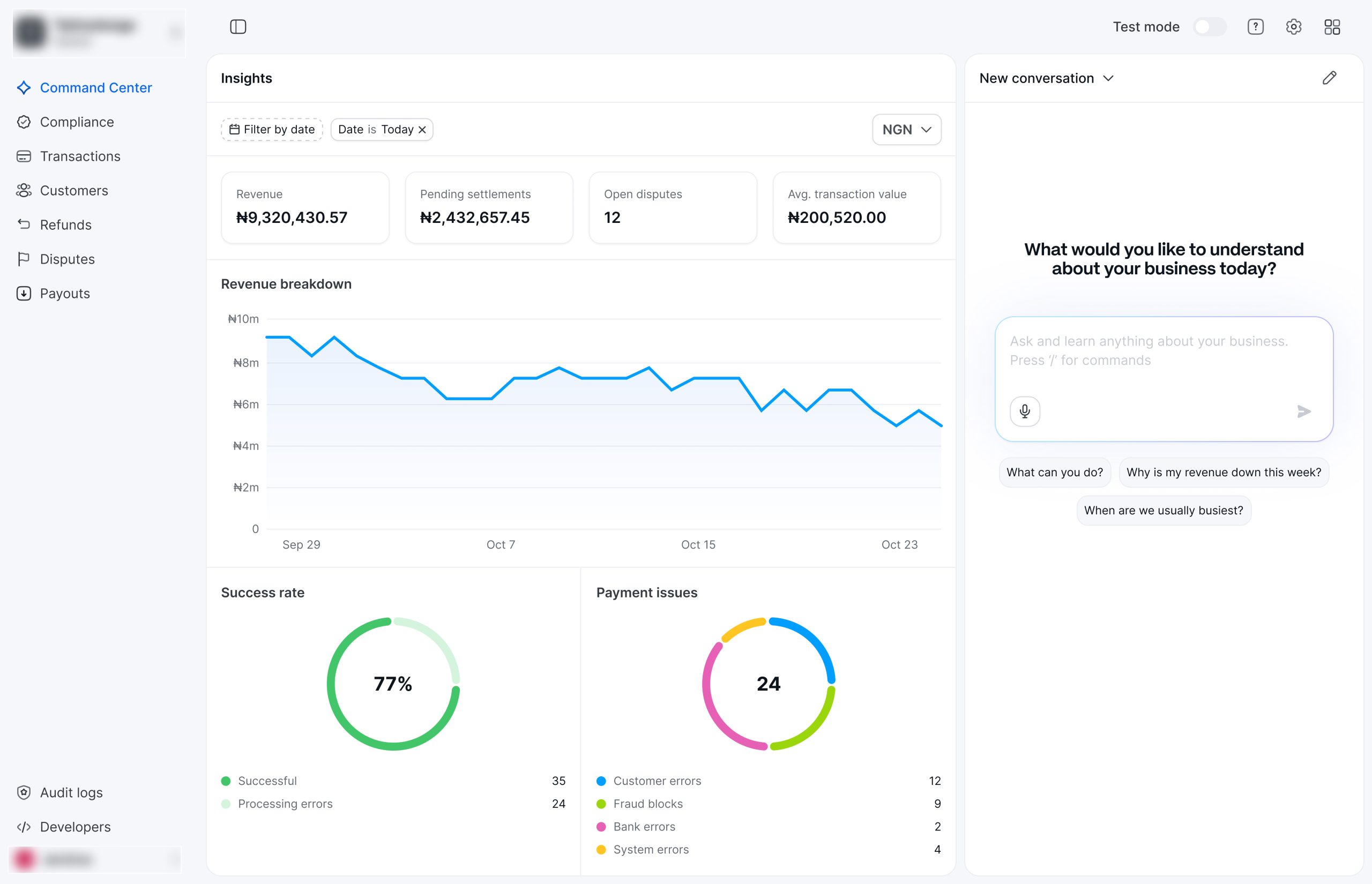
On Thursday, the Stripe-owned fintech launched the first full rebuild of that dashboard in ten years. The new product introduces a cleaner navigation structure, full mobile parity, and — at its centre — an AI-powered conversational interface the company is calling the Command Centre.
The Complexity Problem
The original dashboard was built when Paystack was a leaner product focused on a narrower set of tasks. Over the years, it expanded to support payment pages, user permissions, audit logs, dispute management, settlement tools, and more. Each addition made sense in isolation.
Together, they created a product where merchants knew what they wanted to find but struggled to predict where it lived.
“As we layered in more capabilities, the structure of the Dashboard began to reflect how the product had evolved, rather than how merchants think about their work,” said Dara Assim-Ita, the senior product designer who led the rebuild.
Navigation paths multiplied. What was once straightforward required more steps. Internal research eventually confirmed what merchants had been experiencing: this wasn’t a problem patchable with minor updates.
The solution was a complete structural reorganisation. The new dashboard divides the product into two primary sections — Payments and Products.
Payments consolidates operational workflows: transactions, customers, refunds, disputes, and settlements. Products houses modular offerings and future services. The goal is a structure that mirrors how merchants think about their work, not how the product historically accumulated features.
Ask, Don’t Click
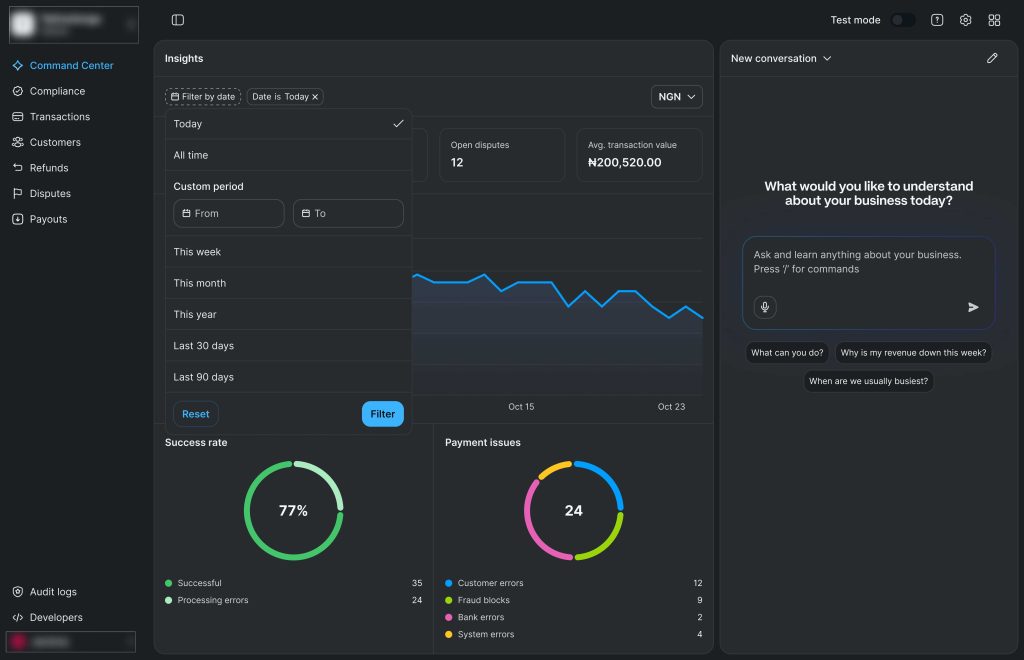
The more consequential change is the Command Centre. Rather than navigating pages to piece together a picture of their business, merchants can now type a plain-language question and receive an answer — as text, a table, or a chart — pulled directly from their own Paystack data.
“Businesses don’t come to their dashboard because they want to click through pages. They come because they have questions,” Assim-Ita said.
Questions like “What happened with this transaction?” or “Why is revenue down this week?” now return direct answers rather than sending merchants on a multi-page search for context.
The system is powered by GPT models, structured data retrieval, and an internal orchestration layer Paystack calls Project Canvas API, which connects the conversational interface to its existing infrastructure.
Because the dashboard handles sensitive financial data, Paystack built safeguards into every stage of the pipeline. Every request that passes through the Command Centre is evaluated against safety and compliance criteria before a response is generated. The company also completed a Data Protection Impact Assessment and ran adversarial testing ahead of launch.
Assim-Ita described a deliberate framework for how the system handles requests: valid queries within scope are fulfilled, valid queries outside scope are declined with suggested alternatives, and harmful requests are refused outright. The intention is to keep the system reliable enough that merchants trust it with real operational decisions.
Mobile Catches Up
The third pillar of the rebuild is something merchants had already been demanding through their behaviour. Research showed that merchants who originally used the dashboard from desktops had begun running parts of their operations from smartphones, even though the original product was not designed with mobile-first usage in mind.
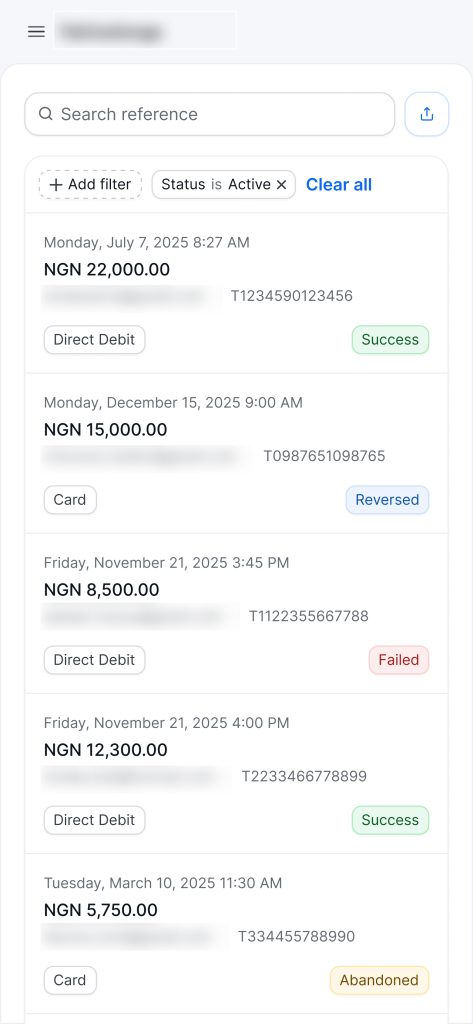
The new dashboard delivers full feature parity across mobile and web — every workflow available on desktop is now accessible on a phone.
More than 300,000 businesses currently use Paystack to process trillions of naira monthly across five African markets, including Nigeria, Ghana, and South Africa. That scale raises the stakes for any interface change.
The redesign took roughly five months from the first design decision to launch — research and design running from November 2025 through early January 2026, with engineering development from mid-January to mid-April.
Foundation, Not Finish Line
The timing of the rebuild isn’t coincidental. The overhaul comes five months after Paystack announced major changes to its organisational structure with the creation of The Stack Group, a holding company to oversee expansion beyond financial services. The new dashboard, in that context, looks less like a product refresh and more like infrastructure for whatever Paystack is building next.
Paystack has been explicit that the current release covers only core payment workflows, with more of the product expected to migrate to the new architecture over time. The company is positioning the dashboard as a platform, not a destination.
“We think the companies that win in this next era of fintech will be the ones who treat AI not as a feature, but as a direction,” Assim-Ita said.
Learn more about other African tech startups on Labari Insights, our data repository for tech in Africa: insights.techlabari.com