




Ghana has an electric vehicle charging problem.
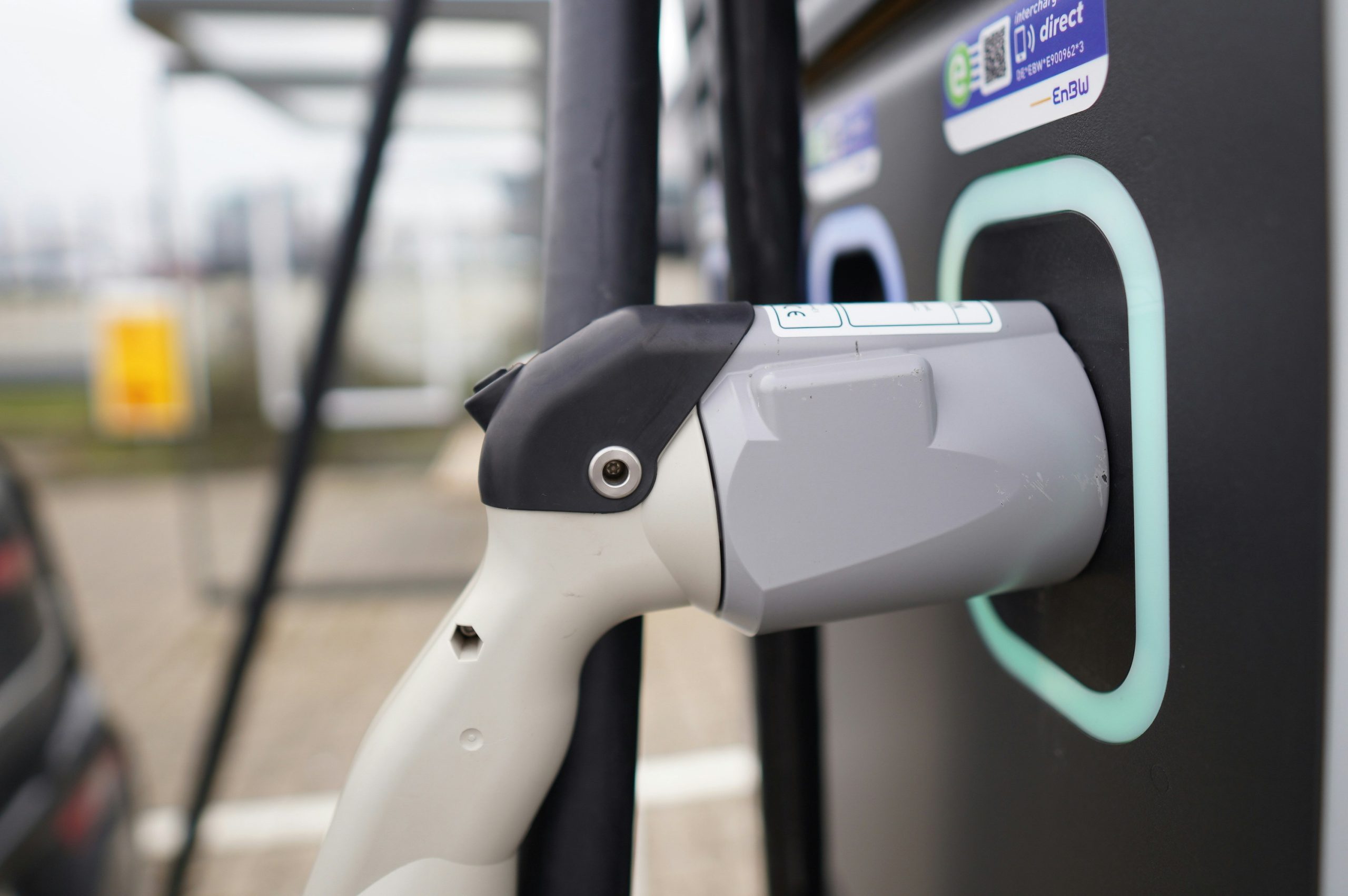
As of August 2024, Ghana had seven publicly accessible EV charging stations. One of them was broken. Another couldn’t run at full capacity because the electricity meter couldn’t handle the load. A third only worked with Chinese-spec connectors.
For a country that has pledged to put 1,500 electric buses on its roads by 2030 and transition all government vehicles to electric by 2035, that is a thin foundation to build on.
A Market Opportunity Study on Electric Vehicle Charging Stations, commissioned by Ghana’s Energy Commission and the United Nations Development Programme (UNDP), lays bare both the ambition and the dysfunction at the heart of Ghana’s EV transition.
Compiled through field interviews with private operators, government agencies, and investors, the report is the clearest picture yet of the gap between what Ghana’s green mobility agenda promises and what’s actually on the ground.
The Math Doesn’t Work — Yet
The report’s profitability analysis is sobering. A standard Level 2 public charger (22 kW) requires more than 5,000 hours of utilization before it breaks even.
In practice, one tracked charging station took over four years to log just 1,215 hours of use. Under business-as-usual projections, operators face a 17-year road to profitability. Even halving the electricity tariff — bringing it down to residential rates — only cuts that to a decade.
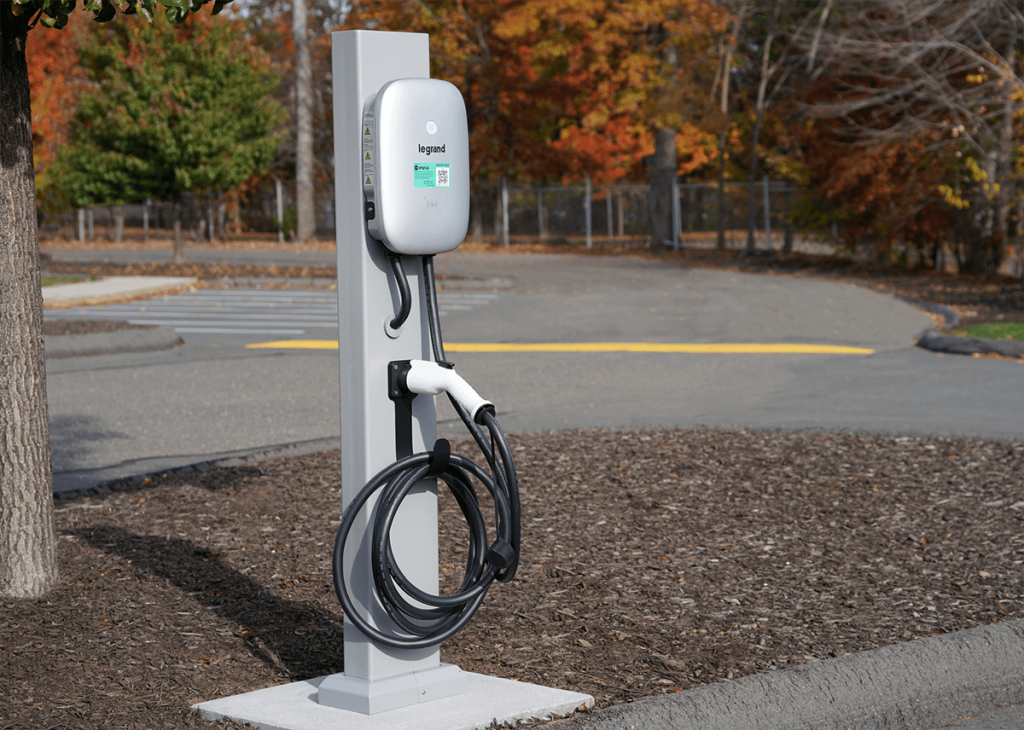
The faster DC charging stations (60 kW) perform better, reaching break-even in roughly seven years thanks to higher throughput and commercial appeal.
But their upfront cost is nearly 22 times higher: $29,428 versus $1,365 for a Level 2 unit. For cash-strapped startups operating in an economy battered by cedi depreciation and high-interest borrowing, neither option is particularly attractive.
The green financing that should bridge this gap isn’t working. Ghana’s SUNREF loan scheme — a collaboration between the Energy Commission, Agence Française de Développement, and the EU — has yet to disburse a single loan to a charging station operator.
Banks demand collateral that early-stage operators can’t provide, and those who do qualify face repayment in Euros while earning in cedis — a brutal proposition given Ghana’s currency trajectory.
The SUNREF team itself admits that start-ups will be “almost impossible” to help under the current framework.
Startups Are Improvising
The private sector isn’t waiting. A cluster of e-mobility startups — iJANU, Solar Taxi, Kofa Swap and Go, Wahu Mobility, Smart Transyt — have built creative workarounds, and their models reveal what’s actually working.
Kofa Swap and Go, backed by Shell Foundation and the UK’s FCDO, has emerged as arguably the most operationally mature player. Its battery swap network — 10 stations across Accra, delivering over 20,000 battery swaps monthly — sidesteps the charging wait-time problem entirely.
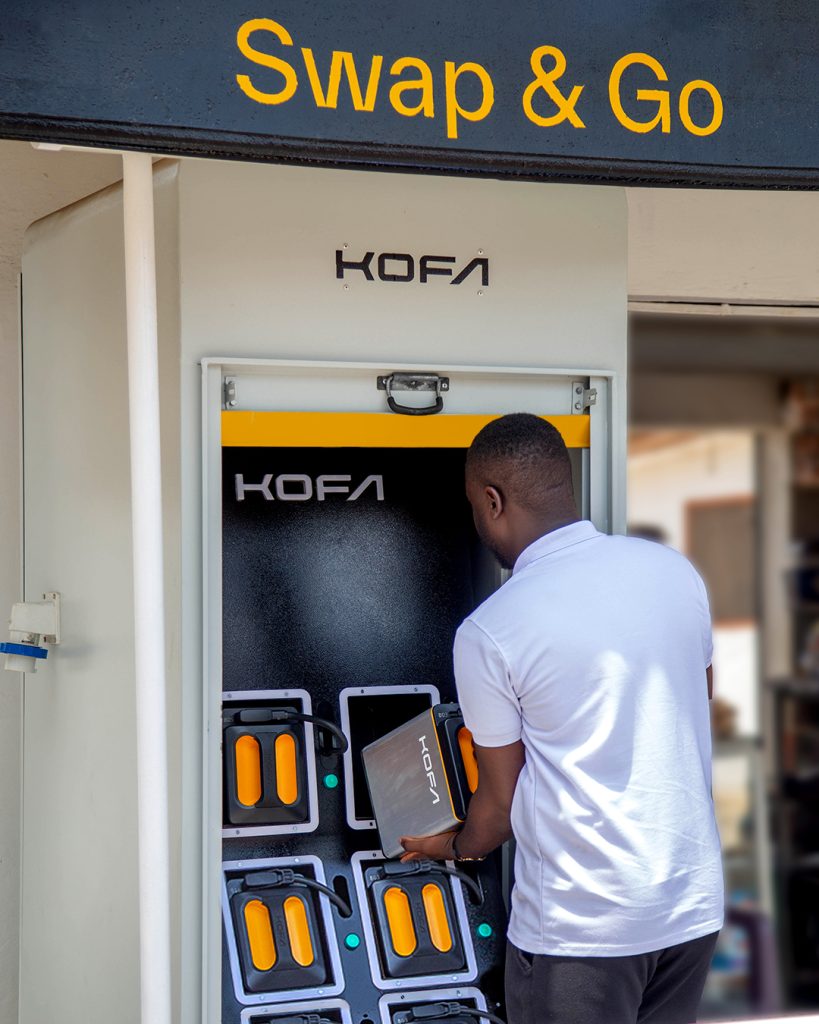
Riders pull up, swap a depleted Kore2 battery for a fully charged one in seconds, and get back on the road. The system works because Kofa has cracked utilization: it controls both the motorcycles and the swap stations, feeding demand into the network by design.
Solar Taxi took a different path, bundling EV sales, ride-hailing, and home charging installations under one roof. When it introduced the Asempa 34 — a 37-seater electric bus with a 350 km range — it discovered that none of Ghana’s existing public charging stations could handle the bus’s power requirements without breaking down.
This prompted Solar Taxi to install a dedicated 60 kW fast charger in an industrial enclave.
Smart Transyt, which runs electric buses between Oyarifa and Tema, is planning mobile charging vans that can follow buses on their routes. The company explicitly ruled out building public charging stations — not enough EVs, not enough foot traffic, not enough margin.
The Regulatory Lag
Government policy is moving, but slowly. The Ministry of Transport is procuring 100 electric buses for Metro Mass Transit and plans to install ten ultra-rapid DC chargers at MMT terminals — a significant infrastructure commitment.
The Energy Commission’s Drive Electric Initiative had received nearly 20 applications for new public charging stations by mid-2024, and the PURC has signaled a new EV-specific tariff band is likely in a 2025 rate review. (The PURC outdoored its tariffs for EVs in March 2026)
But the charging station regulations enabling permits and safety standards are still in draft. Standards for EV mechanics and high-voltage technicians are only beginning to be developed, with KNUST’s Brew-Hammond Energy Centre launching Level 1 safety training in late 2024.
Most companies currently send technicians abroad — to China or the United States — for training, at considerable cost. Local expertise is a gap that compounds every other problem.
The Infrastructure Deficit Is the Product
What the UNDP study ultimately argues is that the business opportunity in Ghana’s EV sector is not in charging stations alone — it’s in solving the infrastructure deficit itself. The most viable commercial models combine vehicle sales, home charger installation, fleet financing, and public charging in a single stack.
Operators who only run public chargers will likely bleed cash for years. Those who control the vehicles, the chargers, and the customer relationship stand a real chance.
With 12,000 EVs projected by 2040 under business-as-usual — and multiples of that if policy incentives land well — the window to build that integrated infrastructure is now.