






The Nairobi-based edtech platform enters its eighth African market, betting AI-driven university matching can outpace traditional recruitment agencies in a crowded field.
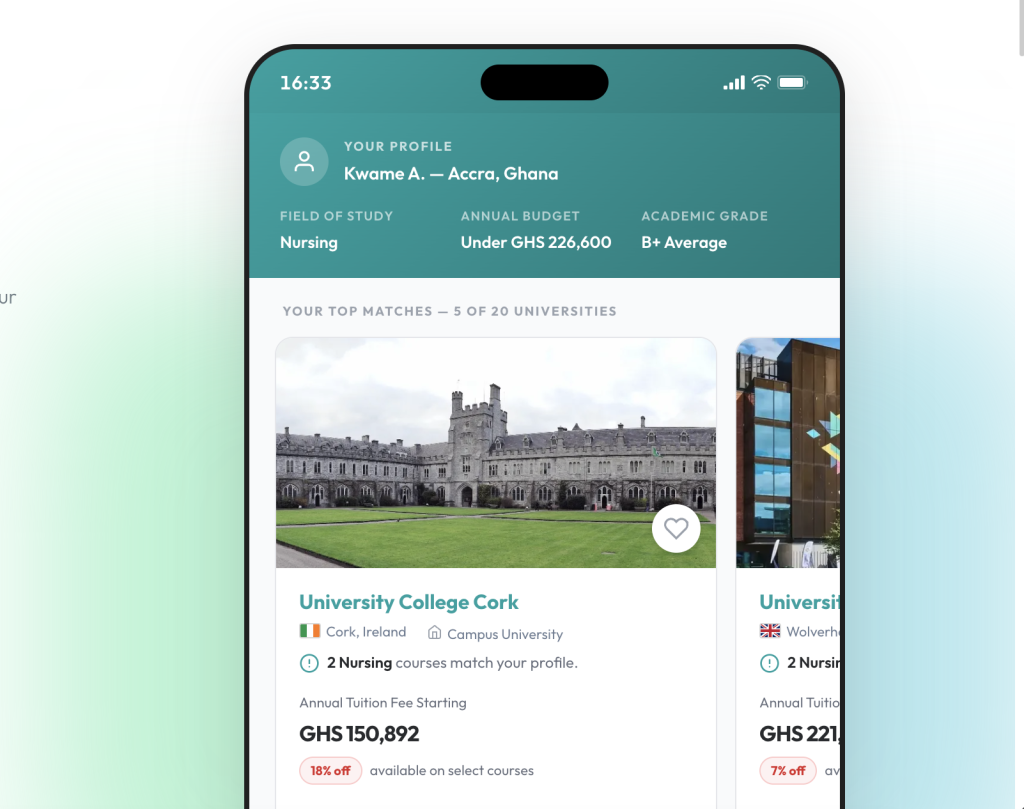
Craydel, the Kenyan education technology company that uses artificial intelligence to match African students with universities abroad, said Tuesday it has launched operations in Ghana, its eighth market on the continent.
The expansion adds West Africa’s second-largest economy to a footprint that already includes Kenya, Nigeria, Uganda, Rwanda, Zimbabwe, Burundi and Tanzania. The company plans to pair its software with on-the-ground advisory services, working with high schools and universities to build a local pipeline of applicants.
A Crowded Field
Africa’s outbound student market is large and growing. By industry estimates, more than 400,000 African students enroll abroad each year, drawn by limited capacity and quality concerns at home and the promise of better job prospects overseas.
That demand has long been served by a patchwork of independent education consultants and recruitment agencies, an industry critics say is opaque, inconsistent in quality, and prone to steering students toward universities that pay the highest commissions rather than those that fit them best.
Craydel, founded in 2021, is one of several venture-backed platforms — alongside competitors offering similar matching tools elsewhere on the continent — trying to digitize that process.
The company says it now works with more than 600 universities across over 50 countries, and pitches itself less as a recruiter than as infrastructure: a single platform where students can compare options based on academic eligibility, cost and career trajectory, while universities tap into a vetted pool of African applicants.
Whether that distinction holds up commercially is a separate question. Craydel, like most platforms in this space, likely earns revenue through fees or commissions tied to successful placements — the same basic mechanism as the agencies it positions itself against. The company’s pitch rests on data and transparency rather than a fundamentally different business model.
Why Ghana
Ghana was a logical next stop. The country has a well-established culture of sending students abroad, particularly to the United Kingdom, the United States and increasingly Canada, and its growing middle class has the disposable income to pay for international tuition — even as currency depreciation has made that tuition more expensive in cedi terms over the past several years.
Manish Sardana, Craydel’s co-founder and chief executive, framed the move as part of a longer-term continental buildout rather than an isolated market entry. The company says it intends to layer in local advisory staff and deepen partnerships with Ghanaian secondary schools, a model it has replicated in each new market.
The Harder Test: Retention and Outcomes
The announcement itself is light on metrics that would let outsiders judge how well Craydel’s model is actually working — no user numbers, placement rates, or revenue figures were disclosed alongside the Ghana launch.
That’s typical for a company at this stage, but it leaves open the central question for any platform claiming to outperform traditional agencies: does AI-driven matching actually produce better outcomes for students, or just a slicker interface on the same process?
For now, Craydel’s bet is that scale across multiple markets — rather than depth in any single one — is what will make the platform valuable to both students and university partners. Adding Ghana brings it closer to that pan-African footprint, even if the harder evidence of impact will take longer to materialize.