


Uber exited Nigeria’s ride-hailing market this year. Now, a separate acquisition on another continent could pull it right back in — through food and grocery delivery instead.
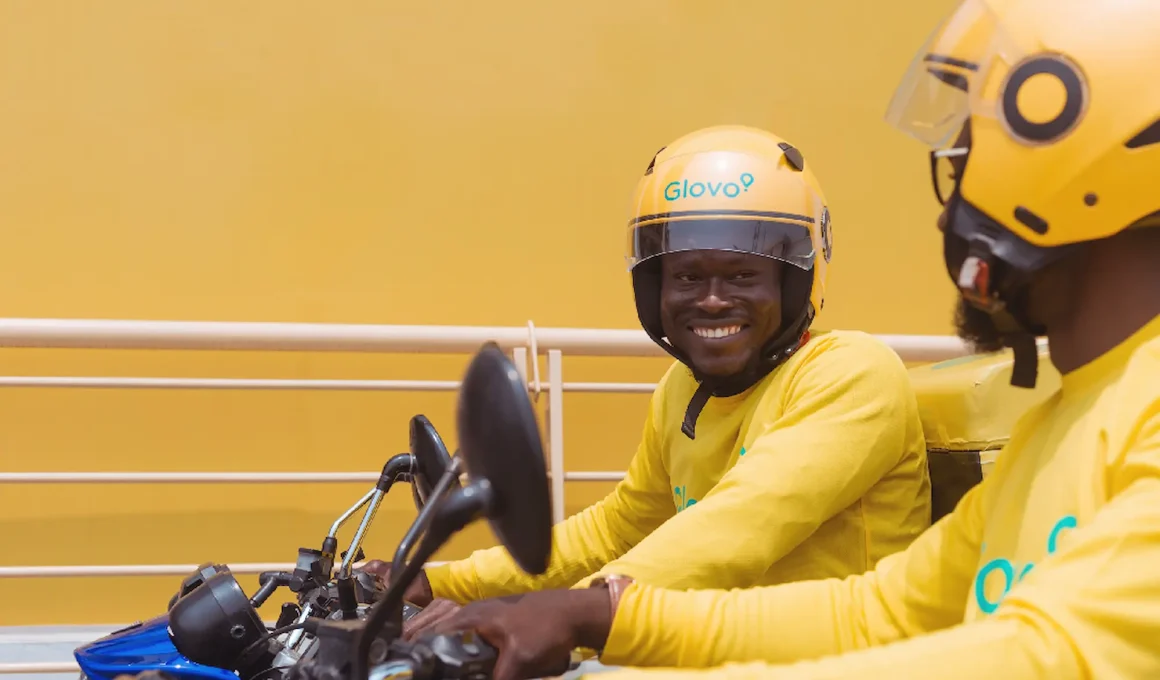
On July 16, Uber agreed to buy Delivery Hero, the Berlin-based company that owns Glovo, in an all-cash deal worth $14.8 billion. The offer values Delivery Hero at €41.50 a share. If regulators approve it, Uber inherits Glovo’s operations across six African markets, including Nigeria.
The deal isn’t really about Nigeria
Delivery Hero operates in roughly 50 markets worldwide. Its brand portfolio includes foodpanda in Asia, Talabat in the Gulf, PedidosYa in Latin America, and Glovo across parts of Europe and Africa. Uber’s interest is global: the combined company would operate in 99 countries with a projected $236 billion in gross merchandise value.
Nigeria is a rounding error in that math. But it’s a meaningful one for the country’s delivery sector.
Why Europe gets carved out and Africa doesn’t
Where Uber Eats and Glovo already compete head-to-head — Spain, Portugal, Poland, Romania, Moldova — Delivery Hero is selling those operations separately. The buyer is SSW Partners, a New York investment firm, in a roughly €1.4 billion side deal.
That carve-out exists to avoid antitrust objections in markets where the merger would obviously concentrate power.
No such carve-out applies to Glovo’s African business. Kenya, Uganda, Nigeria, Morocco, Tunisia and Côte d’Ivoire all stay with Uber.
The likely reason: Uber Eats has little to no presence in most of these markets, so combining it with Glovo doesn’t concentrate anything the way it would in Madrid or Warsaw.
Neither company has said this explicitly — it follows from the market structure, not a stated rationale.
What changes for Nigeria
If the deal closes, Uber would own Glovo’s Nigerian delivery operations outright, layering its logistics, payments and mapping infrastructure onto an already-established local merchant and courier network.
For Uber, buying that network is faster and cheaper than building one from scratch — a calculation that matters more in Africa, where merchant density and courier relationships can take years to establish.
For Nigerian merchants and couriers who rely on Glovo, the outcome cuts two ways. A better-capitalized platform could mean improved logistics and technology. It could also mean fewer independent alternatives, in a market where competitive options for delivery are already limited.
The regulatory question nobody’s answered yet
Nigeria’s competition authorities have grown more willing to scrutinize major digital-platform acquisitions in recent years. Neither the Federal Competition and Consumer Protection Commission nor any other Nigerian regulator has indicated how it views this transaction.
Kenya’s competition watchdog has shown similar interest in these platforms, having previously ordered Glovo and Uber Eats to establish local offices.
The deal itself is expected to close in the second half of 2027, pending shareholder and regulatory sign-off across Europe, Africa, Latin America and the Middle East. That leaves well over a year for Nigerian regulators to weigh in — or to stay silent, as they have so far.
The irony of a ride-hailing company avoiding ride-hailing
Uber’s exit from Nigerian ride-hailing was framed as a retreat from a difficult market. This transaction suggests the retreat was narrower than it looked: Uber is positioned to return to Nigeria through delivery, a business it never operated directly in the country, rather than through the ride-hailing product it just abandoned.
Whether that’s a deliberate strategy or simply a byproduct of how the Delivery Hero deal was structured, the practical effect is the same. Uber’s brand may disappear from Nigerian ride-hailing apps just as it prepares to appear, via Glovo, on Nigerian delivery apps.