



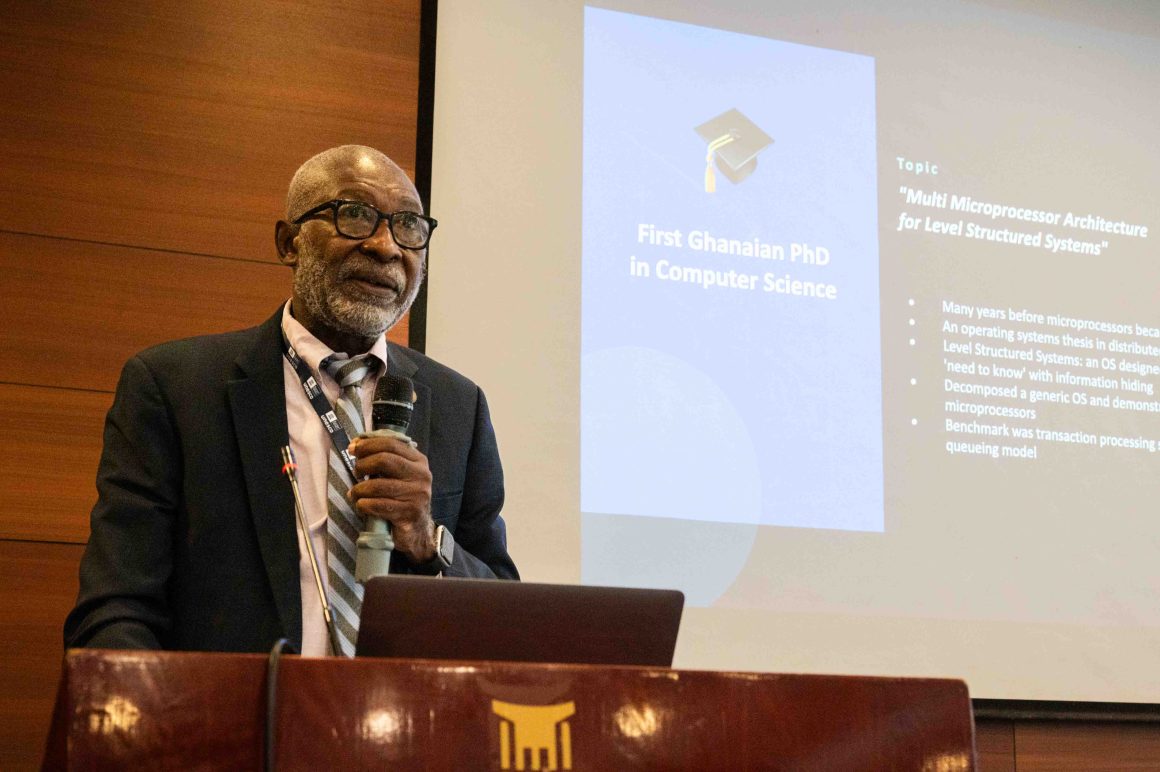
Professor Nii Narku Quaynor has spent half a century telling Africans to stop being users and start being producers of technology.
The 77-year-old engineer, who has been dubbed “Father of the Internet in Africa”, recently sat down for a long-form video interview with Ghanaian journalist Kafui Dey to discuss his journey to becoming the first Ghanaian to earn a PhD in computer science.
He also detailed his career and vision for the continent.
One well-known fact about the Professor is that he owns the country code .gh domain, which government agencies have used for their online services.
But recently, the country-code domain he has managed since 1995 was hijacked. This comes as sources say he has been in recent negotiations with the government to cede ownership to the state.
About the .gh Hack
Attackers hijacked infrastructure serving three country-code domain namespaces: .gh for Ghana, .sl for Sierra Leone, and .as for American Samoa. They modified authoritative DNS records and obtained HTTPS certificates for several Google domains and for domains belonging to other organizations.
That matters because a certificate is how a browser decides a website is genuine. Control over a domain’s DNS can let an attacker prove apparent ownership to a certificate authority and get a certificate without the real owner’s permission. Paired with redirected traffic, that enables convincing impersonation.
Google blocked the rogue certificates in Chrome and worked with the issuing authorities to revoke them. It said its own systems were not compromised. Later analysis found certificates for other organizations, including major global brands, but Google did not name them, give a count, or attribute the attacks.
How the attackers got into the registry has not been disclosed. Whether any Ghanaian users had data intercepted is unknown. Neither the registry operator nor Ghana’s Cyber Security Authority had issued a public account at the time of writing.
A Long-Running Dispute
There has been a long-standing dispute between Professor Quaynor and local officials on ownership of the .gh domain. The dispute dates to 2008. That year, the Electronic Transactions Act made the Ghana Domain Name Registry (GDNR) the legal manager of .gh.
Around 2012, the government took a loan to buy new servers for the registry. They were installed at the National Data Centre, but Ghana Dot Com controlled and managed the system.
But the handover never officially happened. ICANN typically does not transfer a country domain without the incumbent’s consent, even when the government is the claimant. That gives Professor Quaynor an effective veto.
Money sits at the center. In a 2023 letter to ICANN, the Ministry said the GDNR had offered him various forms of compensation, including a fixed sum, and that he rejected each offer, preferring a percentage of proceeds paid to the Internet Society’s Ghana chapter in perpetuity.
Ghana Dot Com tells a different story.
In its reply, the company said the minister was trying to reject terms already agreed in a consensus memorandum. Under that deal, the GDNR would publish annual registration figures and pay the ISOC Ghana chapter 10 percent of receipts. Professor Quaynor frames the payment as community accountability for a state registry. Officials frame it as a permanent levy on a national asset.
The tone hardened. At a 2023 industry forum, GDNR board chair Nanayaa Tina Owusu Prempeh accused an unnamed individual of sitting on the domain for 27 years and blocking redelegation. In December 2023, local internet stakeholders petitioned him to complete the transfer. His January 2024 reply questioned where the 2008 law got the registry rights it assigned to the GDNR, and said he believed the GDNR had acted in bad faith.
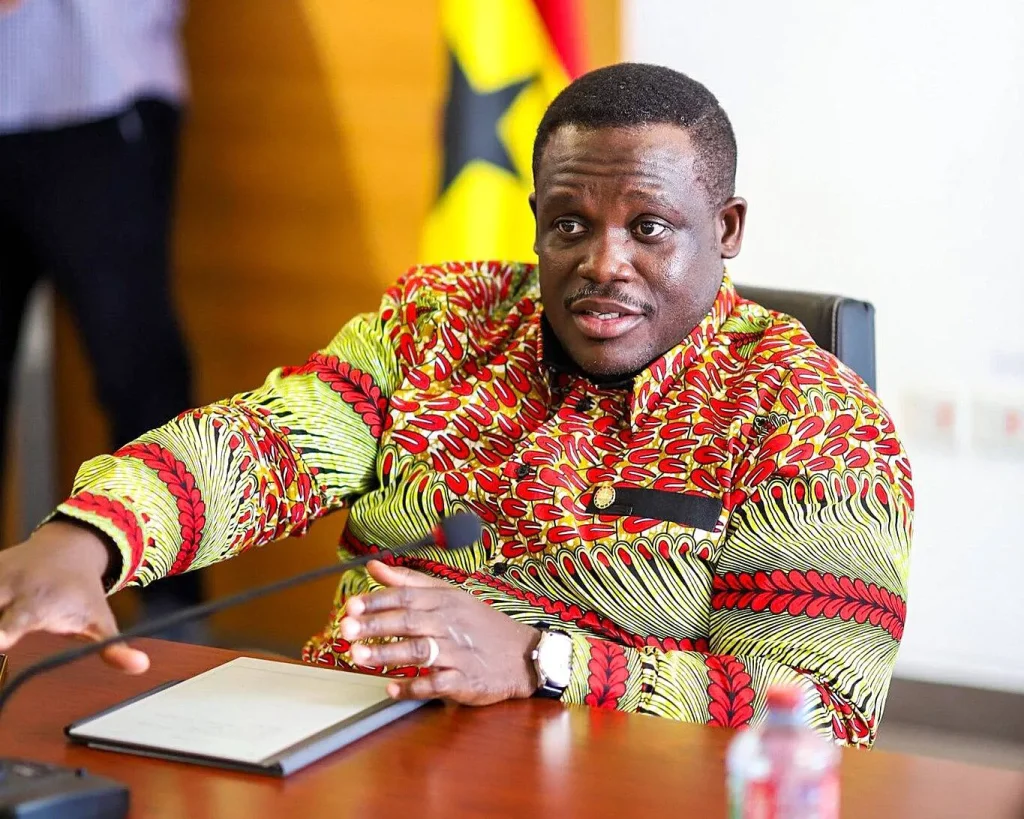
The current government has gone further. Communications Minister Samuel Nartey George said the domain could not stay in private custody and that the state must own it. He has called private management a national security concern. He has also floated giving free .gh domains to newly registered companies.
The stalemate has costs. Ghana had only one registrar as of 2023, compared with 70 in Rwanda, a country with less than half its population.
Domain providers now list .gh registrations as suspended. Public reference data also shows the domain without DNSSEC, the signing standard that makes DNS records harder to forge.
Sources we spoke to claim that there are current negotiations to cede ownership of the .gh officially to the government. No resolution has been made so far.
Tech Labari emailed the Ministry of Communications for any background or updates on the issue of the .gh domain hack and conversations on owning the domain.
We did not get a response at the time of publication.
The Ownership Test
The registry hijack exposes a gap in that philosophy. Ownership alone is not security. A locally run registry is only as sovereign as it is defended.
The episode of the recent hack widens the debate beyond who controls .gh. Ghana’s government and Ghana Dot Com have spent years arguing over control and revenue. Attackers exploited the infrastructure while that argument continued.
Professor Quaynor remains active in advisory roles, teaching, and mentorship.
In his long-form interview, he appears to have animosity towards the state. He referenced a time when political forces brought down his company, Network Computer Systems (NCS). He noted that some individuals felt personal animosity toward him and used their proximity to the regime to target his work.
It is unclear whether feelings toward the government are currently affecting his decision to cede the .gh domain to the government.
Professor Quaynor closed his interview by saying he keeps working because history will judge him long after he is gone. The handling of this breach, and of the .gh handover, will be part of that record.