





African creatives have spent years building careers that stretch across continents. Designers in Lagos collaborate with studios in Amsterdam. Musicians in Nairobi land licensing deals with Paris labels. Motion graphics artists in Accra produce work for clients in New York.
The work travels. The money doesn’t — at least not easily.
The underlying problem is access. Not access to opportunity, but access to the basic financial plumbing that makes getting paid simple.
When a client in London sends a GBP payment, it typically doesn’t land cleanly. It converts, it loses value, it arrives late. Each step adds friction that has nothing to do with the quality of the work — and everything to do with where the creator happens to be based.
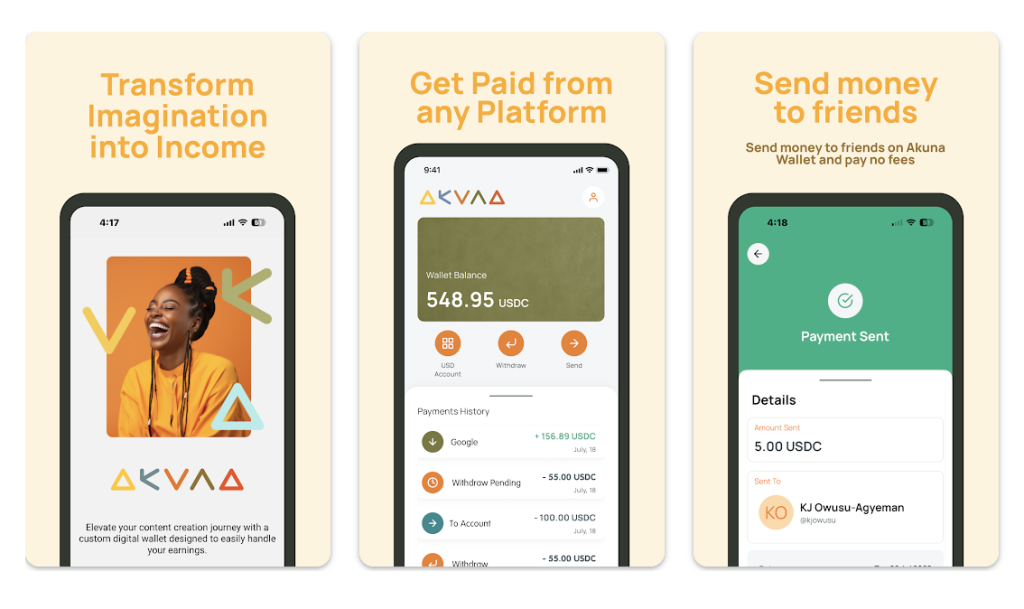
Akuna Wallet, a financial platform built specifically for African creators, is trying to close that gap. The company launched with USD accounts, giving creators a more direct route into global payment flows.
Now it has added GBP and EUR accounts to the mix — meaning creators can receive money in the three major currencies most of their international clients already operate in.
Why Currency Choice Is About More Than Convenience
There’s a meaningful difference between receiving money and receiving it without friction. When a UK client pays in pounds and those pounds arrive in a GBP account — not converted, not delayed — the transaction becomes invisible. And invisible transactions are good transactions.
The effect compounds in subtle ways. Payments come in faster. Working relationships feel smoother. And clients, freed from the extra steps that sometimes accompany cross-border payments to African recipients, are more likely to return.
For the creator, knowing that getting paid is no longer an obstacle changes how they engage with global clients.
For the client, the experience of paying an African creative starts to feel like paying anyone else. That matters more than it sounds.
The Infrastructure Wasn’t Built for This
Traditional financial systems weren’t designed with the modern African creator in mind. They were built for remittances — money sent home — and for international trade between large institutions.
Not for a freelance art director in Accra who’s simultaneously managing projects for clients in three countries and expects to get paid in a reasonable timeframe.
The mismatch has been expensive. Currency conversion fees, unfavorable exchange rates, slow settlement times, and the administrative overhead of navigating each payment as a minor crisis — all of it represents a tax on African creative labor that has no equivalent in more financially privileged markets.
What’s changed is that the tools to fix this now exist. The question is whether they’re being built for the right people.