





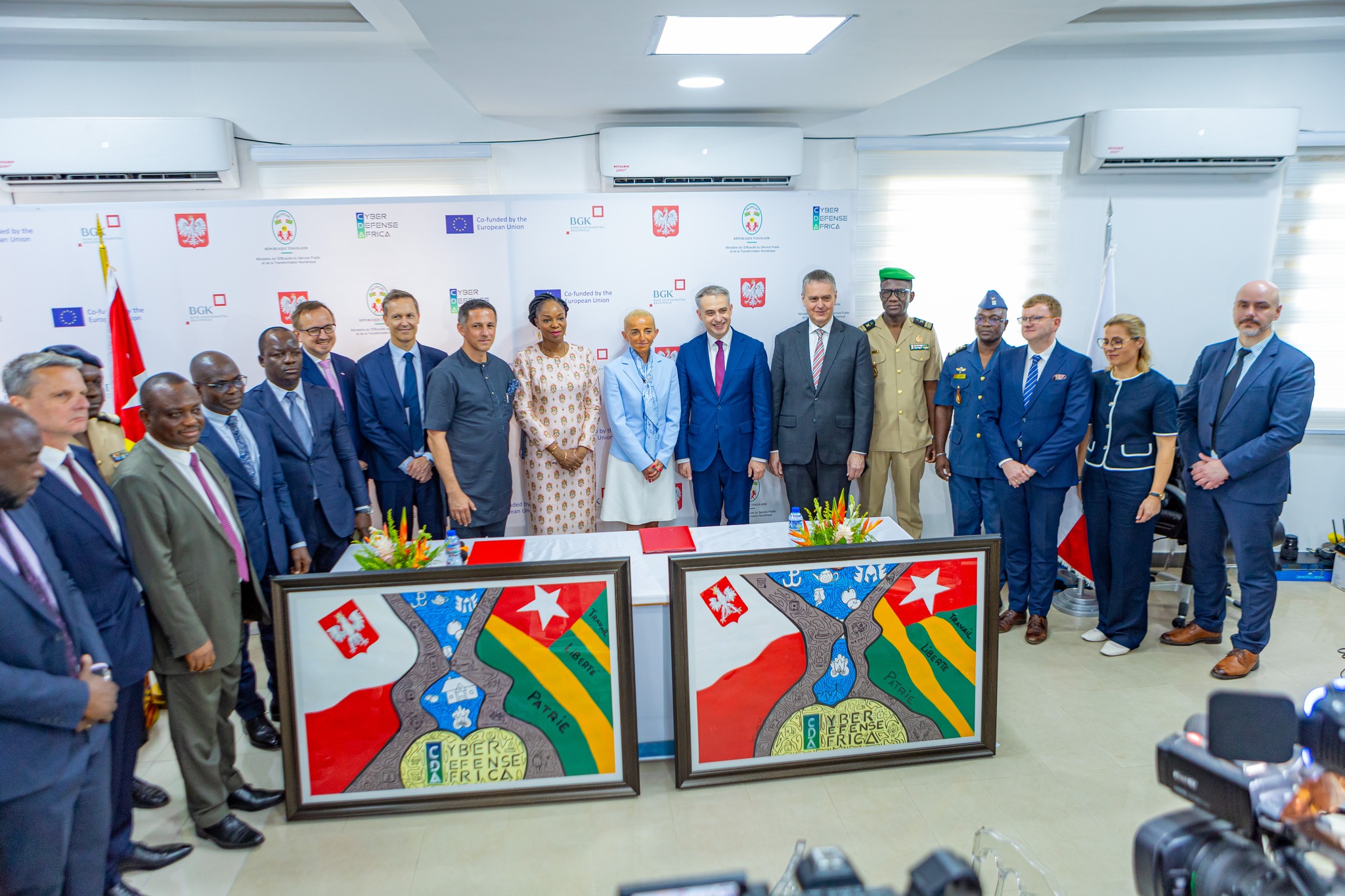
A Polish deputy prime minister landed in Lomé last week with more than diplomatic pleasantries.
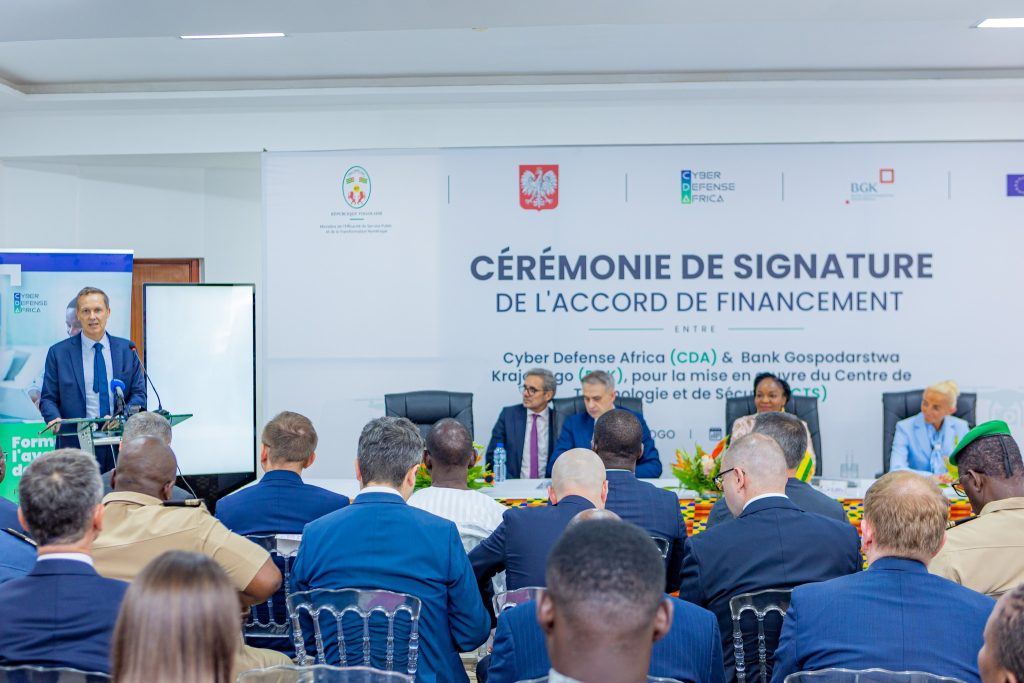
Krzysztof Gawkowski, Poland’s Minister of Digital Affairs, arrived with a funding agreement in hand — and left having formalized one of the more unusual technology partnerships to emerge from the EU’s Global Gateway initiative: a €24 million bet on Togo becoming a serious player in drone manufacturing.
The agreement, signed during Gawkowski’s official visit, green-lights the launch of Africa Drone Company, a new venture to be delivered by Cyber Defense Africa.
The project’s mandate is sweeping — local drone design, assembly, and deployment — with target sectors ranging from agriculture and logistics to security, industrial inspection, and critical infrastructure monitoring.
It is, in short, an attempt to build a drone industry from scratch in a West African nation of fewer than nine million people. And it has the backing of one of Europe’s most active development finance institutions.
Why Poland, Why Now
The funding flows through BGK, Poland’s state-owned development bank, under the framework of the EU’s Global Gateway — Brussels’ answer to China’s Belt and Road Initiative, designed to channel European capital into infrastructure and technology projects across Africa, Latin America, and Asia.
Poland’s involvement in Togolese digital development may seem geographically improbable, but it fits a pattern. Warsaw has been quietly expanding its footprint in African digital diplomacy, leveraging EU mechanisms to establish bilateral relationships in markets where French and Chinese influence has historically dominated.
Gawkowski’s trip to Lomé signals that Poland sees West Africa not merely as a recipient of European aid, but as a growth frontier for its own technology ecosystem — and potentially a commercial one.
Building the Stack Locally
Africa Drone Company’s ambition goes beyond importing hardware and calling it development. The initiative is explicitly structured around skills transfer: training local engineers and technicians to design and assemble drones domestically, not just operate equipment built elsewhere.
This distinction matters enormously in the African context. Continent-wide, technology adoption has often outpaced the development of local expertise, creating a persistent dependency on foreign vendors for maintenance, upgrades, and knowledge.
Drone programs in particular have tended to follow this pattern — governments procure foreign platforms, hire foreign operators, and remain dependent on foreign supply chains.
Togo’s Ministry of Public Service Efficiency and Digital Transformation is pitching Africa Drone Company as a deliberate break from that model. The language coming from Lomé emphasizes “technological sovereignty” — a term increasingly common in African policy circles, signaling a desire to own the means of technological production, not merely its outputs.

The Use Cases Are Broad, the Challenges Real
The sectors targeted by Africa Drone Company — security, agriculture, logistics, industry, and infrastructure monitoring — represent the bulk of where drone technology has demonstrated measurable economic value on the continent.
Agricultural drones have shown strong returns in precision spraying and crop monitoring across sub-Saharan Africa. Logistics drones, pioneered in Rwanda by Zipline, have proven viable for last-mile medical supply delivery.
Infrastructure inspection — power lines, pipelines, roads — is another area where drone deployment can dramatically reduce costs compared to manual surveys.
Security applications are more complex. Drones for border monitoring and surveillance carry obvious dual-use implications, and the involvement of Cyber Defense Africa — a firm whose name signals its core market orientation — will inevitably invite scrutiny over how the security mandate is scoped and governed.
Togo is also starting from a limited industrial base. Building genuine local design and assembly capability requires not just funding and training, but supply chains, regulatory frameworks, and a talent pipeline that takes years to develop. The €24 million is a meaningful starting point, but the real test will come in execution.
A Template in the Making?
What’s happening in Togo is worth watching beyond its immediate context. The Global Gateway has struggled to generate the kind of high-profile, clearly defined projects that can compete with China’s infrastructure narrative.
Africa Drone Company, with its defined scope, bilateral structure, and technology sovereignty framing, offers the kind of concrete deliverable that EU development finance has sometimes lacked.
If the project delivers — if Togolese engineers are genuinely designing and assembling drones within the decade rather than simply maintaining imported ones — it becomes a replicable model. Poland gets a commercial and diplomatic foothold. Togo gets an industry. The EU gets a Gateway win it can point to.