




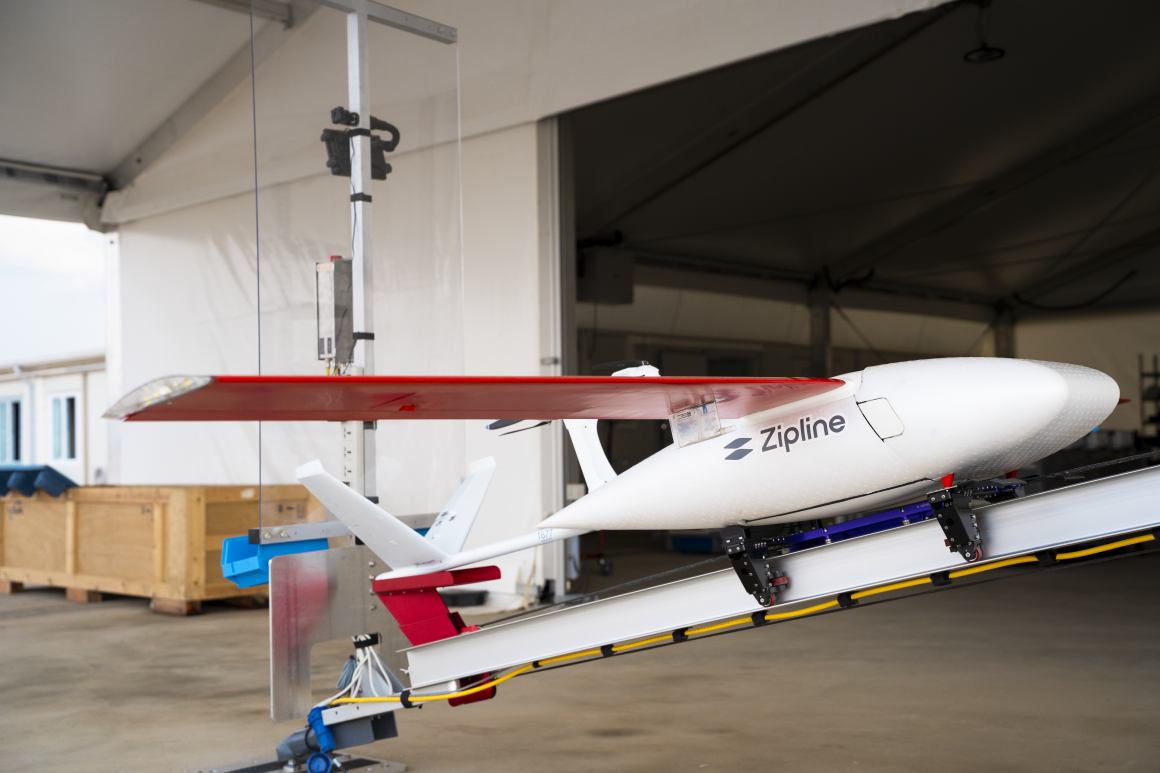
Côte d’Ivoire is scaling up one of the most ambitious drone logistics networks in Africa, expanding a health care delivery partnership with the U.S. robotics company Zipline from a single hub to ten across the country.
The eight-year deal, approved by Côte d’Ivoire’s Ministry of Health, will use autonomous drones to carry blood products, vaccines and essential medicines to more than 2,200 health facilities. Officials project the network will eventually serve over 12 million people — roughly 40 percent of the country’s population.
From One Hub to Ten
The expansion builds on a pilot program that began in Daloa in 2023. In three years, Zipline says it has delivered more than 3.55 million medical products, including about 2 million vaccine doses and 20,500 units of blood, to 220 health facilities across five regions. The company estimates that record has helped save more than 2,000 lives.
Each distribution center functions as a small logistics hub: cold storage, warehousing and a fleet of drones dispatched on demand. Instead of waiting for scheduled deliveries or stockpiling supplies that can expire, clinics can now order what they need and receive it within hours, even in areas cut off by poor roads during the rainy season.
Who Is Paying for It
The financing structure is notable. The U.S. State Department is putting up front infrastructure funding — part of a $150 million pay-for-performance award — while Côte d’Ivoire’s government has committed to covering the network’s ongoing operating costs once it’s built.
That split is meant to make the system self-sustaining rather than dependent on continued foreign aid. It also gives Abidjan operational control: the Ministry of Health gets real-time visibility into orders, inventory and deliveries across the country, which officials say will help them anticipate shortages and respond faster during emergencies or disease outbreaks.
Pierre N’Gou Dimba, the health minister, framed the expansion as an extension of the country’s push toward universal health coverage. “By expanding to 10 distribution centers, Côte d’Ivoire is taking a proven model nationwide,” he said, adding that the pilot had already produced shorter delivery times and fewer stockouts.
The Bigger Picture for Drone Delivery in Africa
Zipline, founded in 2016, says it now operates the largest autonomous delivery network in the world, with more than 2.5 million commercial deliveries and partnerships with over 5,000 hospitals globally. The company completes a delivery somewhere in the world roughly every 20 seconds, according to its own figures.
Africa has become a proving ground for the technology, in part because it lets governments skip the cost of building extensive road infrastructure to reach rural clinics. Rwanda and Ghana have run similar drone health programs for years. But Côte d’Ivoire’s plan — a ten-hub national buildout with a defined public financing model — is among the largest single commitments on the continent.
Xavier Greusard, Zipline’s vice president for Africa go-to-market, said the goal extends beyond deliveries. The company plans to train Ivorian workers across pharmacy, aviation operations, maintenance and data management, positioning the network as the foundation of a local drone and AI industry rather than a foreign-run service.
What’s at Stake
The expansion carries real economic and political weight. Zipline and Ivorian officials estimate a roughly 300 percent return on investment once the full network is operational, and they say it will create hundreds of skilled jobs.
It’s also a test case for how African governments negotiate with foreign tech companies on health infrastructure — a model that ties American funding to measurable outcomes, while leaving long-term ownership and costs with the host government. If it works, it could become a template other countries point to. If costs balloon or reliability falters once U.S. seed funding runs out, it could just as easily become a cautionary tale.
For now, the numbers are promising: thousands of health facilities, millions of people, and a bet that robots flying over Côte d’Ivoire’s rainy-season roads can do what trucks alone couldn’t.