




When ride-hailing services like Uber and Bolt entered the Ghanaian market, they quickly tried to attract drivers by offering attractive rates, including 25% and 20% commission rates.
Drivers would keep their cuts after the riders paid, with the platforms getting their share.
But over time, there has been a lot of contention between drivers and the platforms they use, especially after rising economic challenges over the last few years.
On April 23, members of the Association of Online Drivers gathered in open frustration at Ghana’s Jubilee House to petition President John Mahama over what they called an industry rigged against the people doing the actual driving.
Members claimed that the commission structures of platforms like Uber, Bolt, and Yango have climbed from around 10 percent to as high as 30 percent over the years, steadily eating into earnings that were already thin.
Augustin Mensah, Executive Chairman of the Association of Online Drivers, laid out a scenario that captures the absurdity drivers navigate daily: a ride request coming from 17 minutes away, covering 16 to 20 kilometres depending on the vehicle, with the driver absorbing the fuel and time cost just to reach the passenger.
Decline the request, and the punishment is swift. Drivers who refuse such long-distance pickups risk having their performance ratings docked — ratings built painstakingly over years of service. If it happens repeatedly, drivers can be blocked from the platform for up to a week.
On May 1, a ride-hailing service will be launched, and it would be curious to see if drivers would switch their service to the new platform.
No Commissions With Subscription Plans for Drivers
Mijo, an indigenous ride-hailing platform, was built specifically to address some of the structural frustrations drivers have been voicing for years.
The core proposition is straightforward: instead of taking a cut from each trip, Mijo operates on a flat subscription model — GH₵24 for a 24-hour pass, GH₵150 for a weekly plan, or GH₵600 monthly. Once subscribed, drivers keep every cedi they earn.
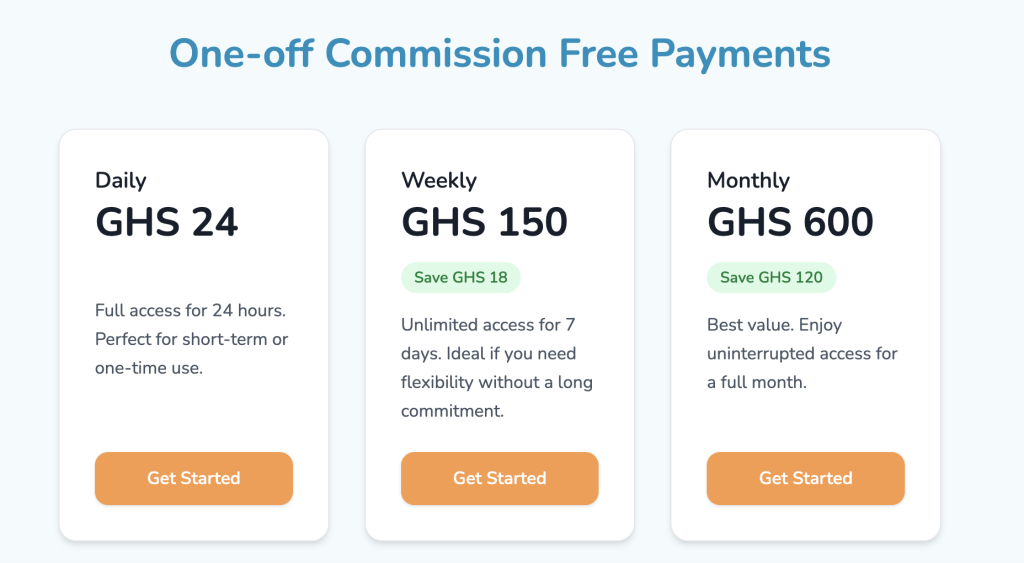
“Everything else goes into your pocket,” said George Arko-Brew, a digital marketing specialist at Mijo.
It’s a clean break from the commission-based logic that has defined the industry — and a bet that predictability will be a stronger recruiting tool than any driver bonus program.
For passengers, the theory is that lower operating costs translate to lower fares. Whether that holds in practice will depend on how quickly the platform reaches the driver and rider density needed to make trips viable.
For riders, they can pay for trips with an integrated Mijo Wallet, Mobile Money (MTN, Telecel, AirtelTigo), or Cash. There are currently no options for Card payments.
Built on Ghana’s Digital Address System
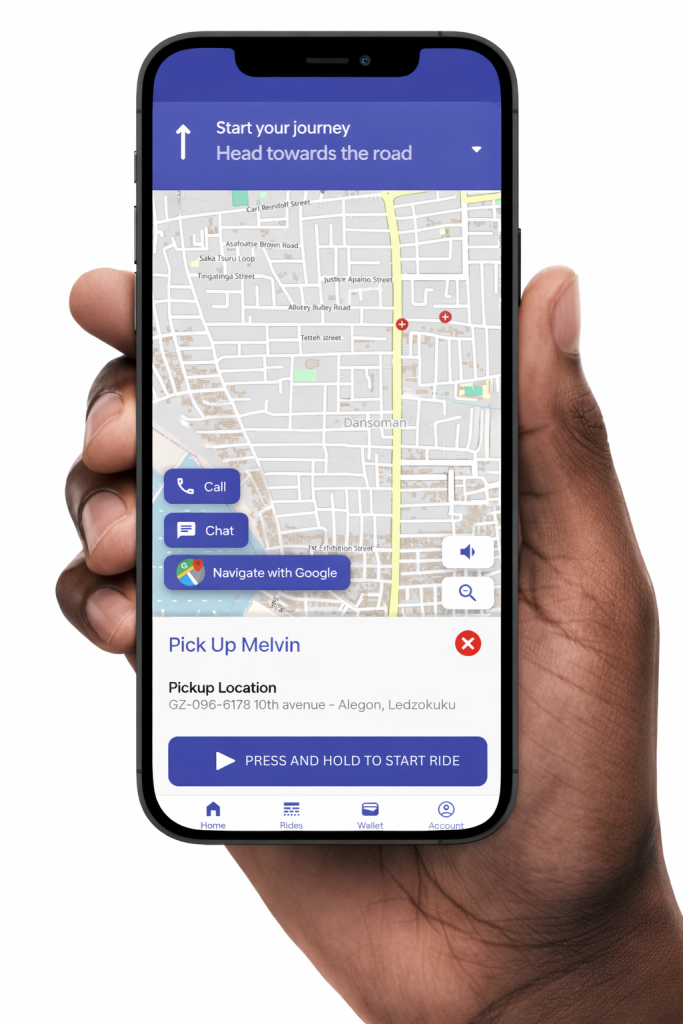
Mijo is built on Ghana’s GhanaPost GPS digital addressing system, designed to improve location accuracy and reduce the inefficiencies that come with imprecise trip matching.
Drivers must verify their identity using Ghana Card details and submit their licence, vehicle documents, insurance, and roadworthiness certification. Passengers go through identity verification as well.
Ferdinand Lokko, Chief Innovations and Marketing Officer at Afrifanom — the company behind Mijo’s software and systems architecture — said that verified data can be shared with security agencies when the need arises.
More Than Just Rides
The platform also integrates parcel delivery services, positioning itself as a broader last-mile logistics solution and extending Ghana Post’s reach into digital commerce.
The initial rollout targets Accra, with phased expansion planned for Kumasi and Takoradi — the three commercial anchors of the Ghanaian economy.
Pilot programmes, including test rides with students in Accra, were conducted ahead of launch to stress-test demand and operations.
Can This New Player Capture Drivers’ Attention?
The global ride-hailing model — build fast, take a commission, scale — has proven durable almost everywhere it has landed. But it has also generated a predictable class of grievances, and Ghana is not unique in that regard. What is relatively rare is a credible local challenger with a structurally different answer.
Mijo’s subscription model won’t automatically guarantee driver satisfaction or rider adoption. Network effects are hard to build from scratch, and the incumbents have deep pockets.
But for drivers who have spent years watching their earnings shrink while platform valuations soared, May 1 could represent something concrete.
Whether Mijo can scale in the future and attract drivers away from the bigger plans like Bolt and Uber remains to be seen.