





Ghana’s digital economy keeps expanding as faster internet speeds, smartphone access, and youthful demographics push the country deeper into the connected age.
According to a newly published report from Datareportal, internet users in Ghana increased to 26.3 million.
By the numbers
- 📱 Mobile connections: 41.8 million — 119% of population (+9.3% YoY)
- 🌐 Internet users: 26.3 million — 74.6% penetration (+8.6% YoY)
- 💬 Social media users: 8.6 million — 24.4% of population (+10% YoY)
- ⚡ Median fixed internet speed: 49.5 Mbps (+31% YoY)
- 🧒 Median age: 21.3 years
Between the lines
- Multi-SIM culture: Mobile connections exceed population size, signaling widespread use of multiple SIM cards and fierce telco competition.
- Offline gap: Roughly 9 million Ghanaians remain offline — a major opportunity for connectivity, affordability, and digital literacy efforts.
- Youth-driven growth: With more than half the population under 25, digital adoption is being led by Gen Z and young professionals.
Social media snapshot
| Platform | Users | Share of pop. | YoY change |
|---|---|---|---|
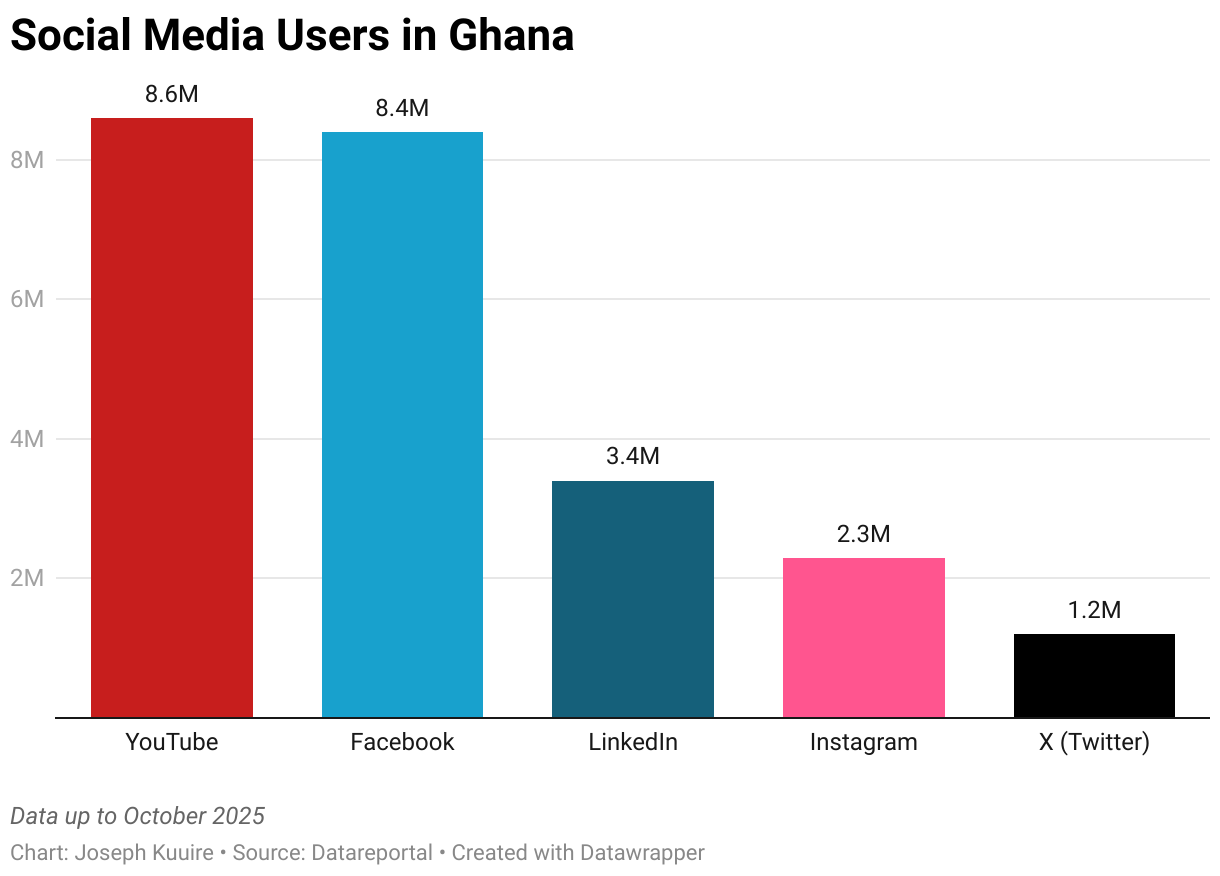
| YouTube | 8.6 M | 24% | +10% |
| 8.4 M | 24% | +15% | |
| 2.3 M | 6.5% | +12% | |
| 3.4 M | 9.7% | +17% | |
| X (Twitter) | 1.2 M | 3.3% | −1.6% |
Reality check: Facebook and YouTube still dominate digital reach, while professional and niche networks like LinkedIn and Instagram are catching up.
Why it matters
- Business & media: Brands and publishers have a clear audience online — but mobile-first experiences remain critical.
- Infrastructure payoff: Rising internet speeds show investments in broadband and fiber are paying off.
- Inclusion challenge: One in four Ghanaians is still offline, underscoring gaps in rural access and affordability.
- Platform strategy: For marketers and publishers, Facebook and YouTube remain key for reach; LinkedIn offers value for professional engagement.
The bottom line
Ghana’s digital transformation is accelerating — powered by youth, connectivity, and mobile access.
The next frontier: bringing the remaining 25% offline population online through affordable data, rural coverage, and local-language digital products.