





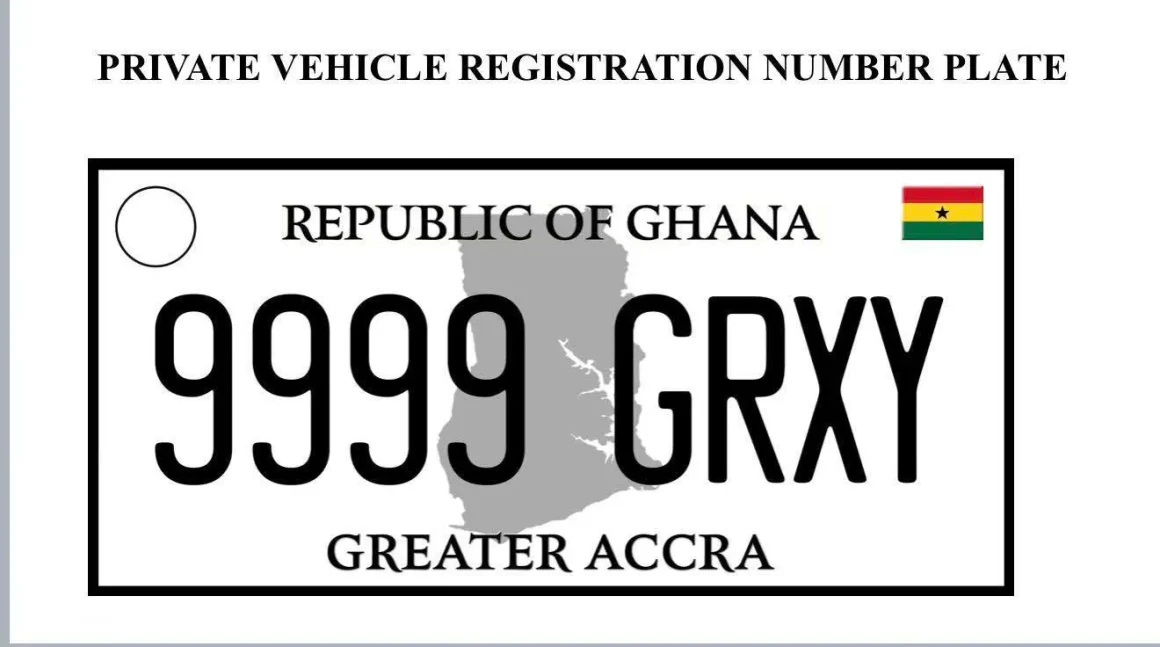
Ghana’s license plates are getting a microchip.
On Tuesday, the head of the Driver and Vehicle Licensing Authority (DVLA) showed off the new plate. DVLA Chief Executive Julius Neequaye Kotey displayed one of the plates and demonstrated the technology built into it, which includes Radio Frequency Identification (RFID) and Near Field Communication (NFC).
Every vehicle in the country will eventually carry one. Here is how the plates work, when drivers will need them, and what could go wrong.
What the Chip Does
RFID uses radio waves to read data from a small tag without physical contact. Toll tags and building access cards use the same idea.
In Ghana’s plates, passive UHF RFID chips are embedded into each plate during embossing. Security agencies with handheld or fixed readers can scan a plate and instantly pull the vehicle’s record from the DVLA’s central database.
The chip itself stores little. Make, model, ownership history, and inspection status sit in the DVLA’s central database, available in real time to authorized officers.
The NFC feature works at closer range. It is expected to let compatible devices retrieve vehicle information, helping authorized officers confirm whether registration details are genuine.
Why Ghana Is Doing This
The main target is plate cloning, where criminals copy a legitimate plate number onto another vehicle. The system features centralized production, database integration, and phone verification to strengthen registration and ownership checks.
Mr. Kotey said the RFID component is embedded in a way that makes it hard for counterfeiters to locate or copy.
The government also wants the plates to do more than identify cars. Authorities say the chips will support electronic tolling, speed monitoring and traffic law enforcement.
What Changes on the Plate
The year of registration is gone. Plates will instead carry zonal codes showing where a vehicle was registered. A car registered in Adenta, Greater Accra, for example, will end in “AD” rather than “25.”
The DVLA says this is about fairness in the used-car market. Buyers in Ghana often judge a used car by its registration year rather than its condition.
Plates will also be color-coded. White is for private vehicles, yellow for commercial, blue for motorcycles and tricycles, and green markings for electric vehicles.
The Timeline
The rollout has slipped. The DVLA first said existing vehicles would be re-registered from April 1, 2026. That did not happen. Parliament missed the deadline for amendments to L.I. 2180, so the DVLA temporarily issued plates with a “26” suffix.
The current schedule:
- August 1, 2026: pilot with government vehicles.
- September 1, 2026: registration opens for previously unregistered vehicles.
- January 1, 2027, to December 31, 2028: nationwide re-registration of all vehicles.
There is a step many drivers may miss. Any vehicle registered before 2023 must have its records migrated to the new digital platform before re-registration begins. Owners who skip this will be unable to obtain registration documents or join the exercise.
The DVLA has not published final fees. One industry estimate puts a standard plate swap at GHS 600 to GHS 1,200, including new windshield stickers. That figure is unofficial. For commercial drivers and fleet owners, even the low end is significant.
Surveillance Concerns
A plate that can be read by radio can, in principle, be read anywhere a reader is installed. Fixed readers at tolls, junctions and checkpoints could log where a car goes and when.
Ghana is not the first to face this question. Rwanda, Uganda, Togo and Ivory Coast have rolled out digital plates. In Uganda, which launched RFID plates in 2024, critics say the system can be used for surveillance, and privacy advocates are demanding more transparency.
The DVLA has not publicly explained how long location data will be kept, who can request it or whether courts must approve access. Ghana’s Data Protection Act applies, but drivers deserve specific answers.
Security of the System
Passive UHF tags are cheap and readable at a distance. That makes them convenient for enforcement. It also means unauthorized readers could, in theory, scan them. How the chips authenticate and whether their data is encrypted has not been disclosed.
The bigger risk is the central database. It will link every vehicle to its owner. A breach or insider misuse would expose far more than a stolen plate ever could.
What Drivers Should Do Now
Owners of vehicles registered before 2023 should confirm their records are on the DVLA’s digital platform. Everyone else should keep documents current and watch for official fee announcements before the 2027 window opens.
The plates may well reduce cloning and fraud. Whether they also become a tracking tool depends on rules Ghana has not yet written.