



Effective July 1, 2026, Nigeria will impose a 4% surtax — stacked on top of existing import duties — on vehicles with engine sizes of 4,000 cubic centimeters and above, and a 2% surcharge on engines between 2,000 and 3,999cc.
The levy was confirmed by Finance Minister Wale Edun and forms the centerpiece of the country’s 2026 Fiscal Policy Measures (FPM), a sweeping overhaul of Nigeria’s import and excise framework.
The goal, the government says, is threefold: price in the environmental cost of pollution, push consumers toward electric vehicles, and shore up government revenues after years of fiscal pressure.
The Stick: Penalizing Polluters
The green tax is explicitly designed to make gas-guzzlers more expensive to import and own. Vehicles with engines below 2,000cc are exempt from the surcharge, as are mass transit buses, electric vehicles, and locally manufactured automobiles.
The intent is clear — if you’re driving a modest, fuel-efficient car or taking the bus, the government isn’t coming after your wallet. If you’re importing a luxury truck or a full-size SUV, you’ll pay more.
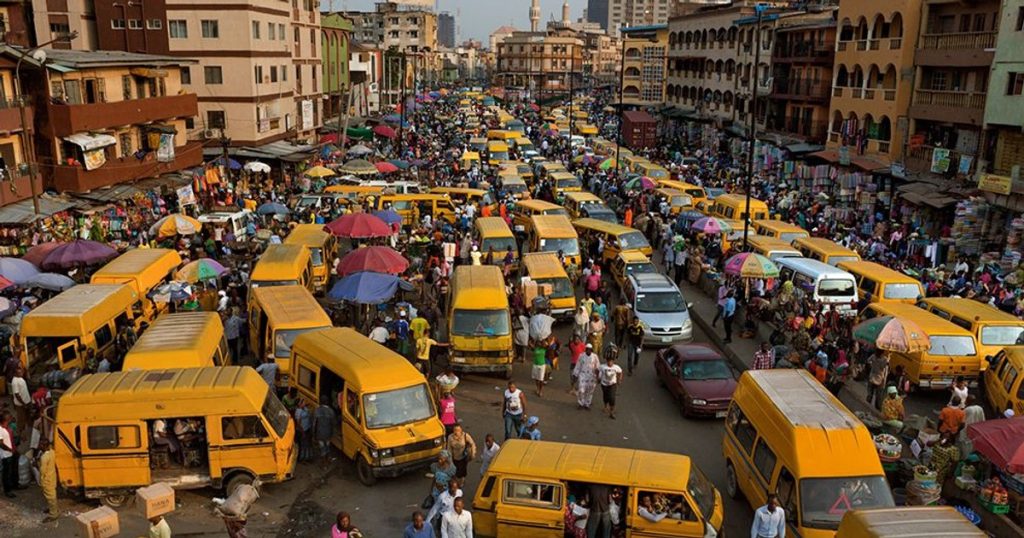
The policy fits into Nigeria’s broader climate ambitions. Nigeria imports hundreds of thousands of vehicles annually — most of them used — at an estimated cost of $8 billion a year, producing considerable emissions.
Fossil fuel passenger vehicles account for nearly three-quarters of the country’s transport-related CO₂ emissions, and poor air quality from vehicle exhaust contributes to an estimated 1,500 premature deaths each year.
At COP26, Nigeria committed to achieving carbon neutrality by 2060, with an Energy Transition Plan that targets 13 million electric vehicles — 60% of the country’s total fleet — by 2050, and full EV deployment by 2060. The green tax is one of the more concrete steps the government has taken to get there.
The Carrot: Cheaper Cars, Food, and Industrial Equipment
The green tax doesn’t arrive in isolation. Alongside it, Nigeria has also slashed import duties across 127 tariff lines in what amounts to one of the most significant trade policy revisions in years.
Tariffs on fully built passenger vehicles, including four-wheel drives and station wagons, have been cut to 40% from the 70% rate that had been in place since the 2015 fiscal policy.
Cheaper car imports may seem counterintuitive alongside a tax on large engines — but the government is betting that lower headline duties will stimulate demand broadly, while the green surcharge steers that demand toward more efficient models.
Food staples also see relief: rice imports will attract 47.5% duty, down from 70%, while broken rice is pegged at 30%. Duties on crude palm oil have been cut to 28.75% from 35%.
For infrastructure and industrialization, the measures go further. Zero percent import duty has been approved for railway locomotives, cargo vessels above 500 tonnes, agricultural and manufacturing machinery, and safety equipment.
The EV Question
The real test of Nigeria’s green tax is whether it can meaningfully accelerate electric vehicle adoption in a country where EVs remain a tiny fraction of the road fleet. As of early 2025, Nigeria’s electric vehicle fleet stood at roughly 15,000 to 20,000 vehicles — a rounding error in a country of more than 200 million people.
The structural barriers are significant. Nigeria currently generates around 4,500 megawatts of electricity for a population of more than 200 million — a fraction of what would be needed to support both households and large-scale EV charging networks.

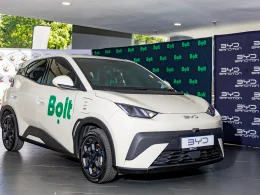
Still, momentum is building. In December, Lagos State, United Bank for Africa, and LagRide created a $100 million financing facility to procure more EVs and deploy more charging infrastructure, while Nigeria’s Ministry of Industry, Trade, and Investment kicked off 2026 by signing a memorandum of understanding with South Korea’s Asian Economic Development Committee to build an EV assembly plant in Kano, targeting annual production of 300,000 vehicles.
What Happens Next
Importers who processed Form ‘M’ before April 1 have been granted a 90-day window to clear goods under the old duty rates, giving businesses a brief runway to adjust. But from July 1, the new regime kicks in fully — including the green surcharge.
Whether taxing big engines translates into cleaner streets is another question. Nigeria has an established pattern of ambitious environmental targets and slower-moving implementation. Analysts note that electrifying even 10% of the national vehicle fleet could save billions in imported fuel and maintenance costs while stimulating demand for locally generated electricity — but that requires more than a surcharge.
It requires a grid that works, charging infrastructure that exists, and EVs that ordinary Nigerians can afford.