





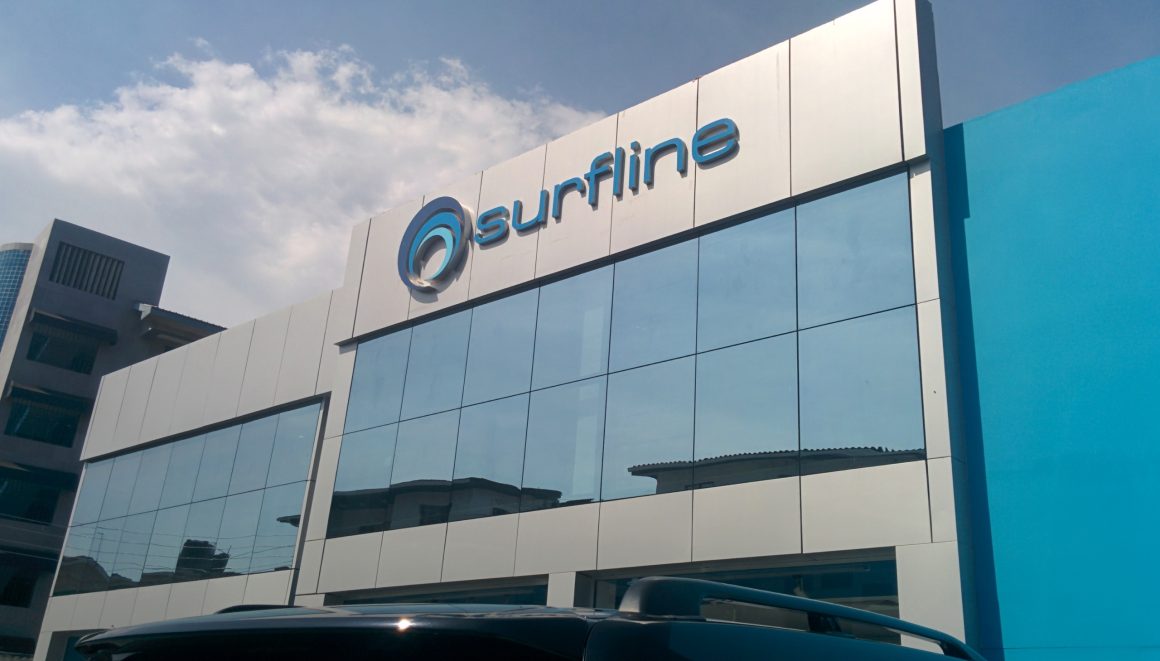
When Surfline Communications launched in 2014, it arrived with the fanfare befitting a genuine first.
Surfline was Ghana’s first 4G LTE company, deploying what was described as the single largest LTE network ever rolled out in sub-Saharan Africa, with strategic partners including IBM, Alcatel-Lucent, Microsoft, and Huawei.
For subscribers, it offered a glimpse of what fast, dedicated broadband could look like — independent of the mobile giants that already dominated voice and data.
By the end of 2017, Surfline held approximately 73% of Ghana’s wireless broadband market, with nearly 77,000 subscriptions. Its 2021 revenues were estimated at $90 million by analysts. On paper, it was a credible, market-shaping business.
But what followed was a slow-motion collapse that some industry observers had seen coming for years.
Early Beginnings
Surfline was founded in 2011 by John Taylor, founder of Woodfields (formerly Cirrus Energy Services Limited), a leading oil trading company in Ghana.
In 2007, he founded Cirrus Oil Services (COS), which was one of the three pioneer bulk distribution companies (BDCs) licensed to import petroleum products and bulk market to the oil marketing companies.
Surfline received its license from the National Communications Authority (NCA) in 2013, with license terms requiring the company to deploy a 4G LTE network in the cities of Accra, Tema, and Takoradi.
The cost of the license was reportedly $6 million.
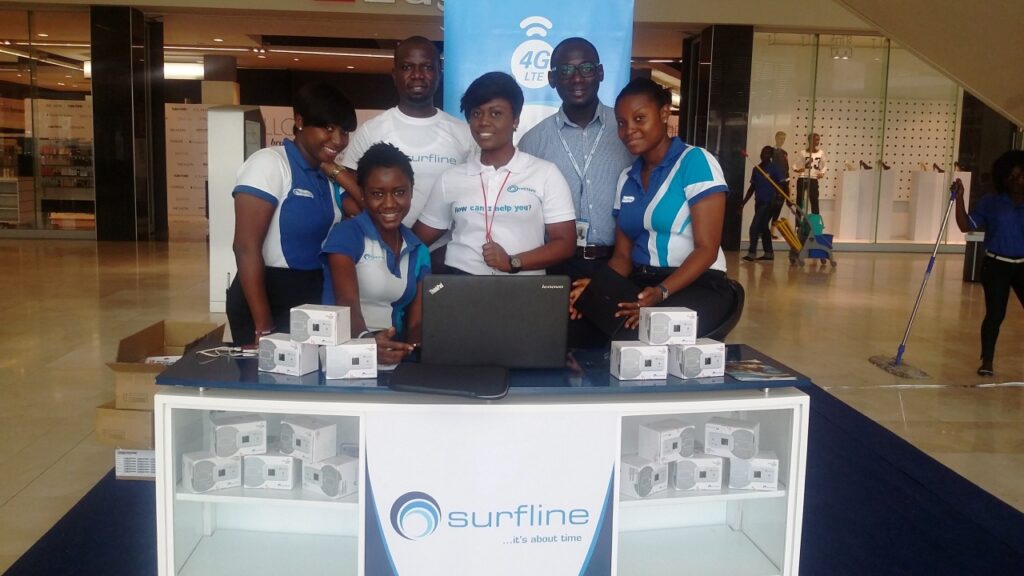
The company sprang into campaign mode, marketing its product and services across radio and TV, billing itself as the first 4G LTE network in Ghana and West Africa.
Competition from The Big Players
In 2015, the Government opened up the 4G space to more competitors, including the telco companies like MTN and Vodafone Ghana. The NCA auctioned 4G spectrum to the highest bidder.
MTN secured its 4G license, paying $65 million for spectrum access. The company officially launched its 4G services to subscribers in June 2016.
All the while, Surfline had been burning cash for its expansion efforts. In 2015, Surfline raised $30m from two foreign investors, guaranteed with the personal assets of its founder.
The facility reportedly had a 5-year term and a dollar interest rate of 12%, to be increased up to 15% if any interest payment was missed.
After MTN’s entry, Surfline saw its leading spot in the 4G space rapidly decline.
By 2017, MTN had virtually captured the market, taking more than 70% of the market due to its presence in virtually all parts of the country. The company’s share in the space shrank to just 20%.
The Long Unravelling
In 2023, Surfline shut down its data centre after being hit by serious financial difficulties. The company had earlier closed its radio access network, leaving subscribers unable to access any service.
The NCA confirmed the severity of the situation. Then NCA Director-General Joe Anokye said the company had written formally to notify the regulator of both shutdowns, describing the underlying problem as a “major liquidity issue” involving serious disputes with major vendors.
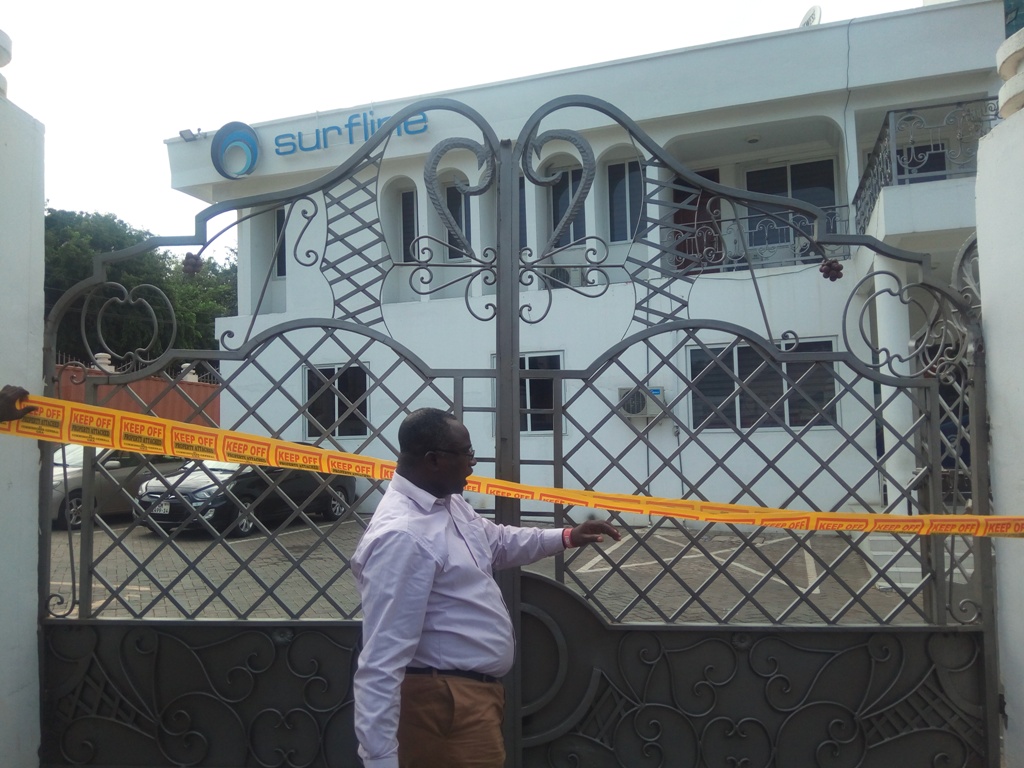
The financial rot had been building for some time. The Ghana Revenue Authority (GRA) had previously shut down Surfline’s offices over unpaid taxes amounting to GH₵37 million, comprising unremitted PAYE contributions, communication service tax, and accumulated penalties dating back to 2015.
Tower infrastructure became the final flashpoint.
ATC Ghana, the main independent tower company, discontinued pre-financing the supply of electrical power to Surfline’s equipment at co-location sites.
ATC cited the company’s persistent refusal to pay for those services over seven years — even as ATC Ghana had already paid electricity bills and diesel costs on its behalf. Without power to its towers, Surfline’s network went dark entirely.
The NCA, in its formal statement, confirmed awareness of the shutdown and noted Surfline’s indebtedness to service providers, urging the company to inform subscribers and ensure that those who had purchased data plans were not left without recourse or compensation.
“We Gave With One Hand and Took With The Other”
The most damning explanation for Surfline’s failure came not from the company itself, but from a former government minister.
In mid-2024, Ursula Owusu-Ekuful, who served as Communications and Digitalisation Minister under the Akufo-Addo administration, offered a frank diagnosis of what went wrong.
Owusu-Ekuful attributed the collapse of broadband providers directly to the 2015 government decision to auction 4G spectrum to mobile network operators — particularly MTN — describing it as giving “an undue advantage to the mobile operators to the detriment of the broadband operators.”
The contradiction at the heart of the policy was stark. Broadband operators had been sold spectrum on the explicit understanding that they would be granted exclusivity in the data space, while mobile network operators handled voice services and procured data from the broadband providers.
When the government subsequently auctioned 4G spectrum to the same mobile giants, that promise was abandoned.
The minister was direct: “It is as if we gave with one hand and took with the other.”
She noted that Surfline was not the only casualty. Other companies like Blue Broadband also exited the market.
The advantage that MTN held was not just commercial — it was structural. A company with its financial scale could acquire spectrum at prices that smaller, locally-focused broadband operators simply could not match.

A Market That Works for One
Surfline’s collapse did not happen in isolation. It accelerated trends already reshaping Ghana’s internet landscape in ways that should concern regulators and consumers alike.
As of 2024-2025, MTN Ghana controls approximately 79 percent of the internet market, far ahead of all competitors, with over 22 million Ghanaians — more than 70 percent of the population — now online.
That concentration carries consequences. MTN’s dominance is widely seen as suppressing competition, with downstream effects on pricing and innovation.
The NCA formally declared MTN a Significant Market Power and placed anti-competitive pricing obligations on the operator — a regulatory acknowledgment that the market has effectively ceased to function as one.
Despite the sector’s overall growth, increasing cost pressures driven by high inflation and foreign exchange fluctuations remain a persistent challenge for operators — pressures that weigh most heavily on smaller players without the capital buffers or balance sheet strength of a group the size of MTN.
The Industry’s Unresolved Question
Ghana’s digital ambitions — a 5G rollout, expanded rural connectivity, fintech integration — rest on a broadband market that has demonstrably failed its smaller participants.
The government’s answer, for now, has been structural consolidation: the formation of Next-Gen InfraCo (NGIC), a shared infrastructure company involving AT Ghana, Telecel Ghana, and international partners, tasked with deploying 5G on a neutral wholesale basis.
Whether shared infrastructure can compensate for a decade of policy decisions that gutted independent broadband operators remains an open question.