





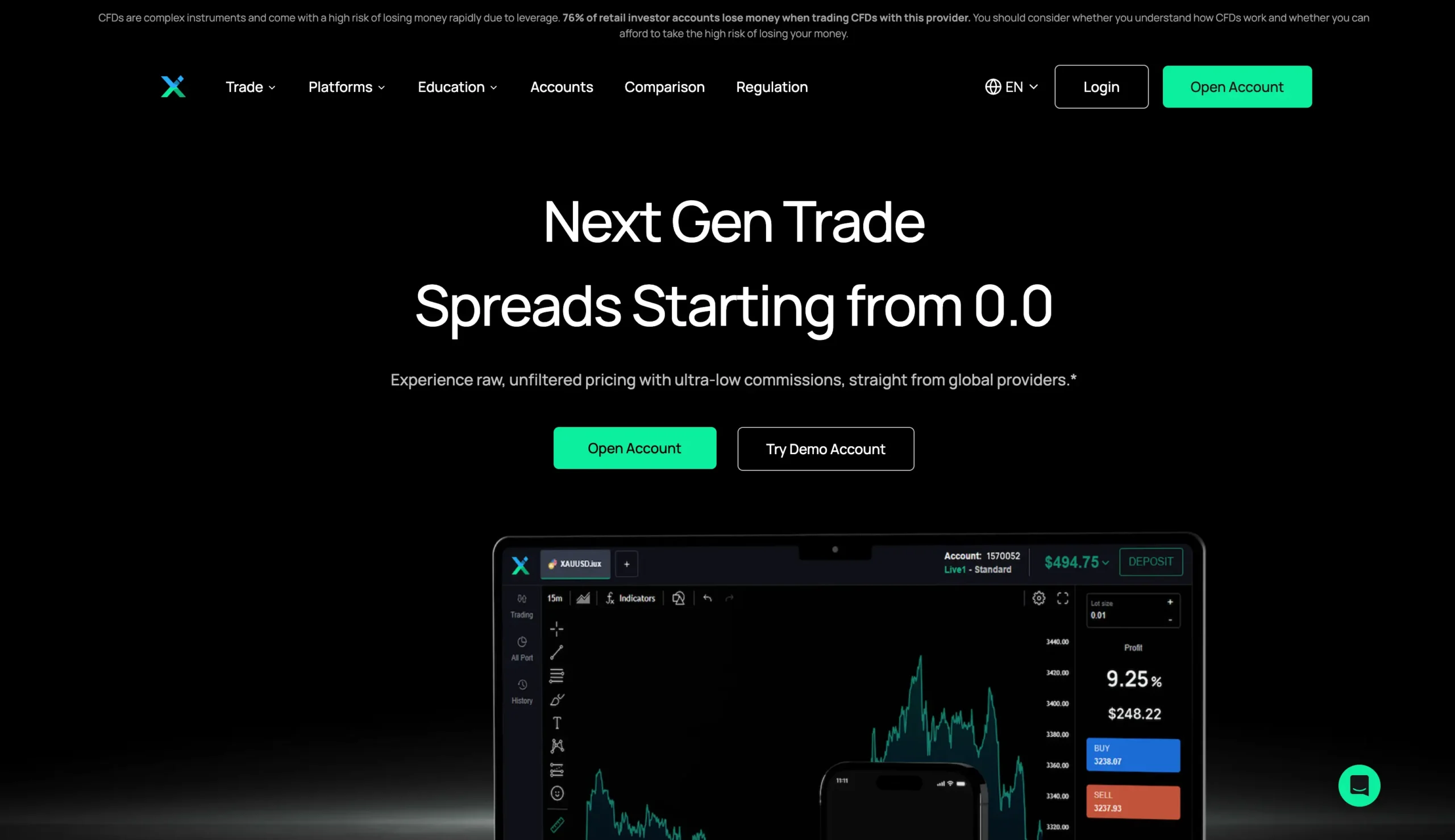
Disclosure: This article is published as a Sponsored Post / Branded Content in partnership with IUX. This material is for general financial education only and does not constitute investment advice.
Trading services are provided by IUX MARKETS (MU) LTD, regulated by the Financial Services Commission (FSC) of Mauritius as an Investment Dealer (License No. GB22200605), and IUX Markets ZA (PTY) Ltd, authorized and regulated by the Financial Sector Conduct Authority (FSCA) of South Africa (FSP No. 53103).
Risk warning: CFDs are complex instruments and come with a high risk of losing money rapidly due to leverage. 76% of retail investor accounts lose money when trading CFDs with this provider. You should consider whether you understand how CFDs work and whether you can afford to take the high risk of losing your money
Why Transaction Costs Matter
When people discuss trading costs, they often focus only on whether a platform offers “low spreads” or “zero commission.” In practice, the total cost of a trade can include several components: the spread, any commission, slippage, overnight charges, currency conversion, and the effect of volatile market conditions.
For traders using MetaTrader 5, commonly known as MT5, understanding these cost components is important because they directly affect the break-even point of a trade. A trade does not need to move only in the expected direction; it must also move enough to cover the cost of entering and exiting the position.
For example, if a trader buys a currency pair, the order is usually opened at the ask price. If the trader closes the position immediately, it is usually closed at the bid price. The difference between the bid and ask price is the spread, and that difference forms part of the cost of the trade.
The Main Types of Transaction Costs
| Cost Component | What It Means | What Traders Should Watch |
| Spread | The difference between the bid price and ask price. | Spreads can be variable and may widen during volatile or low-liquidity periods. |
| Commission | A separate fee charged per lot or per trade, depending on the account type. | A lower spread may come with a separate commission, so both should be calculated together. |
| Slippage | The difference between the expected execution price and the actual execution price. | Slippage can occur during fast-moving markets, news releases, or thin liquidity. |
| Swap / Overnight Cost | A charge or adjustment for holding positions overnight, depending on instrument and account conditions. | Traders should check whether their strategy holds positions beyond the trading day. |
| Currency Conversion | Cost or rate impact when the account currency differs from the trader’s funding currency. | Ghanaian traders should pay attention to USD/GHS conversion rates and payment provider charges. |
| Leverage Impact | Leverage increases market exposure relative to account balance. | Leverage can amplify losses as well as gains, so position sizing is important. |
How Variable Spreads Work During Session Overlaps
Forex and CFD pricing is influenced by liquidity. Liquidity refers to how much buying and selling interest is available at a given time. When liquidity is deeper, spreads are often tighter because there are more buyers and sellers quoting prices. When liquidity is thin, spreads may widen because there are fewer available prices or because liquidity providers price in additional risk.
Major session overlaps can affect this dynamic. For Ghana-based readers, the London–New York overlap is one of the most closely watched periods because it combines participation from two major financial centres. Since Ghana uses GMT throughout the year, this overlap is usually around midday to late afternoon in Ghana, although exact times shift depending on UK and US daylight-saving schedules.
During active overlaps, traders may see tighter spreads on major currency pairs because market participation is higher. However, this does not mean trading conditions are always cheaper or easier. Major economic news, central bank decisions, inflation reports, employment data, geopolitical events, and sudden liquidity changes can cause volatility. In those periods, spreads can widen quickly, orders may be filled at different prices, and stop-loss orders may not execute exactly at the requested level.
This is why traders should avoid judging an account type only by its “from” spread. A spread listed as “from 0.0 pips” or “from 0.1 pips” usually refers to the lowest available spread under certain market conditions. The actual spread at the time of trading may be wider.
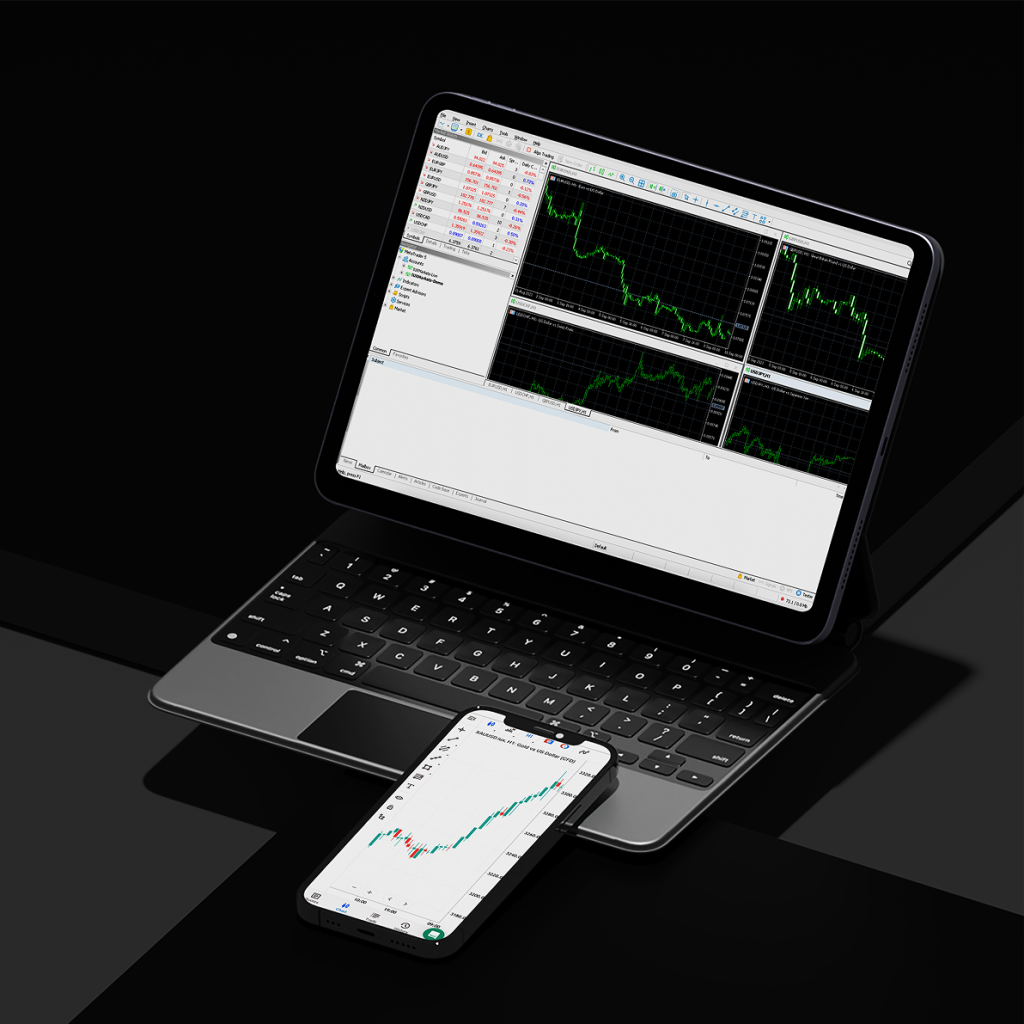
Account Structures on MT5: Spread-Only vs Spread + Commission
MT5 account structures usually follow one of two models.
The first model is a spread-only or commission-free account. In this structure, the broker may not charge a separate commission, but trading costs are built into the spread. This can make costs simpler to understand, especially for traders who prefer not to calculate a separate commission on each trade.
The second model is a raw-spread plus commission account. In this structure, the quoted spread may be lower, but a separate commission applies. This may appeal to traders who want to see the spread and commission separately, but the total cost should still be calculated before trading.
Neither structure is automatically better. The suitable model depends on trade size, trading frequency, holding period, strategy type, and the instruments being traded.
IUX MT5 Account Tiers in Approximate GHS Terms
IUX publishes its MT5 account information in USD. For Ghanaian readers, the table below converts these values into approximate Ghana Cedis (GHS) based on the Bank of Ghana’s indicative reference exchange rate of 1 USD = GH¢11.1902 (as of June 21, 2026).
In compliance with Bank of Ghana Notice BG/GOV/SEC/2025-26, all local deposits and withdrawals initiated within Ghana (including MTN Mobile Money and bank transfers) are processed and settled exclusively in Ghana Cedis (GHS) at the prevailing daily bank rates. Actual conversion amounts may vary based on payment provider charges and daily transaction timing.
| IUX MT5 Account Type | Published Starting Deposit | Approx. GHS Equivalent | Spread s From | Commission | Cost Structure Summary |
| Standard | USD 50 | Approx. GH¢559.51 | From 0.2 pips | No additional commission listed | Costs are mainly reflected through the spread. Suitable for readers comparing simpler pricing structures. |
| Raw | USD 200 | Approx. GH¢2,238. 04 | From 0.0 pips | Commission applies; IUX Help Center lists USD 7 per lot, approx. GH¢78.33 per lot using the same rate | Lower quoted spreads may be paired with a separate commission. Traders should calculate spread plus commission together. |
| Pro | USD 200 | Approx. GH¢2,238. 04 | From 0.1 pips | No additional commission listed | A spread-based structure with tighter listed spreads than Standard, based on published account information. |
These values should be treated as informational, not fixed Ghana cedi pricing. Exchange rates move, and traders should confirm the latest account conditions, conversion rates, and applicable charges before depositing.
Why “Spreads From” Should Be Read Carefully
A “spreads from” figure shows the minimum or starting spread that may be available under certain conditions. It does not mean that the same spread will apply at all times.
Spreads may widen during:
| Market Situation | Why Costs Can Change |
| High-impact economic news | Prices may move quickly and liquidity providers may widen quotes. |
| Market open or close periods | Liquidity can be uneven, especially after weekends or holidays. |
| Major geopolitical events | Uncertainty can lead to sharp price movements and wider spreads. |
| Low-liquidity hours | Fewer market participants can mean fewer available prices. |
| Volatile instruments | Instruments such as gold, indices, crypto CFDs, and exotic currency pairs may experience wider spreads than major FX pairs. |
For this reason, readers should check live spreads on the platform and compare them with the published average or minimum values. Demo trading can help users observe how spreads behave during different market sessions without using real capital.
Regulatory and Licensing Considerations for Ghanaian Readers
IUX operates through international entities, specifically IUX MARKETS (MU) LTD and IUX
Markets ZA (PTY) Ltd. It does not hold a local operating license from, nor is it supervised by, the Securities and Exchange Commission (SEC) of Ghana or the Bank of Ghana. While the SEC of Ghana presented draft guidelines in early 2026 to introduce a licensing framework for retail forex, no local licenses have been finalized or issued to retail CFD brokers.
Consequently, Ghanaian residents who choose to open accounts with offshore entities do so under their own initiative and operate without local investor protection, local complaints-handling portals, or dispute-resolution mechanisms provided under Ghanaian law.
Retail forex and CFD trading through offshore platforms is not yet locally licensed in Ghana in the same way as domestic capital-market operators. Ghana’s Securities and Exchange Commission and the Bank of Ghana continue to emphasise investor protection, licensing, and approval requirements for financial-market activities.
Readers should verify whether any broker or trading service is licensed, authorised, or approved for the relevant activity before opening an account or depositing funds.
This distinction matters because local licensing can affect investor protection, complaints handling, dispute resolution, and the legal remedies available to Ghana-based users.
Practical Risk Checks Before Trading
Before trading with real capital, readers should consider the following:
| Risk Check | Why It Matters |
| Use a demo account first | Helps traders understand platform functions, order types, spreads, and volatility without risking real capital. |
| Check live spreads | Published spreads may differ from live spreads during active or volatile periods. |
| Calculate full trade cost | Include spread, commission, possible slippage, swap, and currency conversion. |
| Use conservative position sizing | Smaller position sizes can reduce the impact of sudden market movements. |
| Understand leverage | Leverage can increase both potential gains and losses. |
| Verify licensing status | Ghanaian readers should check local regulatory updates and confirm whether a provider is authorised for the relevant activity. |
| Avoid trading during unfamiliar news events | Economic releases and central bank announcements can cause rapid market movement and wider spreads. |
Final Takeaway
Transaction costs are more than a line item on a broker’s website. They change depending on account structure, market liquidity, volatility, trade size, and the timing of execution.
For MT5 users comparing account types, the key is to look at total cost rather than focusing only on the lowest advertised spread. A commission-free account may be easier to understand, while a raw-spread account may separate the spread and commission more clearly. In both cases, spreads can widen under volatile market conditions, and leverage can increase the speed and size of losses.
For Ghanaian readers, the additional step is regulatory awareness. Offshore licensing should be reviewed carefully, and it should not be treated as a substitute for local authorisation unless confirmed by the relevant Ghanaian regulator. Education, demo testing, risk management, and verification of licensing status should come before any decision to trade with real capital.