





In addition to the two Dangote Group IPOs this year, two Chinese tech firms with predominantly African operating businesses are seeking to list on the Stock Exchange of Hong Kong (ESHK).
Transsion, whose Tecno, Infinix, and itel phones are market leaders across Africa, has cleared the regulatory hurdle for an ESHK listing. Separately, its sister company, PalmPay, a fintech firm operating in Nigeria with backing from Transsion and China’s NetEase, is seeking about $200 million ahead of a potential listing on the ESHK, with a prospective valuation of one billion dollars.
Hong Kong gives these companies access to international investors and deeper capital markets exposure whilst keeping them close to their Chinese ownership base.
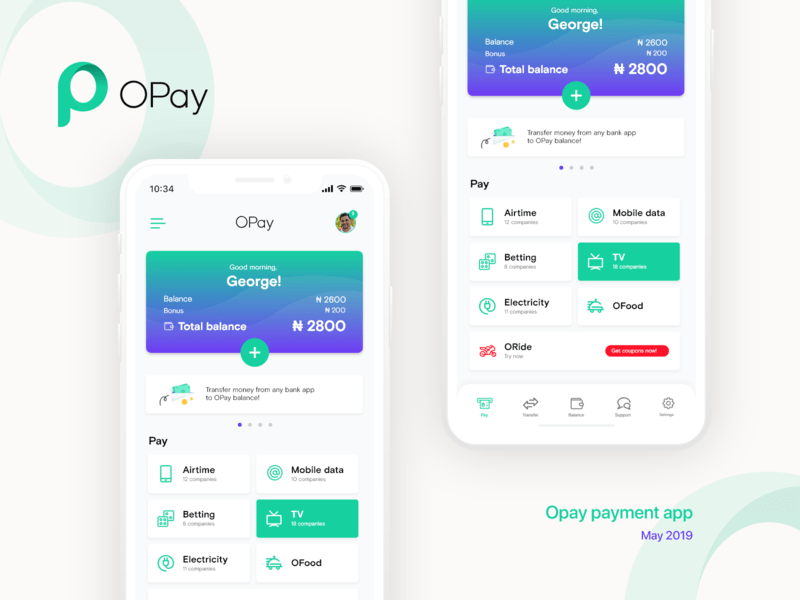
PalmPay’s rival, Opay, another Nigerian payment service provider headquartered in Lagos and Singapore, with operations in Nigeria, Egypt, Pakistan and Indonesia, also plans to go public in the United States, targeting a $4 billion valuation. Airtel Money, another leading African fintech with operations in 14 African markets, had earlier announced plans for a London IPO, with a $10 billion valuation target.
Finally, MNT-Halan, an Egyptian fintech, is also eyeing a listing on the Egyptian Stock Exchange at a billion-dollar valuation. These African IPOs slated for 2026 are well ahead of their global compatriots, a significant development and a test of whether global investors see the continent as a source of scalable growth ventures.
Earlier in the year, OpenAI, SpaceX, Anthropic, Discord, Kraken and others were listed as potential IPO candidates for 2026. But so far, only SpaceX has gone public, with Anthropic expected to close the year, while OpenAI is now aiming for 2027.
According to Emily Zheng, Senior Research Analyst at PitchBook, “IPOs are generally suffering from continued uncertainty from multiple wars, rising energy prices, and AI’s draining of moats around business models across industries has made the market too volatile to instill confidence in the next cohort of VC-backed IPO candidates.”
She argues that “the IPO pipeline is expected to remain thin in the coming years with a more selective cohort of IPO candidates: companies that stayed private longer, are bigger at the time of listing, and go public for a specific reason tied to their growth story. This is the new normal.”
Continental Holdings PLC became the 17th company to list on the Malawi Stock Exchange (MSE) on August 10th. More than ten thousand investors subscribed to shares in the Initial Public Offering (IPO), which covered 753.3 million shares priced at 195 kwacha each.
It was 93% subscribed, raising approximately K135.4 billion, making it the largest IPO in Malawi’s capital market history. The stock went up more than 75% on its first day of trading, rising from 195 to 342 kwacha.
However, the African companies that are listing on the international exchanges have raised concerns in some African markets over why they are not listing on the local exchanges where they generated their value, or not considering a secondary listing so that locals can share in the wealth that is created.
At a meeting with the President of Nigeria, the CEO of Nigeria Exchange Group (NGX Group), Temi Popoola, advocated for policy and legal measures that could encourage major companies with substantial Nigerian operations to pursue dual listings (local and international).
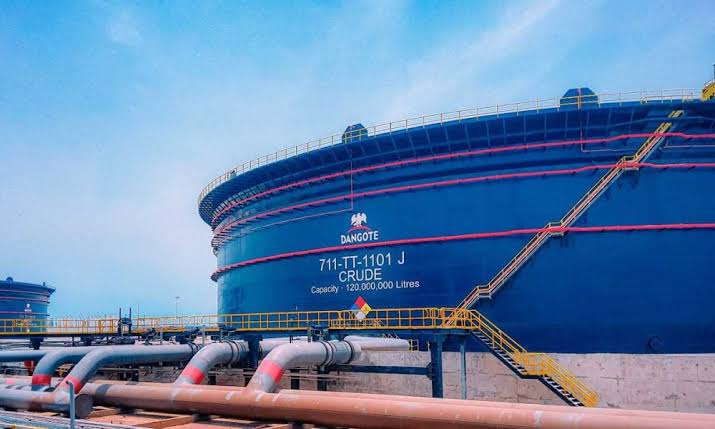
The Dangote Group is leading by example. The group’s cement business, which is currently listed on the NGX, announced plans for a secondary listing on the London Stock Exchange. The group’s subsidiary Dangote Refinery also seeks to list a 5% to 10% minority stake on the Nigeria Stock Exchange (NGX) with a dual listing on other African exchanges.
The company initiated talks in the 2nd quarter of 2026 with African stock market leaders on building a pan-African listing framework, potentially using depositary receipts rather than direct dual listings with six African exchanges, including those in Ghana, Kenya, South Africa and the regional BRVM.
Dangote Refinery’s pursuit of an IPO comes amid the expansion of its 650,000-barrel per day plant, which has become the main domestic supplier of refined fuels to the Nigerian market, as well as exporting jet fuel to Europe.
The company has secured $1 billion in an underwriting program from two firms. The amount consists of a $600 million participation in the refinery’s $2.5 billion private placement and a new $400 million commitment that will go into effect when the IPO launches in October 2026. The refinery’s CEO, David Bird, said “an international listing possibly in London is at least three years away, pending a longer track record of financial performance”.
Hopefully, Dangote’s example of dual listing that allows both local and international investors to participate in the wealth created is pursued by the new entrants into the market.