






Africa has long been the market that global businesses want but can’t quite crack. The continent’s payments landscape is a patchwork of mobile money systems, local card networks, bank transfer protocols, and regulatory frameworks that vary not just by country, but sometimes by corridor.
For a merchant based in San Francisco or Singapore, getting paid in Lagos or Nairobi has historically meant signing multiple contracts, building multiple integrations, and navigating compliance regimes that can take months to untangle.
Yuno and Flutterwave are betting they’ve found the fix — and it fits inside a single API call.
The Problem with Africa’s Payment Puzzle
Africa’s digital economy is growing fast. Mobile money alone moves hundreds of billions of dollars annually across the continent, and smartphone penetration continues to surge. But for global merchants, the very diversity that makes Africa exciting is also what makes it daunting.
Nigeria runs differently from Ghana. Rwanda’s mobile money ecosystem looks nothing like South Africa’s card infrastructure. Uganda, Tanzania, Zambia — each market has its own rails, its own rules, its own friction.
That fragmentation has effectively acted as a tax on ambition. Companies willing to invest the time and capital to integrate locally can win big. Those who can’t afford that complexity simply stay out.
One Dashboard, Eight Markets — and Counting
The partnership announced between Yuno, the global payment orchestration platform, and Flutterwave, Africa’s most prominent payments infrastructure company, is designed to collapse that complexity into a single point of access.
Through Yuno’s unified API, merchants can now activate Flutterwave’s full suite of local payment methods — cards, mobile money, and bank transfers — across Nigeria, Ghana, Uganda, Tanzania, Zambia, Rwanda, South Africa, and more, all from a centralised Yuno dashboard.

The significance of that “and more” shouldn’t be understated. Flutterwave has spent years securing regulatory licenses and building local payment integrations across 34 African countries, processing over one billion transactions worth more than $40 billion for clients ranging from Uber to PiggyVest.
That infrastructure depth is now, in theory, available to any Yuno merchant at the flip of a switch.
“We’ve spent years doing the heavy lifting,” said Olugbenga “GB” Agboola, Flutterwave’s Founder and CEO — integrating local payment methods and securing licenses across the continent to build what he calls a single payment superhighway. The Yuno partnership, he argues, is how that highway gets opened to the world.
The Orchestration Layer Meets the Local Rails
Yuno’s role in this equation is that of the conductor. The platform — which already connects over 1,000 payment methods and fraud tools globally, serving enterprise clients like McDonald’s, Uber, and GoFundMe — specialises in payment orchestration: routing transactions intelligently, optimising acceptance rates, and managing the complexity of multi-provider payment environments from a single layer.
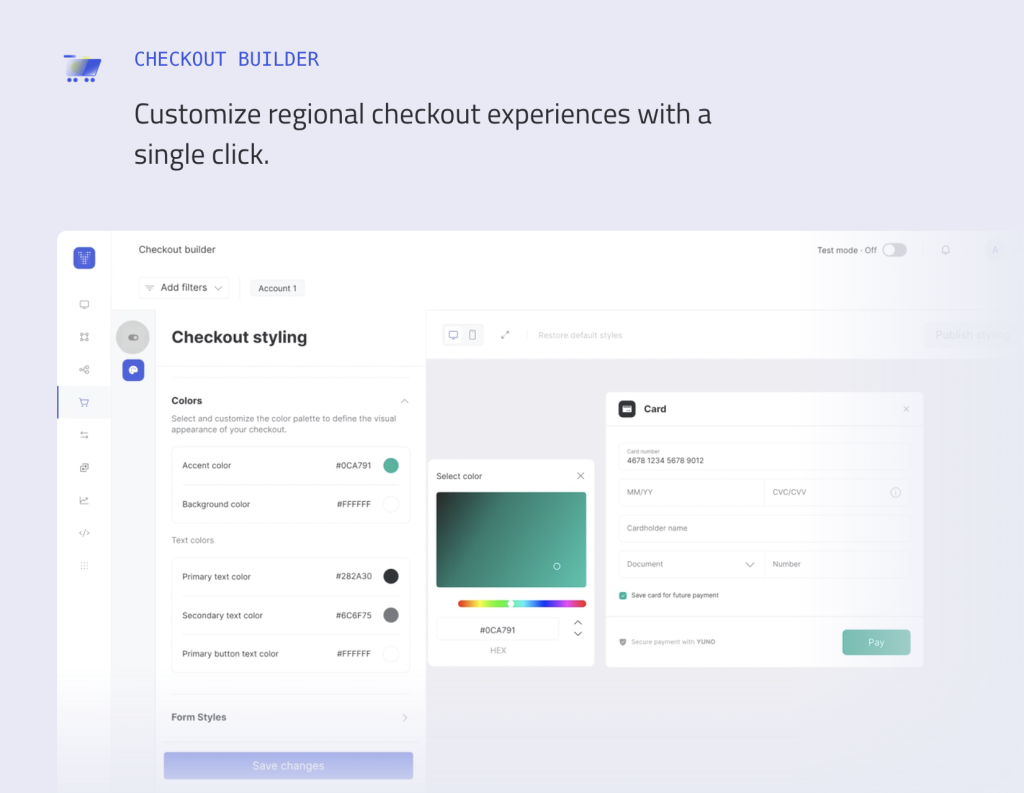
Flutterwave provides what orchestration alone can’t: boots on the ground, local regulatory credibility, and payment method coverage that took years to build. The pairing is, structurally, a classic platform play — one company owns the relationship with the end merchant, the other owns the relationship with the market.
For Yuno CEO Juan Pablo Ortega, the appeal is straightforward. Expanding into Africa has been a costly, resource-intensive exercise for global businesses. This partnership, he says, gives merchants a scalable path in — one that doesn’t require them to rebuild from scratch in every new market they enter.