





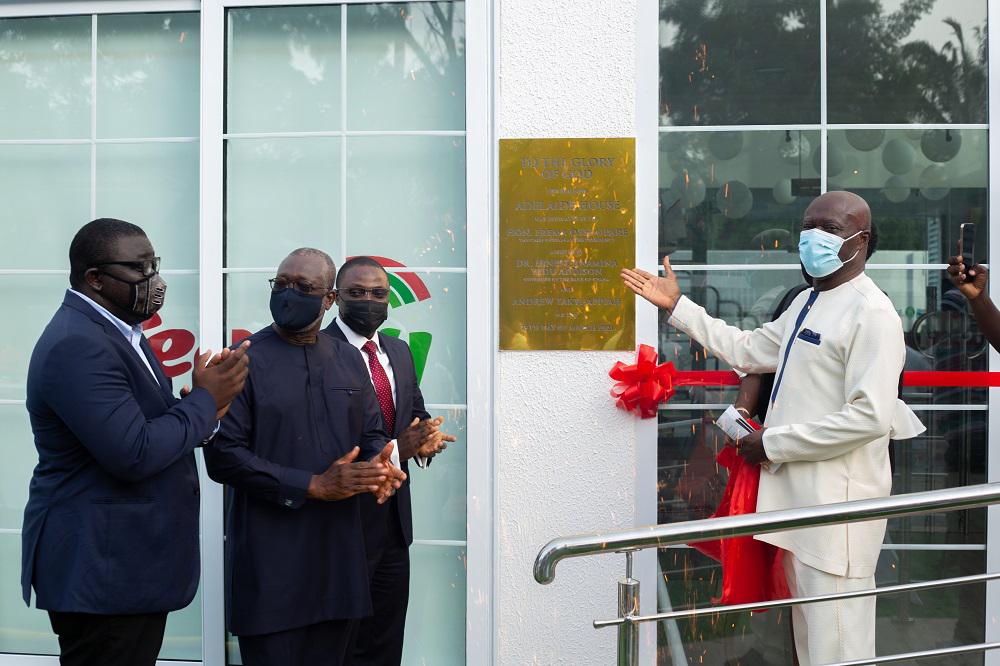
Zeemoney (Barbados) Limited, the Caribbean subsidiary of Ghanaian fintech company Zeepay, is winding down its operations on the island — a quiet collapse of what was once pitched as a transformative bridge between Africa and the diaspora.
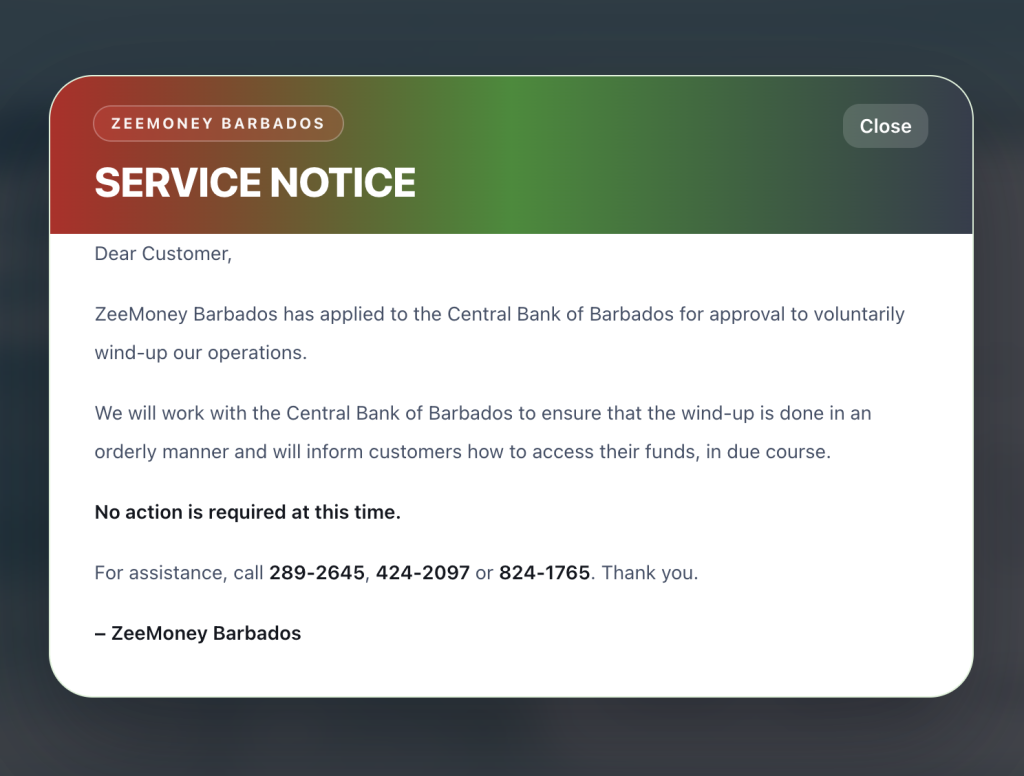
The company, which operated four locations across Barbados, announced on its website that it had applied to the Central Bank of Barbados for approval to voluntarily wind up operations, pledging to work with regulators to ensure the process was orderly and that customers could access their funds.
A Licence Suspended
The Central Bank first moved against Zeemoney on May 5, suspending its licence through June 4 following a supervisory review that raised concerns about the institution’s financial condition, governance, operational continuity, and regulatory compliance.
During the suspension period, Zeemoney was barred from conducting any money or value transmission business. At the end of the suspension, the company was required to correct the identified deficiencies. It reportedly did not.
The central bank had been pointed in its language. Its enforcement order cited “subsequent developments that have materially deepened the bank’s concerns” — regulatory language that signals more than a paperwork problem.
How Zeemoney Got to Barbados
Zeemoney’s bet in Barbados was a deliberate strategic bet by Zeepay’s founder, Andrew Takyi-Appiah, on the Caribbean remittance corridor.
When Zeepay received approval from the Central Bank of Barbados to establish Zeemoney as its Caribbean headquarters, the company projected that its operations on the island would create around 10,000 jobs and energize the local fintech ecosystem.
Takyi-Appiah framed Barbados as a gateway — a base from which Zeepay could serve African diaspora communities across the Caribbean and facilitate remittances flowing back to the continent.
Zeemoney offered a broad suite of services: international remittances, mobile money and digital transfers, wallet and payment services, and transfer termination into bank accounts, debit cards, and mobile wallets.
Zeepay processed over 10 million transactions worth more than $3 billion in 2023 alone, building one of Africa’s most extensive remittance networks, connecting money transfer operators to mobile wallets across more than 20 countries. The Caribbean was meant to be the next chapter.
The Gap Between Vision and Execution
The Barbados closure exposes a recurring tension in African fintech’s expansion playbook: the gap between the scale of ambition and the operational depth required to sustain it in unfamiliar regulatory environments.
Zeemoney’s four branches — headquartered at the Dome Mall in Warrens with locations in Speightstown, Hastings and the Sheraton Mall Annex — served both Barbadians and foreign nationals sending money across borders.
For customers who relied on those branches, the shutdown leaves an immediate practical problem: how to recover funds held in Zeemoney wallets and accounts while the wind-down process plays out.
The company said it would inform customers “in due course” about how to access their money. That vague timeline is unlikely to reassure those caught in the middle.
What It Means for Zeepay
Back in Ghana, Zeepay’s core business remains active. The company raised $18 million in debt financing in 2025 to power further expansion, and continues to operate across Ghana, Zambia, Ivory Coast, Sierra Leone, and the Gambia, among other markets.
But the Barbados exit is a reputational dent. Zeepay built its brand on being a reliable last-mile payments infrastructure for underserved populations. A regulator-forced closure — driven by governance and financial concerns, not market conditions — raises questions about how the company manages oversight as it scales across jurisdictions with varying regulatory expectations.