



Disclosure: This article is published as Branded Content in partnership with IUX Markets. High-Risk Warning: Contracts for Difference (CFDs) are complex speculative instruments. Seventy-six percent of retail investor accounts lose capital when trading CFDs with this provider.
Consider whether you understand how CFDs work and can afford the high risk of losing your capital.
Trading services are provided by IUX MARKETS (MU) LTD, regulated by the Financial Services Commission (FSC) of Mauritius as an Investment Dealer (License No. GB22200605), and IUX Markets ZA (PTY) Ltd, authorized and regulated by the Financial Sector Conduct Authority (FSCA) of South Africa (FSP No. 53103).
Risk warning: CFDs are complex instruments and come with a high risk of losing money rapidly due to leverage. 76% of retail investor accounts lose money when trading CFDs with this provider. You should consider whether you understand how CFDs work and whether you can afford to take the high risk of losing your money
Check the Broker’s Regulatory Status
One of the first things traders should review is the broker’s regulatory and licensing position.
Some online brokers operate through entities licensed in offshore or international jurisdictions. These licenses may allow the broker to provide services in specific regions, but they do not automatically mean the broker is locally licensed in Ghana.
IUX operates through licensed international entities: IUX MARKETS (MU) LTD, regulated by the Financial Services Commission (FSC) of Mauritius as an Investment Dealer (License No. GB22200605), and IUX Markets ZA (PTY) Ltd, regulated by the Financial Sector Conduct Authority (FSCA) of South Africa (FSP No. 53103)
It is also important to note that retail forex and CFD trading is not yet locally licensed in Ghana in the same way as regulated domestic capital market products. Ghanaian readers should review current updates from relevant authorities, including the Securities and Exchange Commission Ghana and the Bank of Ghana, before engaging with any online trading provider.
Understand the Product Risk
Forex and CFD trading involve high risk, particularly because these products often use leverage. Leverage operates as a risk multiplier, magnifying both profits and losses. Under high leverage ratios, a minor adverse market movement can trigger a margin call or an automatic account liquidation. Capital should only come from funds an individual can afford to lose without affecting financial stability.
A small market movement can have a large impact on the trading account, especially when position sizes are too large or when stop-loss planning is not properly applied. Traders should not view leveraged products as a simple way to generate income. They should be treated as complex financial products that require education, preparation, and risk control. No broker, platform, tool, or account type can guarantee trading results.
Review Trading Costs
Trading costs can affect the outcome of each trade. These costs may include spreads, commissions, swaps, and other account-related charges.
The spread is the difference between the buy and sell price of an instrument. In some accounts, the broker’s cost may be built mainly into the spread. In other accounts, the spread may be lower, but a separate commission may apply. Overnight fees, also known as swaps, may apply when positions are held beyond the trading day.
Traders should compare these costs carefully and understand how they apply to their trading style. A trader who places many short-term trades may be affected differently from a trader who holds positions for longer periods.
It is also important to remember that spreads can widen during volatile market conditions, major news events, market opening periods, or times of lower liquidity.
Check the Platform and Available Tools
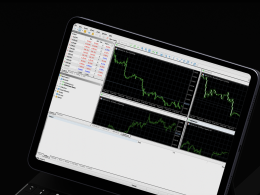
Many brokers provide access to trading platforms such as MetaTrader 5, commonly known as MT5. A platform may include charts, indicators, order types, price history, account monitoring tools, and demo account access.
These tools can help traders learn how the market works and how to manage orders. However, platform features should not be misunderstood as tools that predict profits. Technical indicators, charting functions, and automated tools are only decision-support features. They do not remove market risk.
Before using real capital, traders should spend time understanding how to place, modify, and close orders on a demo account.
Read Deposit, Withdrawal, and Account Terms
Traders must evaluate deposit fees, withdrawal processing times, and associated charges. Foreign Exchange Rate Warning: If your account is funded or denominated in a currency other than Ghana Cedis (GHS), exchange rate fluctuations can significantly impact your margin requirements and account equity.
This is especially important when using an offshore-regulated provider. Readers should understand which legal entity they are contracting with, where that entity is regulated, what dispute-resolution options may be available, and whether local investor protections apply.
Traders should also check whether there are fees related to inactivity, currency conversion, withdrawals, or overnight holding.
Assess Customer Support and Education
Customer support can be important when a trader needs help with account access, verification, deposits, withdrawals, or platform navigation. Traders should check whether support is available in a language and time zone that is suitable for them.
Educational resources can also be useful, especially for beginners. However, readers should separate education from promotion. A responsible broker should explain both the potential uses and the risks of trading products.
Educational material should not suggest that trading is easy, predictable, or suitable for everyone.
Build Risk Management Habits Early
Risk management should be part of the decision-making process before any live trade is placed. Some basic risk management practices include using a demo account, keeping position sizes small, avoiding excessive leverage, setting risk limits, and maintaining a trading journal.
Traders should also avoid using funds needed for rent, school fees, food, medical expenses, or other essential commitments. Trading capital should only come from money the individual can afford to lose without affecting their financial stability.
Stop-loss orders can help define risk, but they do not guarantee a fixed exit price in all market conditions. Slippage may occur, especially during fast-moving markets or low-liquidity periods.
Where IUX Fits
IUX provides access to online trading services and MT5-based account structures for eligible users as well as access to the IUX Web Trading platform and the IUX App (available in select regions only). The platform may be considered by traders who want to compare account types, platform access, and trading conditions.
However, readers should review IUX’s full product terms, risk disclosure, account conditions, and applicable licensing information before making any decision. Offshore licensing should be understood clearly, and Ghanaian readers should note that retail forex and CFD trading is not yet locally licensed in Ghana.
IUX operates through international entities, specifically IUX MARKETS (MU) LTD and IUX Markets ZA (PTY) Ltd. It does not hold a local operating license from, nor is it supervised by, the Securities and Exchange Commission (SEC) of Ghana or the Bank of Ghana. While the SEC of Ghana presented draft guidelines in early 2026 to introduce a licensing framework for retail forex, no local licenses have been finalized or issued to retail CFD brokers.
Consequently, Ghanaian residents who choose to open accounts with offshore entities do so under their own initiative and operate without local investor protection, local complaints-handling portals, or dispute-resolution mechanisms provided under Ghanaian law.
Conclusion
Choosing a broker should not be based only on advertising, bonuses, spreads, or social media visibility. A careful trader should review regulation, product risk, fees, platform tools, withdrawal terms, and risk management practices before depositing real capital.
Online trading can involve significant financial loss. Before trading live, Ghanaian readers should consider using a demo account, reviewing official regulatory information, and seeking independent financial guidance where appropriate.