





For anyone who has ever tried to send money from New York to Nairobi, the experience is grimly familiar: fees that quietly eat 5 to 10 percent of your transfer, settlement windows measured in days rather than minutes, and a cutoff time that means your family waits until Monday if you send on a Friday afternoon.
The correspondent banking system — the global network of intermediary banks that move money across borders — was not built for speed or efficiency. It was built for control.
MoneyGram and NALA think stablecoins can replace it, at least for the corridors that matter most.
The two companies announced a strategic partnership this week to use stablecoin-based settlement infrastructure for cross-border payouts across Africa and Asia — two regions where traditional payment rails have historically been the slowest, most expensive, and most opaque in the world.
The deal is one of the most concrete deployments of stablecoin technology in mainstream financial services to date, and it signals something important: the crypto experiment in global payments is moving from white papers to working plumbing.
What They’re Actually Building
At the center of the partnership is NALA’s infrastructure platform, called Rafiki. It functions as a licensed stablecoin on- and off-ramp — a system that can receive value denominated in digital dollars, convert it, and route it to local bank accounts and mobile money networks across the region in near real-time.
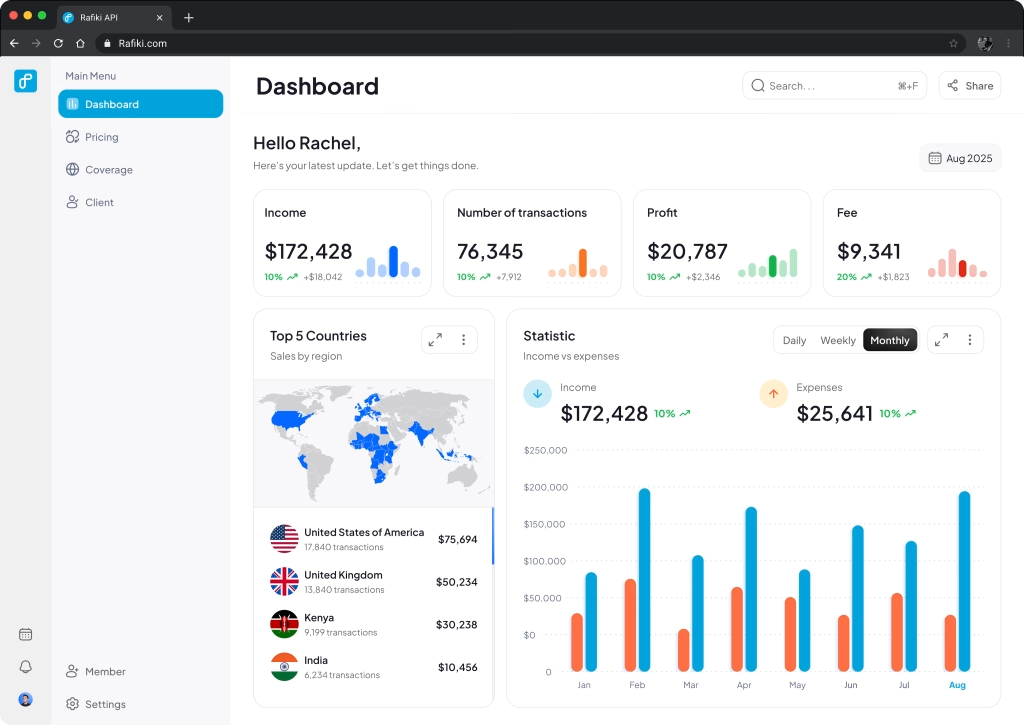
MoneyGram plugs into Rafiki to get that local distribution reach. NALA gets MoneyGram’s global network and the institutional credibility that comes with it.
Together, they are effectively building a new settlement layer for cross-border payouts — one that doesn’t depend on correspondent banks, pre-funded accounts sitting idle in dozens of jurisdictions, or the operating hours of legacy financial institutions.
The practical difference for end users is significant. Instead of waiting two to three business days for a transfer to clear, payments settle in near real-time. Instead of absorbing wide foreign exchange spreads built into correspondent bank margins, the system routes directly to local liquidity providers.
And instead of hitting a wall at 5 PM on a Friday, the network runs 24 hours a day, seven days a week.
For MoneyGram, there’s also a meaningful back-office benefit. Reducing the need to pre-fund accounts across multiple countries improves capital efficiency — money that was previously sitting dormant in foreign accounts can be put to work elsewhere.
Why Emerging Markets, Why Now
Africa and Asia are not an afterthought in this deal. They are the point.
These regions represent some of the highest-volume remittance corridors in the world, yet they are consistently served worst by the existing system.
Mobile money has already transformed how hundreds of millions of people in sub-Saharan Africa manage their finances — platforms like M-Pesa in Kenya and MTN Mobile Money across West Africa have proven that consumers will embrace digital financial infrastructure if it actually works.
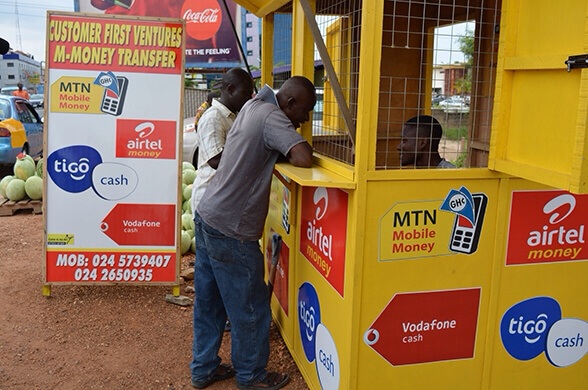
What has lagged is the international layer connecting those local ecosystems to the rest of the global economy.
That’s the gap MoneyGram and NALA are targeting. By plugging stablecoin settlement into existing mobile money and banking networks rather than asking users to adopt entirely new wallets or interfaces, the partnership sidesteps the adoption problem that has sunk countless crypto payment initiatives before it.
The use cases extend beyond personal remittances. Global marketplaces paying gig workers and freelancers in Ghana or the Philippines, multinational companies managing treasury across multiple currencies, and platforms collecting payments locally before distributing them internationally — all of these stand to benefit from faster, cheaper cross-border rails.
The remaining questions are real. Regulatory frameworks for stablecoins vary enormously across the countries involved, and liquidity depth in some corridors is still thin. A model that works smoothly in Kenya may hit friction in a market with tighter currency controls or less developed mobile money infrastructure.
Source: Fintech Finance News