





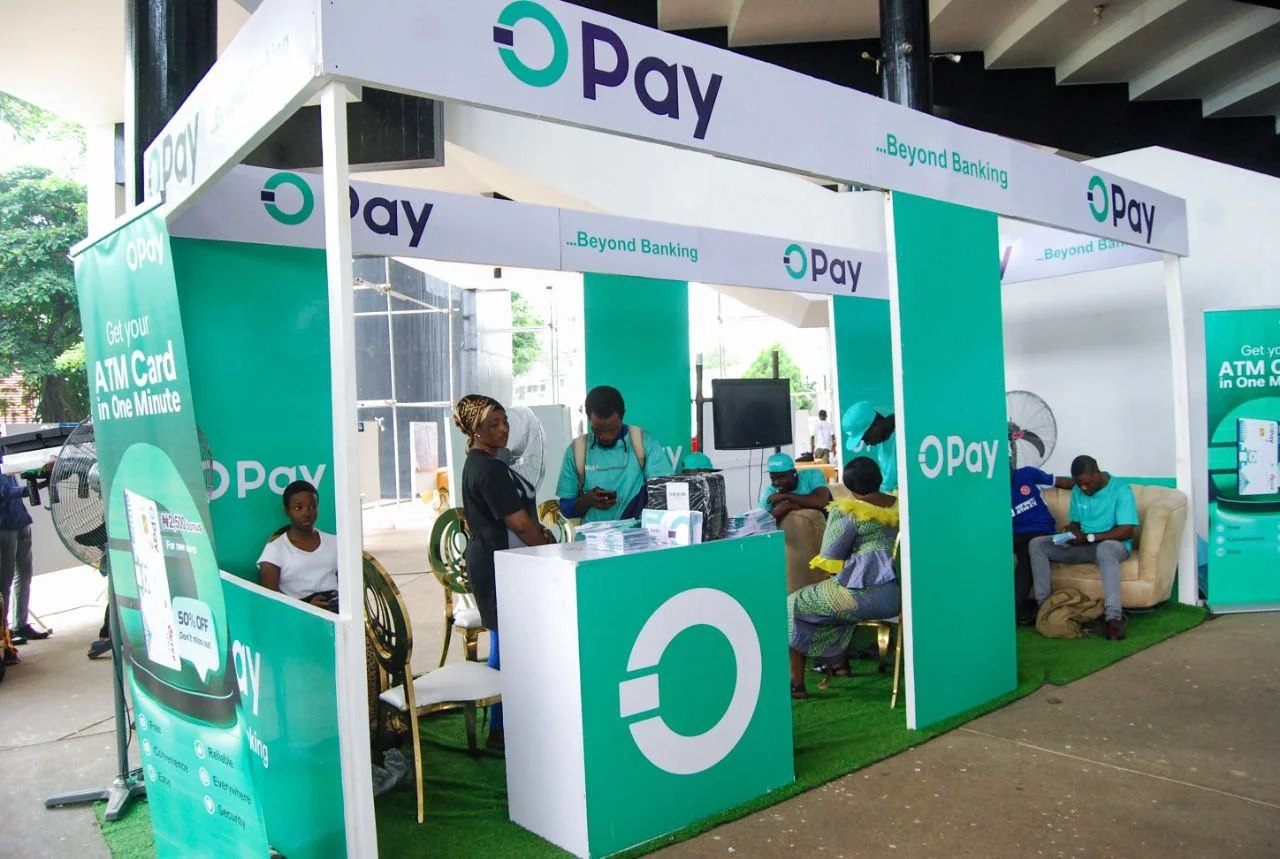
OPay, the African-focused fintech giant backed by SoftBank’s Vision Fund, has officially set its sights on a public listing in the United States.
According to sources familiar with the matter, the company has enlisted a powerhouse trio of investment banks—Citigroup Inc., JPMorgan Chase & Co., and Deutsche Bank AG—to lead its initial public offering (IPO).
The move, reported first by Bloomberg, marks a pivotal moment for the African tech ecosystem. If successful, OPay’s debut on a U.S. exchange (likely the NYSE or Nasdaq) would represent one of the most significant exits for a private technology company operating in emerging markets in recent years.
The Road to Wall Street
While the company has not yet released a target valuation or a specific date for the filing, analysts suggest the IPO could value the fintech unicorn significantly higher than its $2 billion valuation achieved during its 2021 Series C funding round.

The involvement of JPMorgan and Citigroup—two of the world’s most active IPO underwriters—underscores the global investor interest in African digital finance. For Deutsche Bank, the mandate reinforces its strengthening position in cross-border tech transactions.
From Ride-Hailing to Fintech Dominance
To understand the significance of OPay’s IPO, one must look at its rapid, often aggressive, evolution. Founded in 2018 by Chinese billionaire Yahui Zhou (the founder of Opera), OPay initially launched in Nigeria as a multi-service “super app.”
In its early days, OPay was synonymous with its vibrant green-branded motorcycles (ORide) and tricycles (OTrike). This mobility-first strategy was designed to acquire users quickly, offering food delivery and logistics alongside transportation.

However, in 2020, following a regulatory crackdown on commercial motorcycles in Lagos—Nigeria’s economic hub—the company pivoted sharply.
By shedding its capital-intensive logistics wings, OPay doubled down on its core financial services. It built a massive “agent banking” network, deploying hundreds of thousands of point-of-sale (POS) terminals across Nigeria.
This allowed the “unbanked” and “underbanked” populations to deposit, withdraw, and transfer money without ever stepping into a traditional brick-and-mortar bank.
The Engine of Growth: Nigeria’s Digital Shift
OPay’s meteoric rise is inextricably linked to Nigeria’s shifting economic landscape. As the Central Bank of Nigeria (CBN) pushed for a “cashless policy,” OPay filled the vacuum left by traditional banks that often struggled with system downtimes and high transaction fees.
Today, OPay is a licensed Mobile Money Operator (MMO). Its platform facilitates billions of dollars in monthly transactions, offering everything from peer-to-peer transfers and bill payments to high-yield savings products and micro-loans.
The company’s competitive advantage has been its infrastructure. By building a robust, low-latency technology stack, OPay achieved a transaction success rate that lured millions of frustrated traditional bank customers. As of 2024, OPay boasted over 30 million registered users and over 500,000 agents.
SoftBank and the Global Backing
OPay’s journey has been fueled by deep pockets. In August 2021, the company raised $400 million in a round led by SoftBank Vision Fund 2. This was a landmark moment, marking SoftBank’s first major investment in an African-focused startup.
Other notable backers include Sequoia Capital China, Redpoint China, Source Code Capital, and Meituan.
This international pedigree has always suggested that OPay was being groomed for a global exit. By listing in the U.S., OPay seeks to access the deepest pools of liquidity in the world, providing its early venture capital backers with a high-profile liquidity event.
Challenges and the Path Ahead
Despite its success, OPay’s path to the IPO is not without hurdles. The Nigerian economy has faced significant headwinds, including record-high inflation and the volatility of the Naira. As a company that earns primarily in local currency but reports to international investors in dollars, OPay must prove it can maintain growth despite currency fluctuations.
Furthermore, the fintech space in Africa is becoming increasingly crowded. Rivals like PalmPay and Moniepoint are vying for the same market share, while traditional banks are aggressively upgrading their digital offerings to win back customers.