





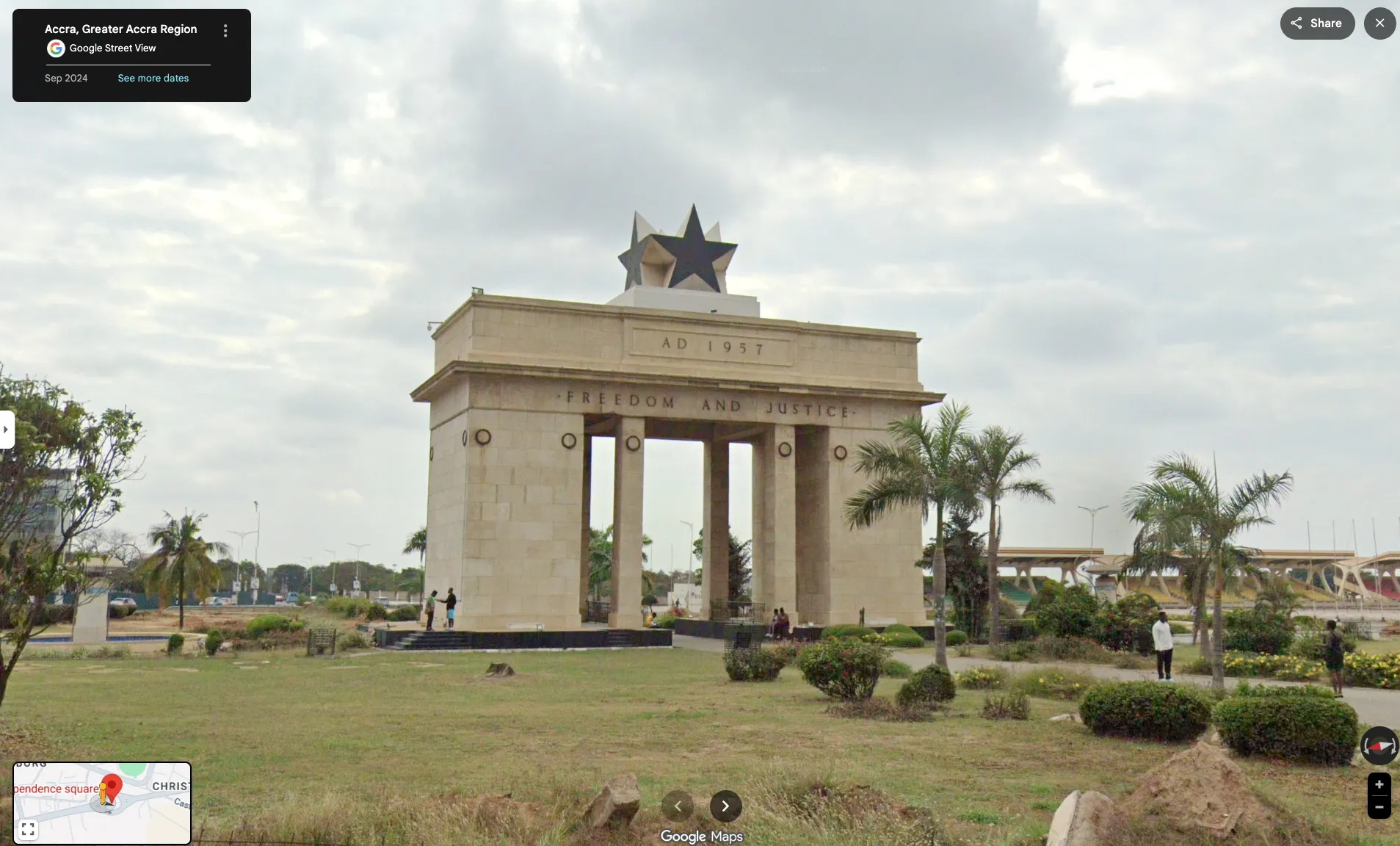
Google has released a significant update to its Street View coverage of Ghana, expanding the tool’s reach across major urban centers, national highways, and some of the country’s most visited cultural landmarks.
The update is the most comprehensive imagery refresh the country has received since Google first brought Street View to Ghana in 2016.
Accra, Kumasi and the Roads Between
The update deepens coverage in Accra and Kumasi, Ghana’s two largest cities. Users can now virtually navigate past the National Theatre in Accra — a building modeled to resemble a ship — and through the stalls of Kejetia Market in Kumasi, one of the largest open-air markets in West Africa.
Sporting venues including the Accra Sports Stadium and the Baba Yara Stadium in Kumasi are also newly covered.
Beyond the cities, Google’s cameras have traveled key national highway corridors: the N10 running north through Tamale, and the N12 and N2 cutting through Ghana’s eastern and western regions. The company says it used upgraded camera systems on these routes to improve color accuracy and image sharpness.
Heritage Sites Go Digital
The update also brings virtual access to several of Ghana’s UNESCO World Heritage Sites. Users can now explore the line of historic forts along the Gulf of Guinea coastline — colonial-era structures that served as holding sites during the transatlantic slave trade — and view the traditional Asante buildings near Kumasi, which reflect the architectural legacy of the Asante Empire.
Nature draws coverage too. Google has captured imagery along the Volta River, including the Adomi Bridge at Atimpoku, as well as nature reserves and the Aburi Botanical Gardens in the hills east of Accra. New coastal and beach imagery rounds out what amounts to a broad sweep of Ghana’s geographic and historical terrain.
New Camera, New Ambitions
Google says it has deployed its latest generation Street View camera in Ghana this year — the company’s most advanced imaging hardware to date. The immediate priority for the new equipment is expanding coverage along the coast, with Cape Coast and Takoradi identified as targets for more detailed city-level imagery.
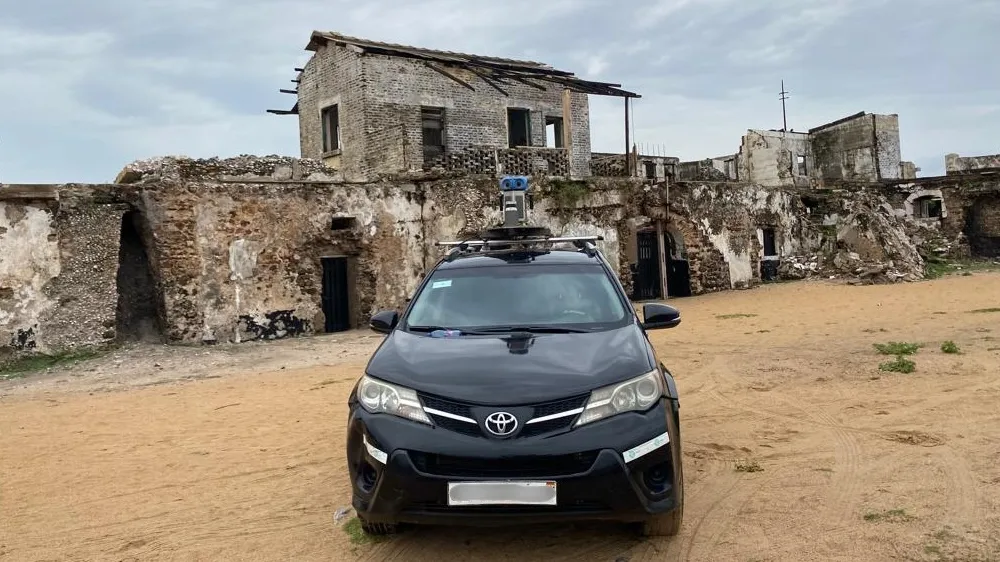
The announcement signals that this update is a floor, not a ceiling. Street View coverage in many parts of sub-Saharan Africa has historically lagged behind Europe and North America, with large gaps between cities and little documentation of secondary roads and towns.
Google has been gradually closing that gap — it launched Street View in Namibia earlier this year under a similar push — but significant portions of Ghana and the broader region remain uncharted.
Why It Matters
For a country like Ghana, which has positioned itself as a tech and tourism hub in West Africa, improved mapping infrastructure has practical consequences. Better Street View coverage aids navigation app accuracy, supports logistics and delivery services, and gives international visitors a way to familiarize themselves with destinations before they arrive.
The Year of Return campaign in 2019, which drew tens of thousands of African diaspora visitors to Ghana, demonstrated the country’s appetite for tourism investment. Digital visibility on tools like Google Maps is part of that equation.
Still, Street View is ultimately a product built for Google’s ecosystem. The company stands to benefit commercially from richer map data in emerging markets, where it competes with local and regional alternatives for user attention and advertiser dollars.
The framing of such updates as a public service — bringing Ghana’s beauty to the world — sits alongside a less-discussed business rationale.
The new imagery is available now on Google Maps.