



Disclosure: This article is published as Branded Content in partnership with IUX Markets.High-Risk Warning: Contracts for Difference (CFDs) are complex speculative instruments. Seventy-six percent of retail investor accounts lose capital when trading CFDs with this provider.
Consider whether you understand how CFDs work and can afford the high risk of losing your capital.
Trading services are provided by IUX MARKETS (MU) LTD, regulated by the Financial Services Commission (FSC) of Mauritius as an Investment Dealer (License No. GB22200605), and IUX Markets ZA (PTY) Ltd, authorized and regulated by the Financial Sector Conduct Authority (FSCA) of South Africa (FSP No. 53103).
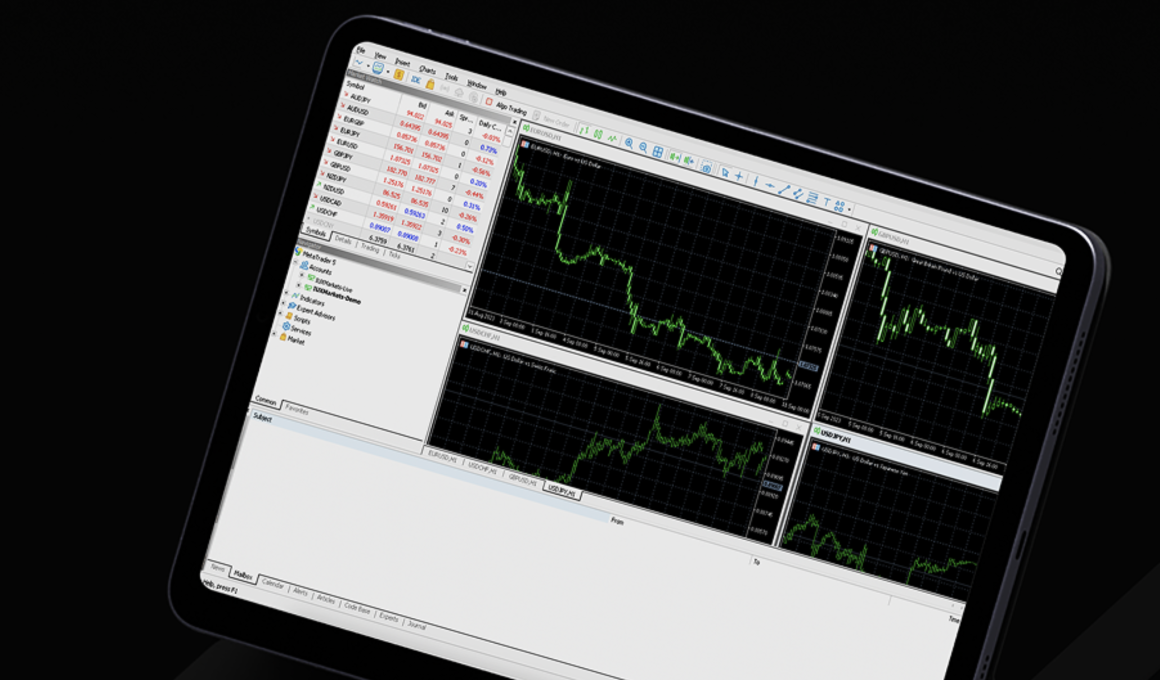
Risk warning: CFDs are complex instruments and come with a high risk of losing money rapidly due to leverage. 76% of retail investor accounts lose money when trading CFDs with this provider. You should consider whether you understand how CFDs work and whether you can afford to take the high risk of losing your money MetaTrader 5, commonly known as MT5, is one of the platforms used by traders to access global financial markets, including forex and contracts for difference, or CFDs.
For beginners, the platform can appear technical at first because it includes charts, order types, indicators, account data, and trading tools in one interface.
What Is MT5?
MT5 is a trading platform that allows users to view market prices, analyse charts, place orders, monitor open positions, and review account activity. It is commonly used by brokers that offer access to forex, commodities, indices, and other CFD instruments. The platform itself does not create profits or reduce market risk.
It is a tool for order execution, market observation, and account management. A trader’s outcome depends on many factors, including market movement, trading decisions, costs, leverage, risk management, and emotional discipline.
For beginners, the most important first step is not to rush into live trading. It is better to understand the basic functions of the platform before using real capital.
Understanding Charts and Market Prices
MT5 allows traders to view price charts across different timeframes. For example, a user may look at a one-minute chart, a one-hour chart, a daily chart, or other time intervals. These charts show how prices have moved in the past.
The platform may also include technical indicators, such as moving averages, oscillators, or volatility tools. These indicators can help traders study historical price behaviour, but they do not predict the future with certainty.
Markets can move in unexpected ways, especially during major economic announcements, geopolitical developments, or periods of low liquidity. Beginners should avoid assuming that a chart pattern or indicator will always lead to a specific result.
Common Order Types on MT5
MT5 includes several order types that help traders manage how they enter and exit the market. A market order is used when a trader wants to buy or sell at the current available market price. The final execution price may differ slightly during fast market movement.
A limit order is used when a trader wants to buy or sell at a specific price or better. This can help traders avoid entering at an unwanted price, but the order may not be filled if the market does not reach the selected level.
A stop order is used when a trader wants an order to activate once the market reaches a certain price. Stop orders are often used for breakout strategies or risk management. A stop-loss order is designed to close a position when the market moves against the trader beyond a chosen level.
However, during periods of extreme volatility, low liquidity, or rapid price movements, stop-loss orders are subject to slippage and market gaps. Under these conditions, the order will be executed at the next available market price, which may be significantly less favorable than the requested price, potentially leading to losses that exceed the trader’s expectations. A standard stop-loss order does not guarantee a fixed execution price.
Leverage and Margin: Why Beginners Should Be Careful
Leverage allows a trader to control a larger market position with a smaller amount of capital. This is one reason forex and CFD trading can carry high risk. For example, a small price movement may create a much larger percentage change in the trader’s account when leverage is used. This can work in either direction. Losses can increase quickly if a trader uses large positions or does not manage risk properly.
Margin is the amount of account balance required to keep a leveraged position open. If the market moves against the trader and the account does not have enough margin, positions may be closed automatically by the broker.
Beginners should understand leverage and margin before placing live trades. Leverage operates as a multiplier, amplifying both potential profits and potential losses. Because the FSC
Mauritius does not impose restrictive caps on retail leverage, traders can access high ratios, making disciplined risk management essential. Maintaining lower leverage ratios, utilizing smaller position sizes, and keeping accounts well-capitalized are critical practices to help mitigate the risk of rapid capital loss and sudden margin liquidation.
Demo Accounts Before Real Capital
A demo account allows traders to practise using the platform without risking real money. It can help beginners learn how to place orders, set stop-loss and take-profit levels, monitor charts, and understand account movements.
However, demo trading is not the same as live trading. In a live account, traders may experience emotional pressure, slippage, variable spreads, and different execution conditions. A demo account is useful for learning the platform, but it should not be treated as proof that a strategy will perform the same way with real funds.
Before moving from demo to live trading, beginners should have a written trading plan and a clear risk limit.
Trading Costs on MT5
Trading on MT5 may involve several types of costs. The spread is the difference between the buy and sell price of an instrument. Some account types may include wider spreads with no separate commission, while others may offer different spread conditions with a separate
commission.
Swap or overnight fees may apply when a position is held beyond the trading day. These fees can vary depending on the instrument, position direction, and account terms.
Spreads are not fixed in all market conditions. They can widen during volatile periods, major news events, market openings, or lower-liquidity sessions. Traders should understand that the cost of entering and exiting a trade may change depending on market conditions.
Regulatory and Licensing Considerations for Ghanaian Readers
IUX operates through international entities, specifically IUX MARKETS (MU) LTD and IUX Markets ZA (PTY) Ltd. It does not hold a local operating license from, nor is it supervised by, the Securities and Exchange Commission (SEC) of Ghana or the Bank of Ghana. While the SEC of Ghana presented draft guidelines in early 2026 to introduce a licensing framework for retail forex, no local licenses have been finalized or issued to retail CFD brokers.
Consequently, Ghanaian residents who choose to open accounts with offshore entities do so under their own initiative and operate without local investor protection, local complaints-handling portals, or dispute-resolution mechanisms provided under Ghanaian law.
Retail forex and CFD trading through offshore platforms is not yet locally licensed in Ghana in the same way as domestic capital-market operators. Ghana’s Securities and Exchange Commission and the Bank of Ghana continue to emphasise investor protection, licensing, and approval requirements for financial-market activities.
Readers should verify whether any broker or trading service is licensed, authorised, or approved for the relevant activity before opening an account or depositing funds.
This distinction matters because local licensing can affect investor protection, complaints handling, dispute resolution, and the legal remedies available to Ghana-based users.
A Beginner’s Risk Checklist
Before placing a live trade, beginners should consider the following:
- Use a demo account to learn the platform first.
- Understand the product, instrument, and trading cost.
- Start with small position sizes if moving to live trading.
- Avoid using high leverage without understanding the risk.
- Set a maximum loss limit before entering a trade.
- Avoid trading with money needed for essential expenses.
- Review account terms, risk disclosures, and withdrawal conditions.
- Keep a record of trades and review mistakes regularly.
Conclusion
MT5 can be a useful platform for learning how online trading works, but it should be treated as a tool rather than a shortcut to financial results. Beginners should focus first on education, platform practice, cost awareness, and risk management.
Before trading with real capital, readers should review the broker’s licensing information, understand the risks of leveraged products, and test platform functions through a demo account.
Trading decisions should be made carefully and with full awareness that losses are possible.