



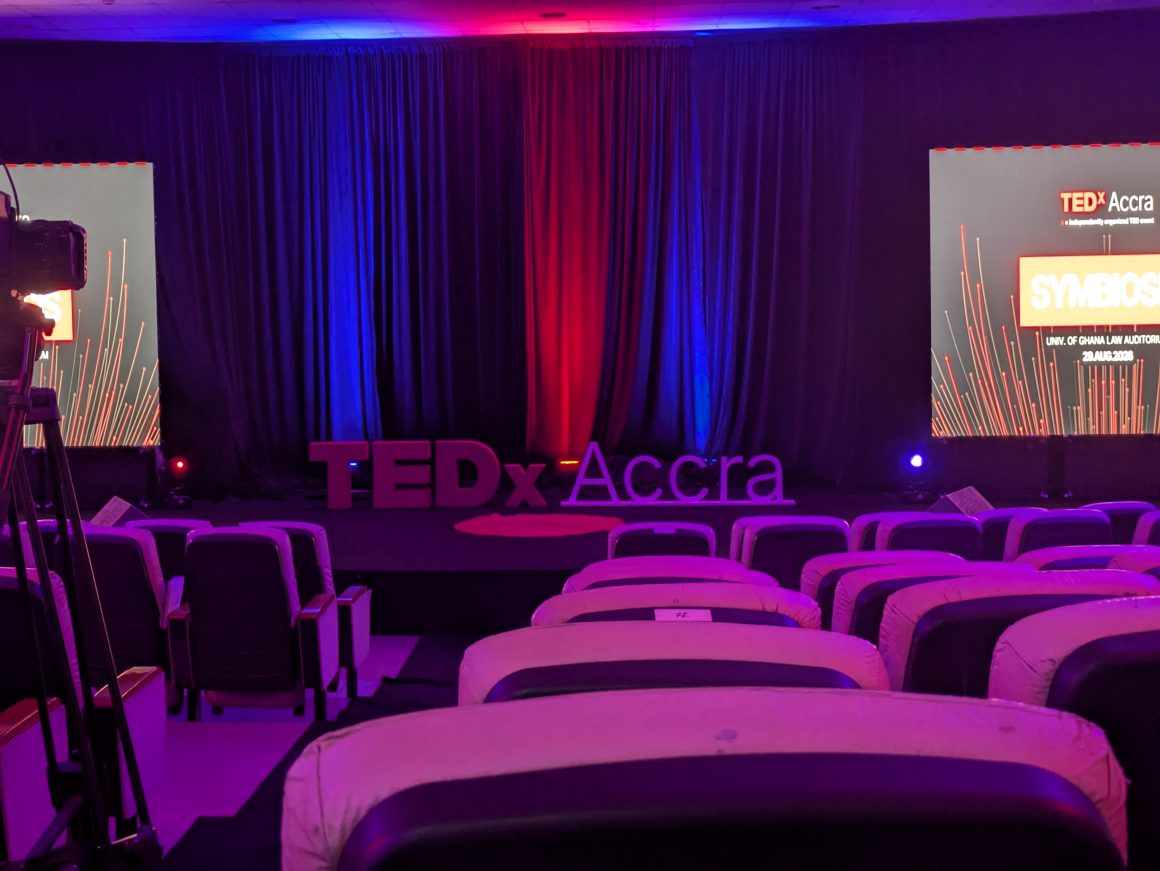
TEDxAccra finally returned to Accra after a four-year absence. The 2026 edition took place at the Ghana Law Auditorium on the University of Ghana, Legon campus. The edition fell under the theme “Symbiosis”.
In Ghana’s capital city, where ancient practices, new technology, sprawling growth, and fragile ecosystems are constantly bumping into each other, the organizers built a program around a simple premise — that real progress isn’t solo achievement; it’s collective evolution.
Six speakers from manufacturing, environmental science, venture investing, art, and computer science each took their own run at what it means to grow together rather than apart.
The event was hosted by hosts Zulfiquer “Zuu” Gbedemah and Afi Tsegah of the popular podcast, “Stay By Plan”.
Here’s an overview of the day’s event
What If: A Question About the Community and Collaboration
The event opened with Ama Yeboaa Adi-Dako Seidu and Kabiru Seidu, who set the tone with a “what if” framing of solving issues in Accra. The conversation then turned to something very concrete: the Odaw River and its long, visible struggle with pollution.
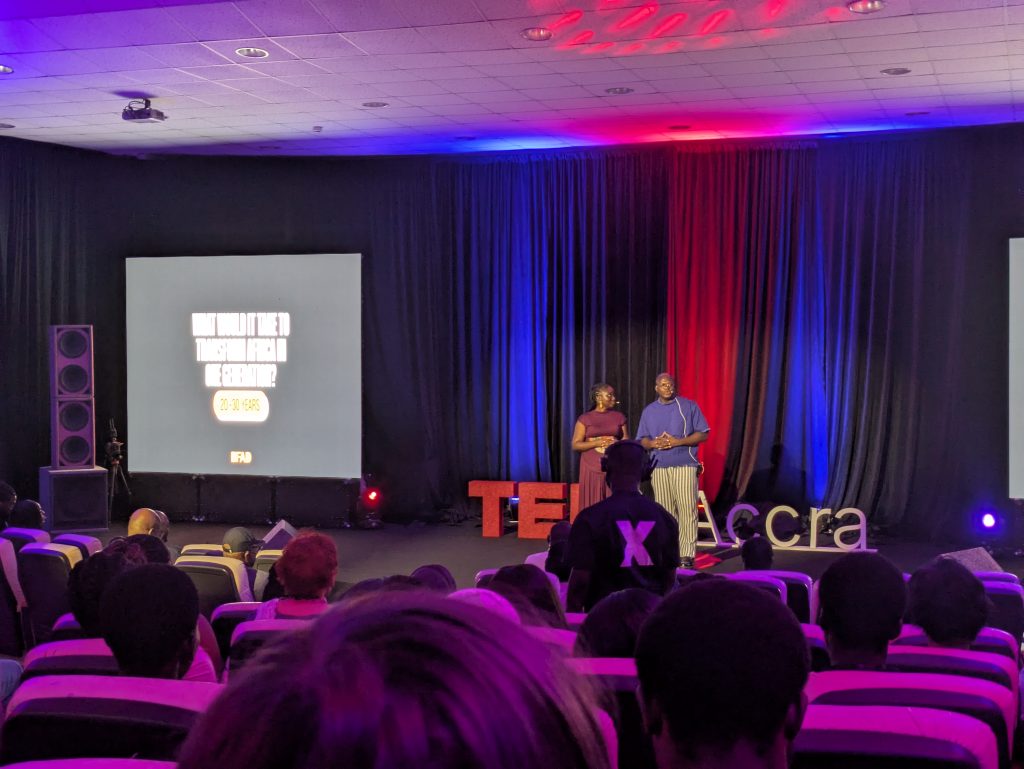
Their presentation touched on Big Fat African Development (BFAD) (their organisation) and used the Odaw — one of Accra’s most degraded waterways — as a way of grounding the day’s theme of symbiosis in a problem most residents walk past every day.
What 40 Years of Manufacturing Teaches About Succession
Emmanuel Osei Ntim, General Manager and serial entrepreneur, brought the audience inside FON Limited, the family manufacturing business — spanning FON Tissue and FON Packaging — that his family has built over four decades.
He shared numbers that underscored the scale of what’s often dismissed as “just” a local manufacturer: 250,000 boxes produced per day for Nestlé, alongside partnerships with Distell and Kasapreko, including work on Savanna Dry.
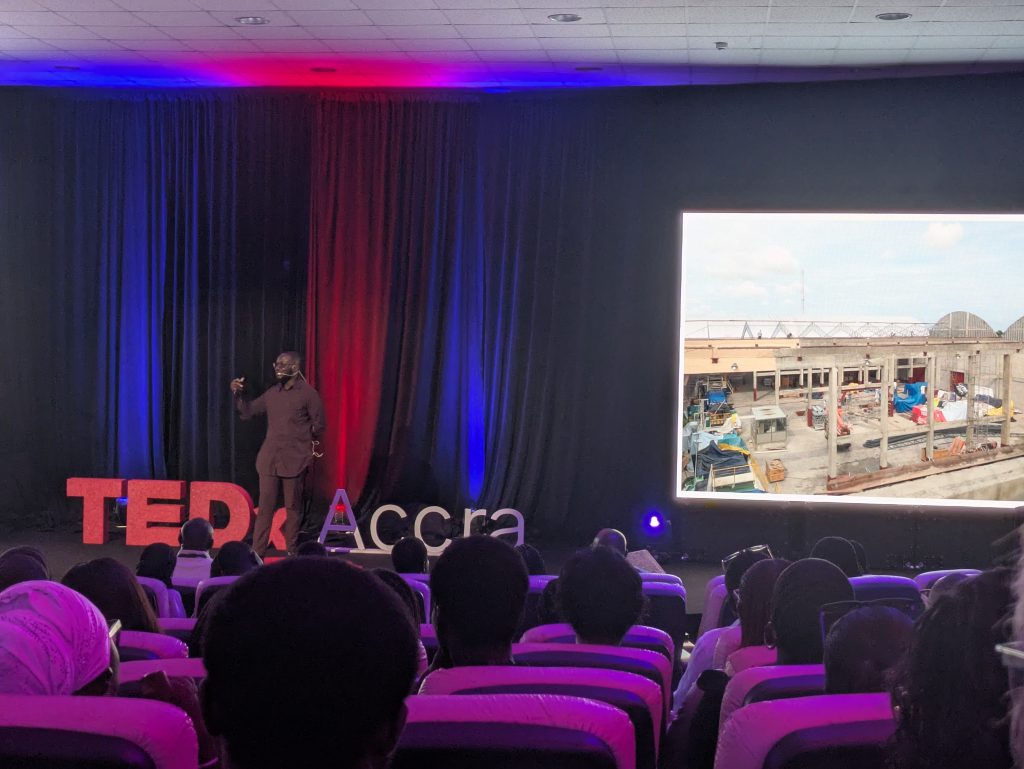
But the heart of his talk wasn’t the output figures — it was governance. Osei Ntim used FON’s story to make a broader point about African family businesses: too many are built without the structures needed to outlive their founders.
The continent’s succession problem, he argued, isn’t a talent gap — it’s a governance gap.
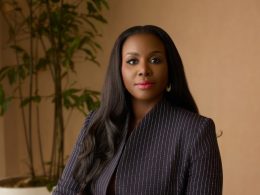
Rachael Tachie-Menson: The Value of Friction
Rachael Tachie-Menson, Founder of Author Digital Labs, took the audience into an idea that runs against the grain of most startup advice: that friction — struggle, resistance, discomfort — isn’t something to engineer away, but something with real value.
Drawing on her own path and observations from Stanford’s tech ecosystem, she argued that self-belief is often forged in exactly the moments founders are told to avoid.
Compatibility, she suggested, isn’t the absence of friction between people or ideas — it’s what gets built through it.
Katya “the Destroyer”: Saving the Korle Lagoon
Widely regarded as the standout talk of the day, Katya — Head of Environmental [initiatives, per her bio] — delivered a talk on environmental cleanup centered on the Korle Lagoon, one of the most polluted water bodies in West Africa.
Katya touched on her personal story of attending Harvard and trying to “save the world”.
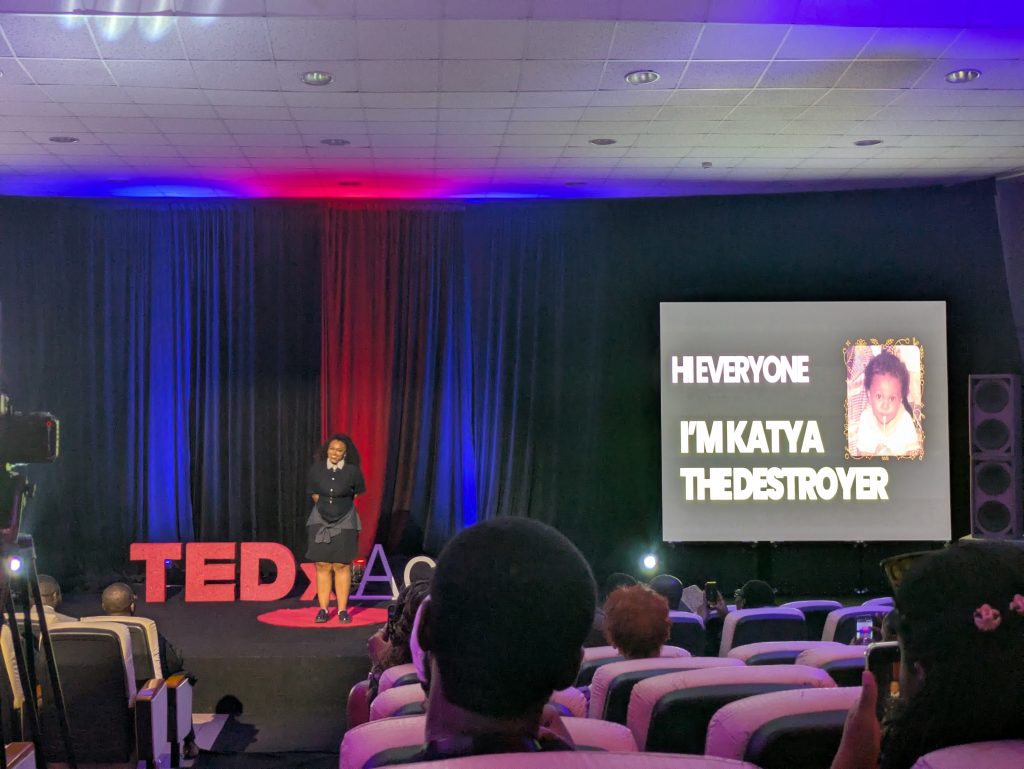
Where the opening presentation raised the Odaw as a question, Katya’s talk answered it with urgency and specificity: this is what saving a piece of a city’s ecology actually looks like in practice, and why it can’t wait.
Knowledge vs. Intelligence in Africa’s AI Debate
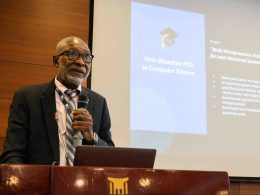
Prof Isaac Wiafe, of the Department of Computer Science, tackled one of the most contested conversations in tech right now: what AI development should look like on the continent — locally built versus internationally imported.
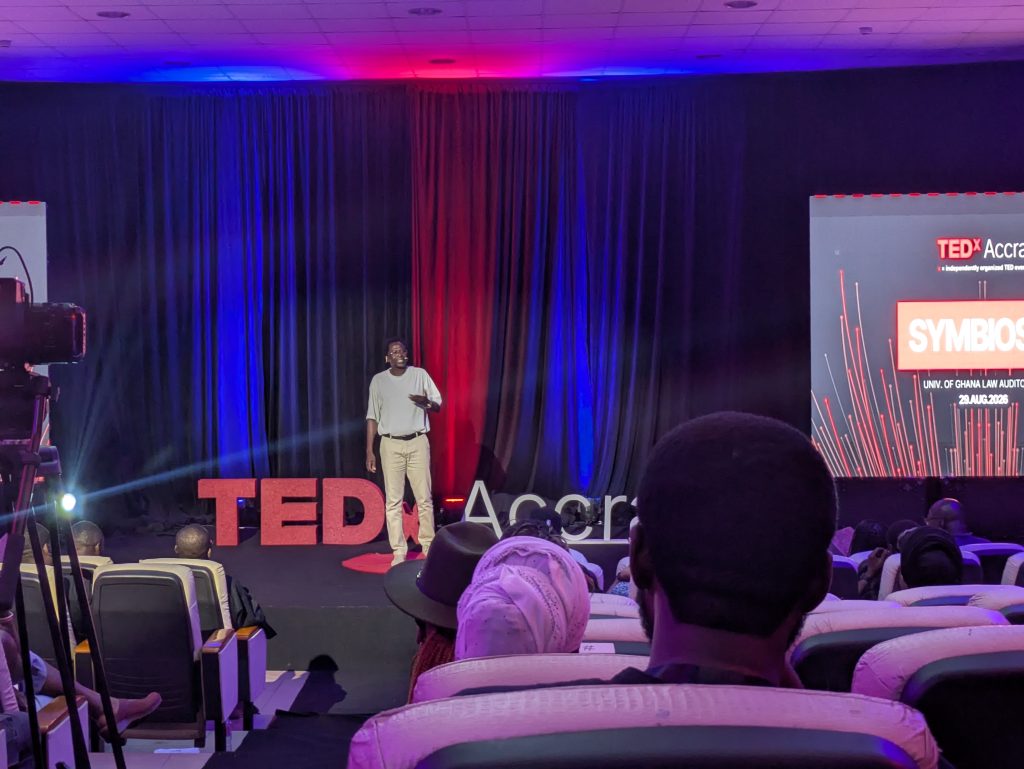
His talk reframed the usual debate, drawing a distinction between knowledge and intelligence and asking what Africa loses, and what it stands to gain, depending on which one its AI strategy is built around.
Ghosts, Bridges, and What History Leaves Behind
Closing out the individual talks, artist and philanthropist Ibrahim Mahama took the audience on a path of some of Ghana’s history and his mission to preserve it. He used examples of Red Clay Studio in Tamale and how they’re trying to preserve some of Ghana’s history.
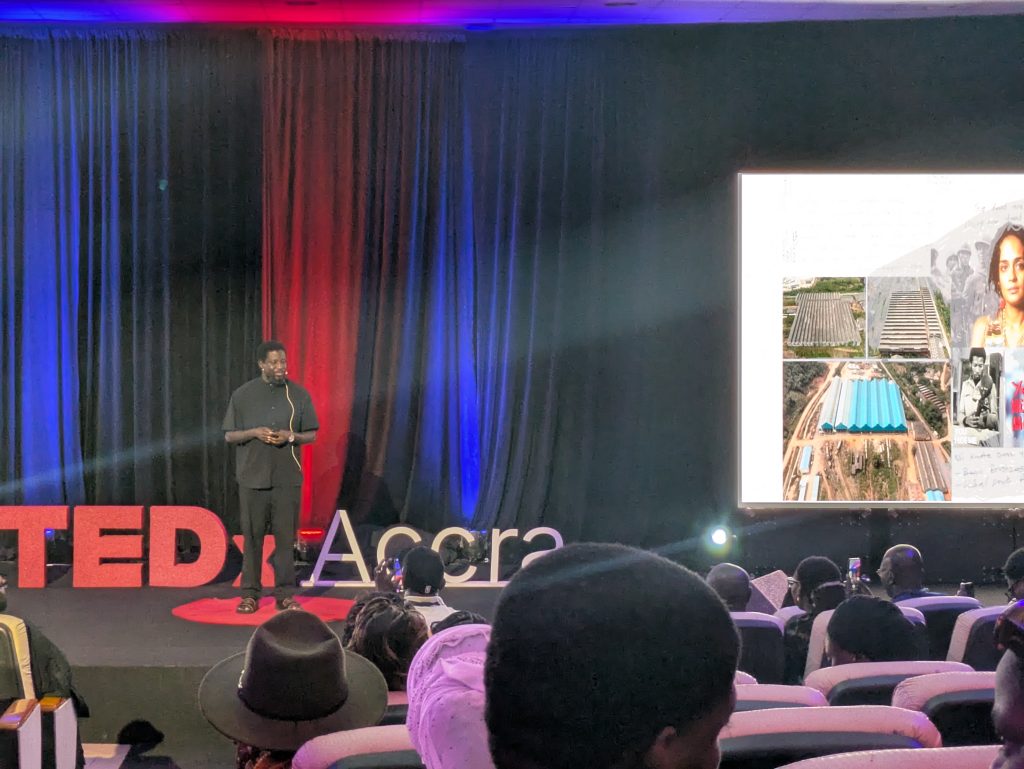
His talk moved through ideas of memory, inheritance, and the physical structures that carry a country’s past forward, whether it wants them to or not.
Closing
The event closed by tying the day’s threads back to Symbiosis — manufacturing dynasties and their succession gaps, polluted rivers and the people fighting to restore them, the friction that builds founders, the fault line between knowledge and intelligence in AI, and the ghosts embedded in a nation’s infrastructure.