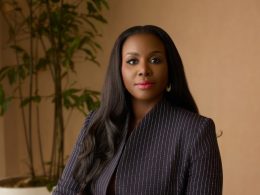





In a world where borders blur and identities clash, few stories capture the raw pull of home like that of Kanessa Muluneh. Born in Ethiopia and raised in the Netherlands, Kanessa spent years navigating diaspora life.
Three years ago, she upended it all, returning to the continent with her husband and children in tow.
What started as a personal quest for belonging has blossomed into a mission: an investment firm aimed at fueling Africa’s scale-ups.
On a recent episode of the Labari Media podcast, host Joseph Kuuire sat down with Kanessa to unpack her journey, the gritty realities of investing in Africa, and the untapped opportunities waiting to be seized.
The Diaspora Dilemma: Finding Home in the Unfamiliar
Kanessa’s story is one many in the diaspora know too well—a childhood steeped in traditional Ethiopian values amid the unfamiliar rhythms of European life.
“You grow up in an environment that’s not really similar to your own background,” she reflects. “Although I call both home, I never felt like I was part of the European lifestyle.”
As she matured, that disconnection deepened, prompting a soul-searching trip back to Ethiopia. What she found wasn’t just landscapes and family; it was clarity.
“That completely changed my whole view of life,” she says. “The diaspora story is quite complicated for a lot of people—and the way it healed me inspired me to do the same for others.“
Today, Kanessa channels that healing into action. As a serial entrepreneur, she’s always had a knack for business. Before her return, she poured resources into ventures across Europe and beyond.
But Africa called for something bigger: a firm that marries her investment savvy with her intimate understanding of the continent’s pulse. “It’s a mix of my experience and my talent,” she explains.
No longer content to bootstrap every idea from scratch—”time-consuming” and profitless for years—she embraced the world of investing, introduced by her husband. Now, she balances the thrill of founding with the strategic leverage of backing others’ dreams.
Investing in Africa: Beyond the Balance Sheet
For Kanessa, the shift from founder to investor isn’t just pragmatic; it’s liberating. “I classify myself as a founder, not a CEO,” she admits. “I love to be invested in something new and make that change—but now, I don’t carry the full responsibility.”
Her firm targets scale-ups—established companies generating revenue, if not always profits—rather than raw startups. It’s a deliberate choice in a market where the stakes are high and the rules are fluid.
The investment process in Africa, Kanessa stresses, defies Western playbooks. “People assume it’s just finances,” she says. “But when you invest on the continent, you have to look at way more aspects.”
With 54 countries sharing economic threads, due diligence is an art form. It involves scrutinizing not just numbers, but people: Do the team members gel? What’s their origin story? Are customers loyal? And then there’s the “backdoor due diligence,” a term coined by her Kenyan lawyer—informal checks on reputation, networks, and unspoken norms that outsiders often miss.
Politics looms large, too. “It’s not for the weak,” Kanessa warns. A new political leader can upend regulations overnight, shaking livelihoods and investor confidence. Competition for deals?
It’s fierce but nuanced. “We invest in scale-ups, so we have access to all this information,” she notes. “Whereas with larger corporations, it gets quite complicated.”
Her edge? That African upbringing, granting her insight into the “mentality” that eludes foreign players.
Entrepreneurs’ Hurdles: Documentation, Stability, and the Human Touch
From the trenches of pitch meetings, Kanessa hears a common refrain from founders: clarity is king, but it’s elusive. In the West, rules are codified and accessible.
In Africa? “Things aren’t quite clear,” she says.
Many startups begin as hobbies, sans lawyers or compliance frameworks. When investors demand documents—tax filings, contracts, IP records—founders often come up empty. “We cannot just give you money and hope for the best,” Kanessa explains. Her role often morphs into mentorship: guiding teams to fill gaps, explaining requirements step by step.
Why the disparity? “Lack of knowledge,” she pins down. Add political instability—flipping policies with elections—and it’s a recipe for caution.
Cross-border scaling amplifies the chaos. Leaders have pushed for open borders, from financial flows to trade corridors, but politics stalls progress. “It has its own challenges and is super complicated,” Kanessa says, sidestepping the thorns.
Citizens foot the bill: trapped funds, repatriation nightmares, missed synergies. An “open border would be ideal… a dream“.
Overlooked Goldmines: Healthcare, Luxury, and the Power of Niche
Amid the potholes, Kanessa spots treasures. Healthcare tops her list—a “double-edged sword” she’s passionate about, despite qualms over profiting from pain. Shortages plague hospitals; counterfeit drugs flood markets. “You just need a tool to prove authenticity, and you can make a lot of money,” she says.
Then there’s luxury—not handbags, but high-end services for Africa’s growing elite. Funerals, cars, premium healthcare: niches overlooked because founders chase mass markets.
“People don’t niche,” Kanessa laments. “They market to everybody.” The psychology is simple: exclusivity commands premiums. “Why else would I spend extra if everybody has access? The whole point is to exclude others.”
Founders fumble elsewhere, too: marketing. “That’s one of the worst things I’ve seen on the continent,” she declares. Sales happen, but branding? “Non-existing.”
Africa’s PR suffers—Google it, and negativity dominates—mirroring how products flounder without stories.
Kanessa’s fix: Invest in narrative first. Build buzz, tease logos, solicit pre-orders. “Create a following… take them in the story with you.”
Calling the Diaspora Home: Reconnection Over Reinvestment
For the 17 million-strong African diaspora—remittance powerhouses eyeing reinvestment—Kanessa’s advice is unvarnished: Don’t dive in blind. She underestimated their skepticism, shaped by parental traumas and Western media’s doom-scroll.
“We are worse than what Western people think about Africa,” she admits. Her first pitch to her community drew backlash—”the people that knew you will hurt you the most.”
The antidote? Travel light. “Go back without any business plans. Just ground yourself and reconnect.” Absorb the mentality, the highs and lows. Only then can you fight the narrative and contribute meaningfully—whether funding ventures or fostering knowledge.
Spotlight Investments and a 2020 Vision
Kanessa’s portfolio pulses with promise. East African agriculture captivates her—a family-owned cocoa plantation, ripe for storytelling. But the crown jewel? A collaboration with the African-American community on an expansion project, eyeing global reach including Africa.
“African-Americans are way more positive about Africa,” she marvels, tapping a “long-lost diaspora” trend fueled by curiosity and heritage.
AI’s African Awakening: An Untapped Frontier
Kanessa’s verdict on AI in Africa is stark: “We’re far behind.”
Western and Asian dominance starves models like ChatGPT of African data, yielding skewed outputs on the continent’s 2,000+ languages. “Who feeds the African information?” she asks.
One pitch she fielded: a startup curating and fact-checking Africa-centric feeds for AI. “It’s an untapped market… Why can’t we fight for our position like Asia does with the US?”
For aspiring founders: Here’s your cue. Build that data pipeline. Africa needs it more than most—and the first movers will redefine the narrative.