





For decades, the dominant narrative around African poverty has centred on aid: food relief, microfinance, and direct cash transfers.
The Africa Jobs Fund has a different thesis — one that is blunter, more mercantile, and arguably more transformative. Give people better jobs, and everything else follows.
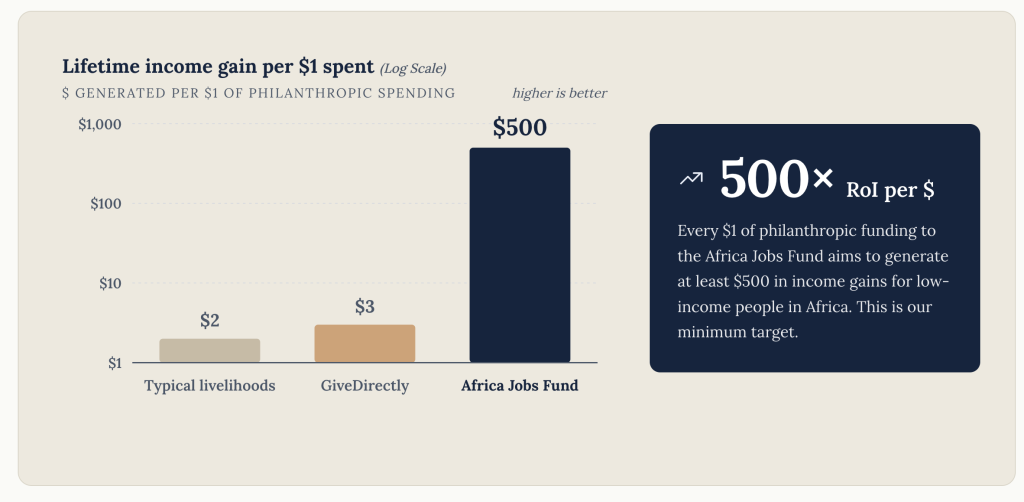
Launched on May 27 in Nairobi, AJF is a philanthropic investment fund with a target of $100 million and an audacious headline goal: generate more than $50 billion in income gains for African workers and more than double the lifetime earnings of at least 250,000 low-income people.
It is housed within Renaissance Philanthropy, the nonprofit vehicle built by former White House science advisors Tom Kalil and Kumar Garg, and it will be led by Daniel Yu — founder of Wasoko, one of the continent’s largest B2B e-commerce platforms.
The Numbers Make the Case
Africa’s employment crisis is a slow-moving emergency hiding in plain sight. By 2040, roughly 600 million of the world’s extreme poor will be African.
The continent currently produces around 3 million formal jobs per year — a figure that falls dramatically short of the pace required to absorb a rapidly expanding working-age population. The gap is not closing. It is widening.
AJF’s answer focuses on two interventions it argues have the strongest track record of pulling people out of subsistence poverty at scale: export manufacturing and international labour mobility.
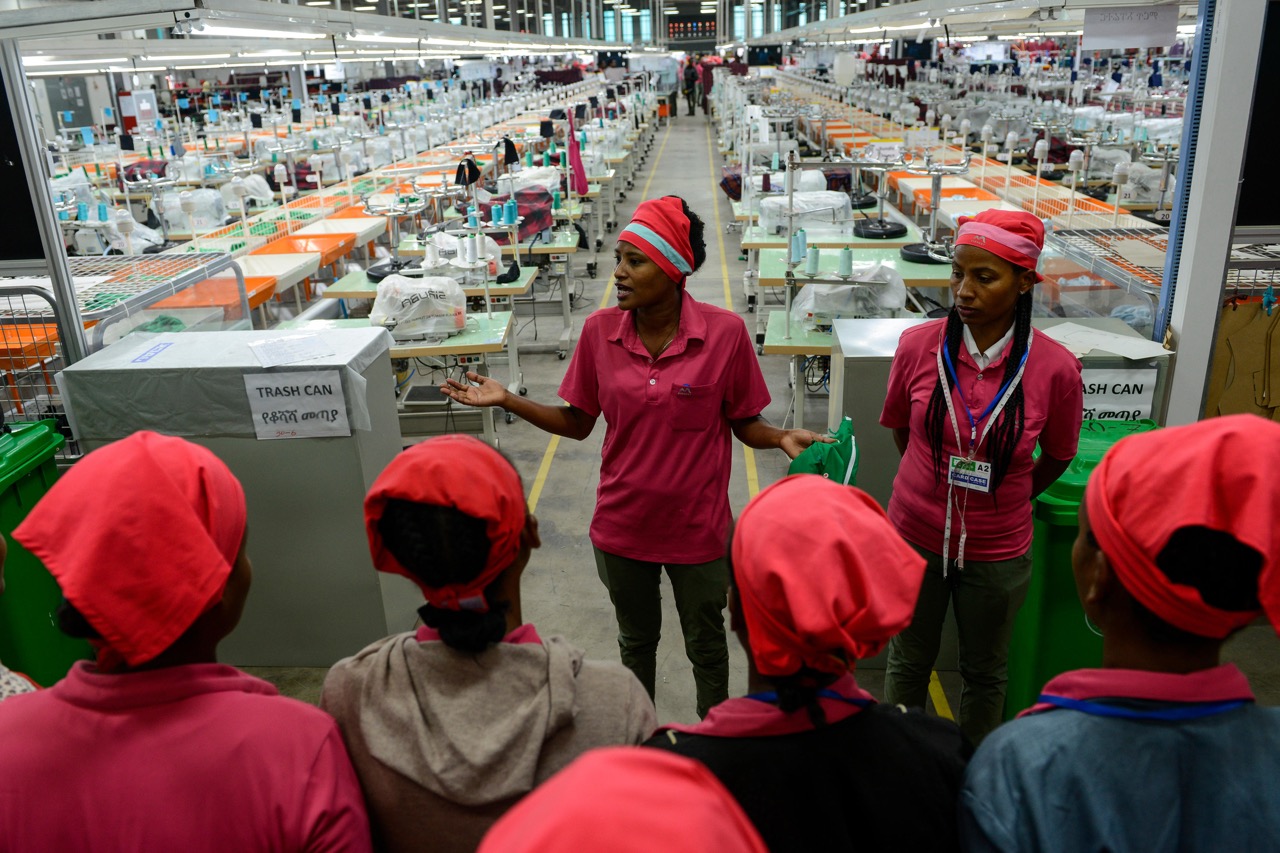
The manufacturing argument draws on two centuries of industrial history. China, Mauritius, Poland, Bangladesh — the pathway is well-worn. A worker moving from subsistence farming into export manufacturing can see a fivefold increase in productivity.
Africa, AJF contends, is now structurally positioned to follow that same arc. Wage levels are competitive with Asia. Preferential tariff access into the US, EU, GCC, and China is in place. Global buyers, spooked by supply chain fragility, are actively diversifying their sourcing away from single-country dependencies.
The obstacle is not competitiveness. It is the cost of being first. Pioneer firms entering new export markets absorb enormous setup costs — worker training, supply chain development, buyer relationships — that commercial capital alone won’t underwrite.
AJF intends to absorb some of that risk, lowering the barrier enough for private capital to follow.
Moving People, Not Just Goods
The second pillar — international labour mobility — is where AJF’s projections get most striking. An informal worker earning around $2,000 a year in Sub-Saharan Africa can earn $40,000 or more performing the same category of work in a high-income country. That is a 20x income multiplier, and it is sitting largely untapped.
More than 15 million people migrate to wealthy countries each year, and ageing populations in Europe, North America, and the Gulf are set to push that demand significantly higher over the next two decades. The demand side is not the problem. The problem is access.
Low-income African workers face predatory recruiters, opaque processes, and prohibitive upfront fees that effectively wall off the highest-return migration corridors. Employers in destination countries, meanwhile, can’t find reliable pipelines of trained workers.
AJF plans to back companies building formalised, transparent recruitment and training infrastructure in those corridors. Yu himself already has skin in this game — he chairs Malengo, an education migration nonprofit deploying $20 million to help young East Africans pursue career paths in Germany.
The Team Behind the Thesis
Yu brings the kind of operator credibility that philanthropic funds often lack. Wasoko raised $145 million and served more than 150,000 informal retailers across Africa. His operating partner, Ben Hyman, founded Talent Safari, a prominent African recruitment firm.

Senior advisors include Iyinoluwa Aboyeji — co-founder of both Andela and Flutterwave — and Samantha Power, former head of USAID and US Ambassador to the United Nations.
Power’s involvement is notable given the current climate around US development assistance. Her endorsement of AJF’s jobs-first model — “one of the most powerful tools we have to lift families out of poverty,” she said at the launch — carries both symbolic weight and a pointed implicit critique of the conventional aid architecture she once administered.
Renaissance Philanthropy, which hosts the fund, has catalysed more than $533 million across 22 programmes in its first two years, spanning AI, climate, health, and scientific infrastructure.
A High-Stakes Hypothesis
AJF is, at its core, a very large wager on a specific theory of change: that the fastest route from poverty to prosperity runs through payroll, not philanthropy. That commercial capital will follow pioneer investment into sectors it currently deems too risky.
That formalising labour migration corridors creates more durable wealth than almost any alternative development intervention.
The $50 billion income-gains projection will invite scrutiny, as it should. But the underlying logic — that a job in a factory or a care home in Hamburg does more for a family in Nairobi than a decade of aid — is harder to dismiss than it once was.
Yu put it plainly at the launch: “Nothing else in development comes close to the impact of getting this right.”