



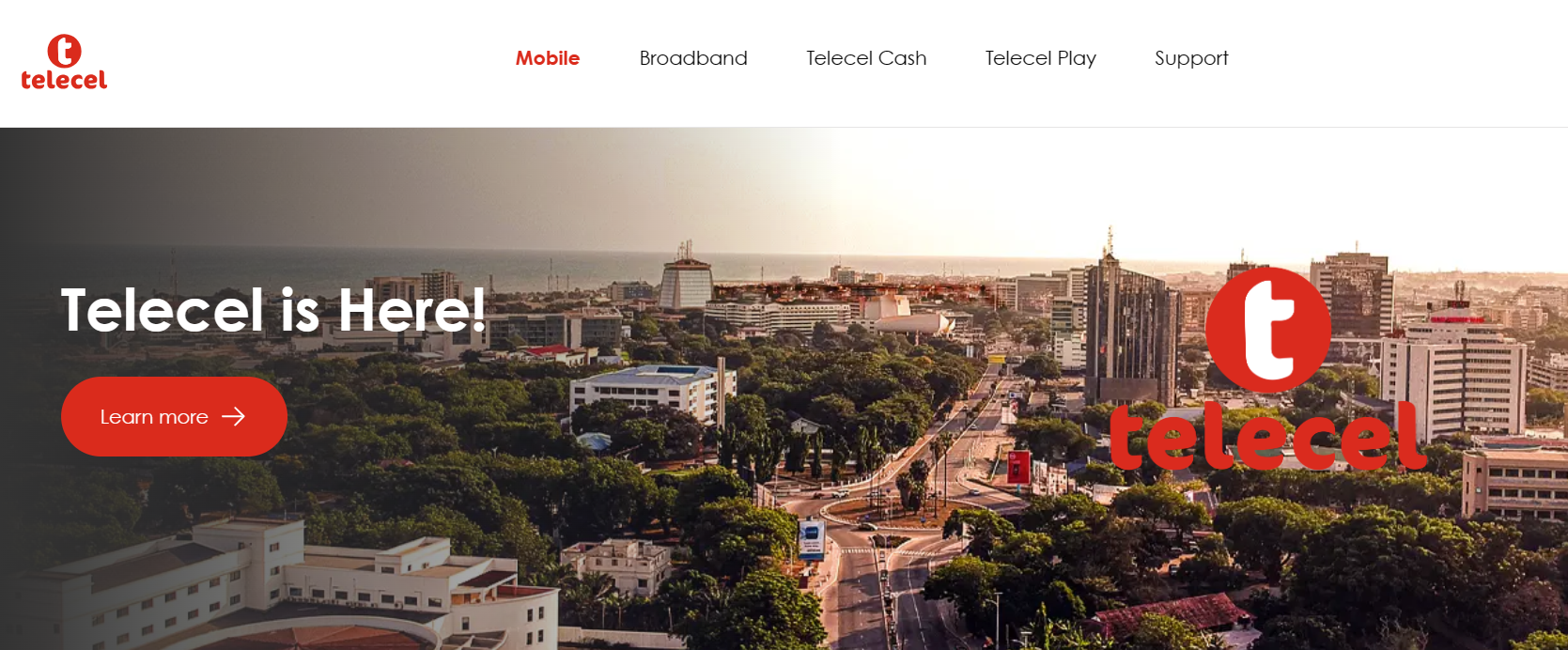
Telecel Ghana plans to switch on 5G service by December, after the government awarded it spectrum and a license to run the network itself.
“We plan to launch the service in December this year on our own network,” Moh Damush, Telecel’s chief executive, said in an interview with Bloomberg.
The license puts Telecel in direct competition with MTN Ghana, the country’s largest operator, which also won 5G spectrum. Both awards follow Ghana’s decision to cancel an exclusive deal that had made a single state-backed company the sole provider of 5G in the country.
The End of a Monopoly
In 2024, Ghana granted Next Gen Infraco, a wholesale provider, exclusive rights to build and operate the country’s 5G network. Under that model, mobile operators like MTN and Telecel would buy 5G capacity from Next Gen Infraco rather than build their own networks.
The arrangement was meant to cut broadband costs and speed up coverage. Radisys Corp., a unit of Indian billionaire Mukesh Ambani’s Reliance Industries, was selected to supply the network equipment.
The rollout fell far behind schedule. As of March, only 49 5G sites were operating. The government’s target is 1,200 sites by 2027.
Citing those delays, Ghana revoked the concession, which was not due to expire until 2034. It then invited operators to bid for their own licenses. MTN and Telecel were among the bidders.
What Each Operator Won
The National Communications Authority, Ghana’s telecom regulator, awarded MTN Ghana spectrum in two bands used for 5G and mobile broadband.
MTN secured two of the three lots available in the 700-megahertz band. It also won all three lots in the 3-gigahertz band. Each license cost about $100 million, the company said in a filing to the Ghana Stock Exchange.
Each permit runs for 15 years.
The two bands serve different purposes. Lower frequencies, like 700 megahertz, travel farther and pass through walls more easily, which helps coverage in rural areas and inside buildings. Higher frequencies, like 3 gigahertz, carry more data at faster speeds but over shorter distances, which suits dense urban areas.
Details of Telecel’s spectrum award were not disclosed in the same filing.
Why It Matters
5G networks can carry far more data than 4G, with faster speeds and lower delays. For operators, that means handling more traffic without congestion and selling faster broadband products.
Demand is rising. Video streaming, cloud services and digital financial products are growing across Africa, a continent with the world’s youngest and fastest-growing population. In Ghana, mobile money is central to daily commerce, and data use continues to climb.
For Telecel, the license is also a chance to close the gap with MTN. MTN dominates Ghana’s mobile market by subscribers and revenue. Launching 5G on its own network, rather than renting capacity from a wholesaler, gives Telecel more control over pricing, coverage and service quality.
What Comes Next
A December launch would put Telecel on a tight timeline. Building 5G coverage requires new equipment at cell sites, upgraded fiber links and compatible handsets in customers’ hands.
Early service is likely to be limited to major cities, where demand is highest, and existing infrastructure is strongest. Wider coverage would take longer.
Affordability remains a hurdle. 5G-capable smartphones are still out of reach for many Ghanaians, and the operators will need to recover the cost of their licenses. How they price 5G data plans will determine how quickly customers adopt the service.
The shift also tests Ghana’s policy reversal. The government moved from a single shared network, intended to avoid duplicated investment, to a competitive model where operators build their own. Supporters argue competition will speed up deployment. The results will become clearer as the first networks go live.
For now, Ghana’s 5G race has two operators with licenses, a regulator eager to see faster progress and a December deadline set by Telecel itself.