





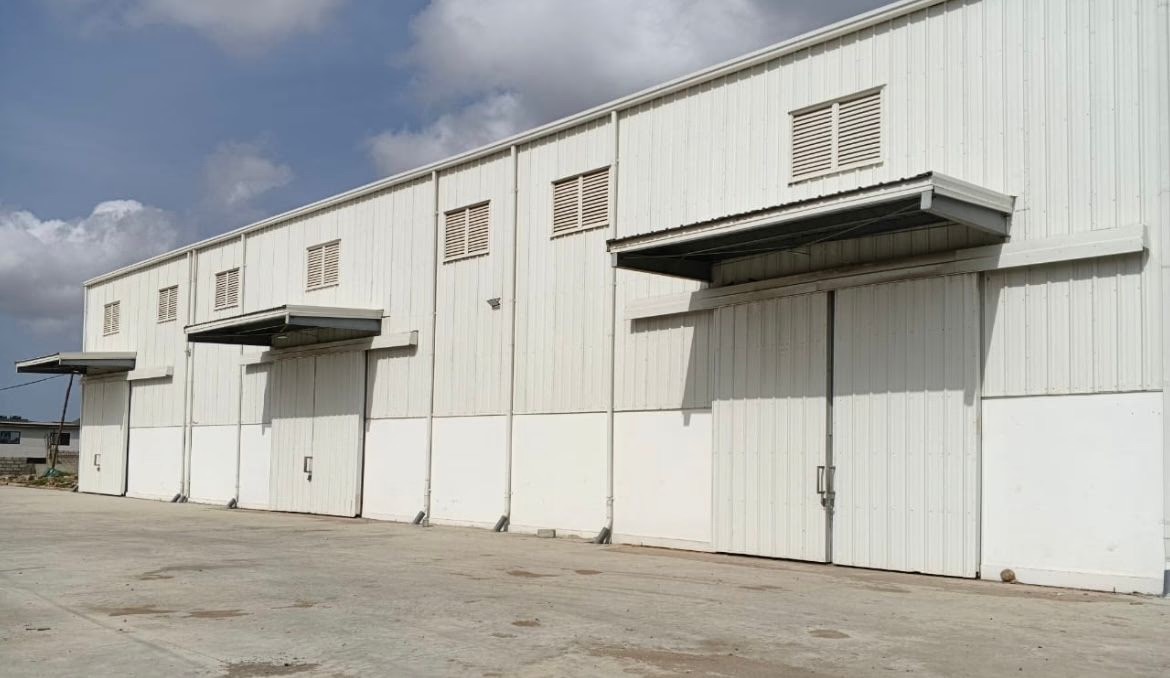
Terra Industries has announced that it is building a drone factory in Accra.
The Lagos-founded defense tech company is constructing Pax-2, a 34,000-square-foot drone manufacturing facility in Ghana’s capital that will serve as its primary regional base for drone and counter-drone systems.
It’s a significant scale-up. Terra’s first factory, Pax-1, covers 15,000 square feet and sits in Abuja, Nigeria. Once Pax-2 is operational, it will be the largest drone manufacturing facility on the African continent.
Drones Are Already Reshaping Conflict in Africa
The wars in Ukraine and Gaza didn’t just reshape geopolitics — they rewrote the manual on asymmetric warfare. Low-cost commercial drones, modified with fiber-optic guidance and improvised payloads, have become weapons of choice for non-state actors. That playbook has migrated.
Across the Sahel and sub-Saharan Africa, non-state actors are increasingly deploying modified commercial and fiber-optic drones as attack systems — tactics that have been battle-tested in the Middle East and Eastern Europe — and this is accelerating demand for integrated defense systems that combine surveillance, electronic warfare, and kinetic response.
Terra’s answer to that problem is a suite of systems designed to operate as a layered defense stack. The Accra factory will produce the Archer VTOL, a long-range surveillance and strike platform; the Iroko UAV, built for rapid tactical deployment; and Kama, Terra’s newest addition — a high-speed interceptor drone engineered specifically for counter-drone defense, capable of reaching speeds of up to 300 kilometers per hour.
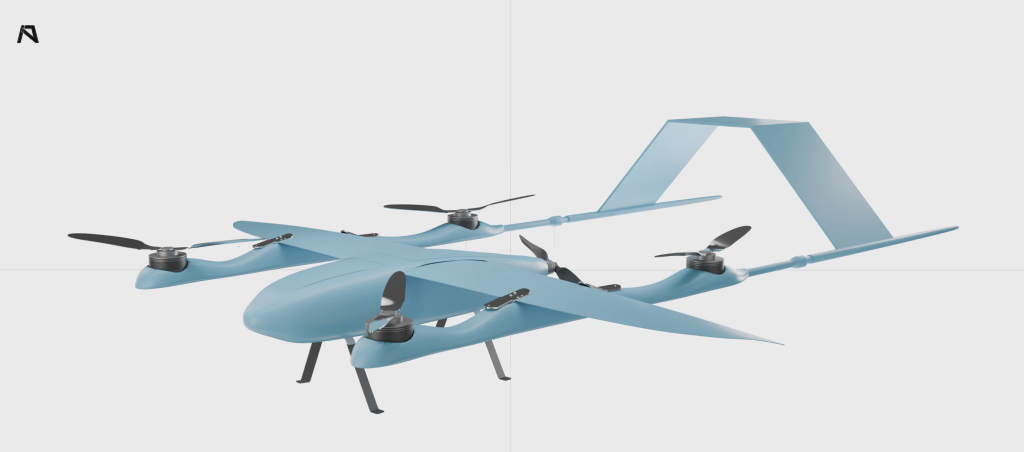
Kama, in particular, is designed for the kind of volume production that kinetic interception demands — you don’t shoot down a drone swarm with a handful of interceptors.
The Case for Ghana
Terra’s choice of Ghana for its second factory isn’t arbitrary. The country has a stable political environment by regional standards, a growing engineering talent base, and, critically, a government that has signaled a willingness to engage seriously with defense industrialization.
CEO Nathan Nwachuku said the company chose Ghana for Pax-2 because of its talent, strategic position, and political will to become a serious defense exporter. That last point matters. A factory is only as viable as its policy environment, and Ghana appears to have cleared that bar.
The facility is expected to create 120 engineering jobs and operate on a continuous production schedule — not the kind of limited-run, proof-of-concept output that often characterizes early-stage African manufacturing announcements, but a genuine production line.
Terra projects an annual capacity of 50,000 units across its aerial systems portfolio by 2028.

Sovereign Defense, Not Dependency
The deeper ambition behind Pax-2 is philosophical as much as industrial. Terra frames its factory network under the concept of Pax Africana — the idea that lasting peace on the continent requires Africa to build, deploy, and control its own defense technology, rather than perpetually depend on foreign suppliers who set the terms of access.
Nwachuku put it directly: “The only way Africa can have lasting peace is by uniting to build sovereign defense, not by relying on foreign security architecture.”
It’s a pointed framing — and one with clear commercial logic behind it. African governments currently spend billions annually on imported defense hardware, often from suppliers who come with geopolitical strings attached.
A continent-based manufacturer, one that can iterate quickly on local threat conditions and doesn’t require export approvals from Washington or Brussels, is a fundamentally different kind of partner.
Terra raised $34 million to scale manufacturing capacity, accelerate deployments, and grow its engineering teams across Nigeria and allied African countries — capital that now has a physical address in Accra.
What Comes Next
Construction on Pax-2 is in its final phase, with full operations expected by the end of June 2026. That’s a tight runway, but Terra has clearly structured this as a momentum play — the announcement, the funding, and the operational timeline are all designed to signal that this isn’t a concept.
The harder question is what happens after the ribbon-cutting. Building drones is one thing. Integrating them into the procurement cycles of African militaries — institutions with layered bureaucracies, legacy supplier relationships, and varying degrees of institutional trust — is a different kind of challenge entirely.
Learn more about other African tech startups on Labari Insights, our data repository for tech in Africa: insights.techlabari.com