




Six weeks ago, Lagos Life was a side project. A Nigerian developer coded it in a single night and released it on Nigeria’s Independence Day.
Now the company behind it, Vatar, is launching in a second country. Vatar has announced its first international expansion, into Ghana, with virtual versions of Accra, Kumasi and Tema.
The launch tests whether a game built on one city’s culture can be repeated somewhere else. It also tests whether a viral hit can become a lasting business.
What Vatar is launching
The company says Ghana will not get a copy of Lagos with new street names. Its stated goal is a Ghana experience built with Ghanaians that reflects the everyday life, places and culture of each city.
“For Ghana, we have shaped this launch with Ghanaians, and for Ghanaians, we can’t wait for players in Accra, Kumasi and Tema to live their city’s story on Vatar,” said Shalom Rayhamen, Vatar’s founder and chief executive.
The three Ghanaian cities join a wider network. The company says the launch is the next step toward a global network of culturally authentic virtual cities, starting with Africa.
How the game works
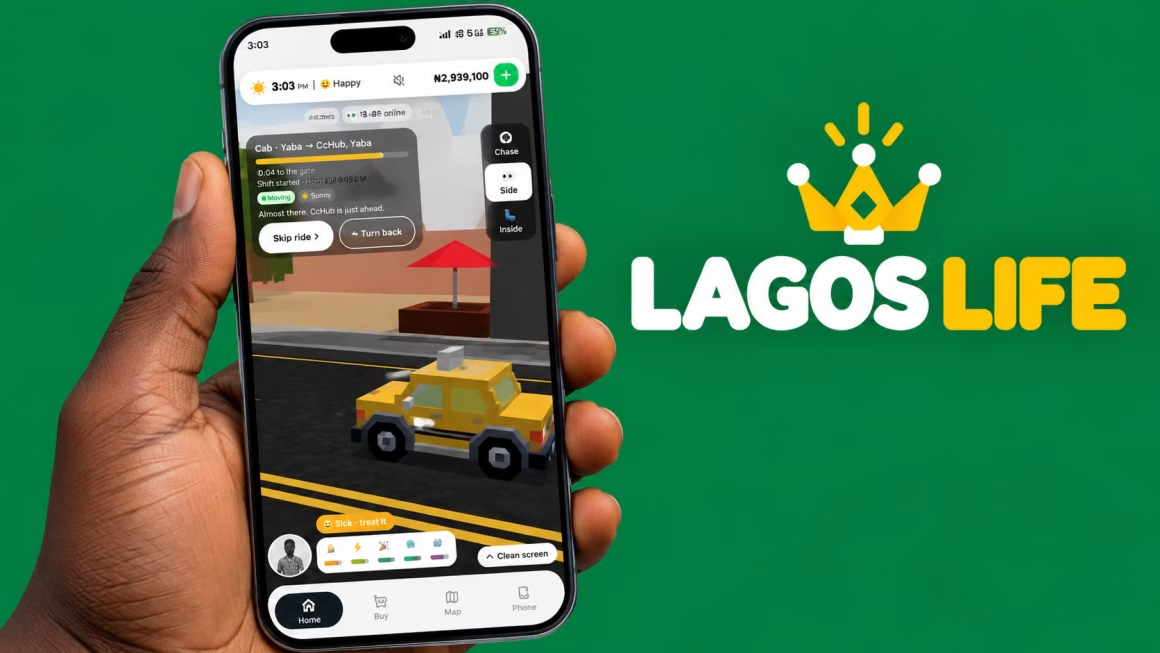
Lagos Life is a life simulator that runs in a web browser. Players create characters, get jobs, earn virtual naira, pay rent and interact with other users in a shared city. There is no large download, which matters in markets where data is expensive and many phones are low-end.
Rayhamen has said the game was partly inspired by The Sims 3, which she played as a child, and by a wish to build a digital space that reflects everyday Nigerian life. It also drew on Lagos Run, a browser game in which players drive a danfo bus.
A fast first month
The growth has been fast. Rayhamen started coding late on September 30 and released the game on Independence Day. Lagos Life reached one million players in four days, and within a month it had added Abuja and Port Harcourt. It has since passed 11 million players.
Investors moved quickly too. Vatar raised $500,000 in angel funding at a $10 million valuation nine days after the game launched. Flutterwave CEO Olugbenga Agboola invested through his fund, Resilience17.
Condia, citing sources familiar with the matter, has reported that Vatar is seeking a further $2.5 million in pre-seed funding.
Why Ghana is first
Ghana was a natural first market outside Nigeria. Ghana was already among the largest audiences outside Nigeria, alongside the United States, the United Kingdom, Canada and the Netherlands.
This means Vatar is building for players it already has. Ghanaians who were playing in a virtual Lagos can now move through Makola, Adum or Community 1 instead.
How Vatar Makes Money
Players do not pay to start, so Vatar earns money in other ways. It earns from advertising, music promotion, commercial partnerships, football streaming and sales of virtual currency. Flutterwave handles payments.
The early numbers are modest but growing. Rayhamen said the game earned about $46,900 in its first four days. Vatar now reports more than $170,000 in earnings and contracted deals, a figure that includes signed deals as well as cash received.
For Ghana, the commercial question is local. Vatar will need Ghanaian brands, musicians and advertisers to pay for space in virtual Accra and Kumasi, much as Nigerian partners have in Lagos.
The challenges ahead
Viral games often fade. Copycats appeared within days, including a London bus game and a Port Harcourt life game. A browser game is easy to build, which also makes it easy to copy. That is especially true now that AI coding tools have shortened development time. Rayhamen built the first version in under a day with AI tools.
Africa’s games industry is also still small. A KPMG and Maliyo Games study found that Africa earns less than 1% of the world’s $187 billion in gaming revenue. Turning huge player numbers into steady revenue has proven hard for studios on the continent.
There is also the question of whether a pan-African network holds together. Vatar describes its cities as interconnected. Whether a player in Kumasi cares about a player in Abuja will decide if the network is a real advantage or just a slogan.